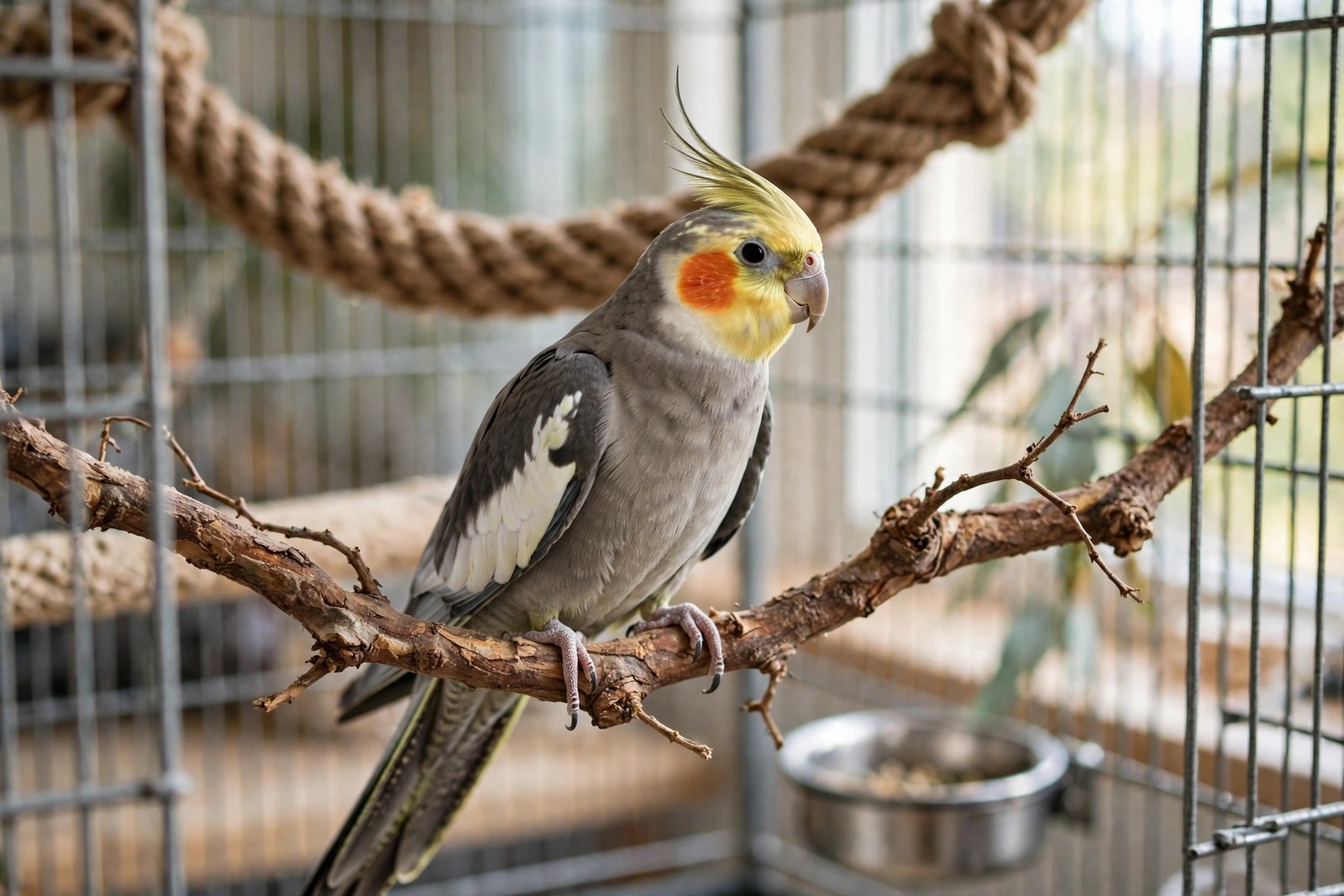
In the wild, a bird lands on hundreds of surfaces of different widths, textures, and angles every day. In a cage, it stands on the same few perches for most of its life, which is why perch choice is a genuine health issue rather than a furnishing detail. A bird's foot is built to grip: tendons lock the toes around a branch when the bird settles, and healthy feet need that grip to keep changing.
Natural Branches in Varied Diameters
The core of a good setup is natural wood branches in several different thicknesses. Look for perches where the foot wraps roughly two-thirds of the way around: if the toes meet or overlap underneath, the perch is too thin; if the foot sits almost flat with toes barely curled, it is too thick for regular use. Supply a spread either side of that ideal, so the bird constantly shifts grip and weight between different parts of the foot. Suitable branch woods sold for birds include manzanita, java wood, and dragonwood, which are hard, durable, and uneven along their length, and that unevenness is a feature, not a flaw. The sleeping perch, usually the highest one, should be a comfortable mid-range diameter, because the bird spends the whole night on it.
What to Avoid
The smooth, uniform dowel perches that ship free with many cages are the classic problem. Every spot on a dowel is the same diameter, so the same points of the foot carry the load hour after hour, which over time contributes to pressure sores, arthritis, and the painful foot condition owners dread. One dowel among varied natural perches does no harm; a cage furnished with dowels alone is a foot problem in slow motion. Sandpaper perch covers are worse and should be removed entirely: feet do not work like nails, the grit abrades the skin of the sole and the tops of toes where the bird shifts weight, and birds also chew and ingest the grit. A bird does not need to file its feet on sandpaper, and sore, reddened soles are the usual result.
Rope and Textured Perches, Placed With Intent
One soft rope perch gives the feet a genuine rest, and many birds choose it for preening or daytime naps; inspect it often, trim loose threads, and replace it once frayed, because toes and beaks catch in worn fibres. A single mildly textured mineral or pedicure perch, placed where the bird passes briefly rather than where it sleeps, commonly beside the food or water dish, helps keep nail tips and the beak in trim through normal landing and wiping. Keep the roughest perch out of the sleeping spot, and watch sensitive or older birds, who may need it removed if soles look pink or worn.
Placement, Cleaning, and Foot Checks
Spread perches at different heights with clear flight or climbing paths between them, angle some rather than running all parallel, and never position a perch directly over food or water, where droppings will fall. Scrub perches weekly with hot water and a brush, let them dry fully before returning them, and rotate in a spare set so cleaning never leaves the bird perchless. Replace any perch that is cracked, deeply chewed, or too soiled to clean. While you clean, glance at the feet themselves: smooth pink soles are healthy, while redness, swelling, scabs, overgrown nails, or a bird favouring one foot all warrant an avian vet visit.
Adding the weekly perch scrub and foot glance to KinsLe Care Teams, where it can be assigned and ticked off, keeps this small job from slipping in a busy household.