
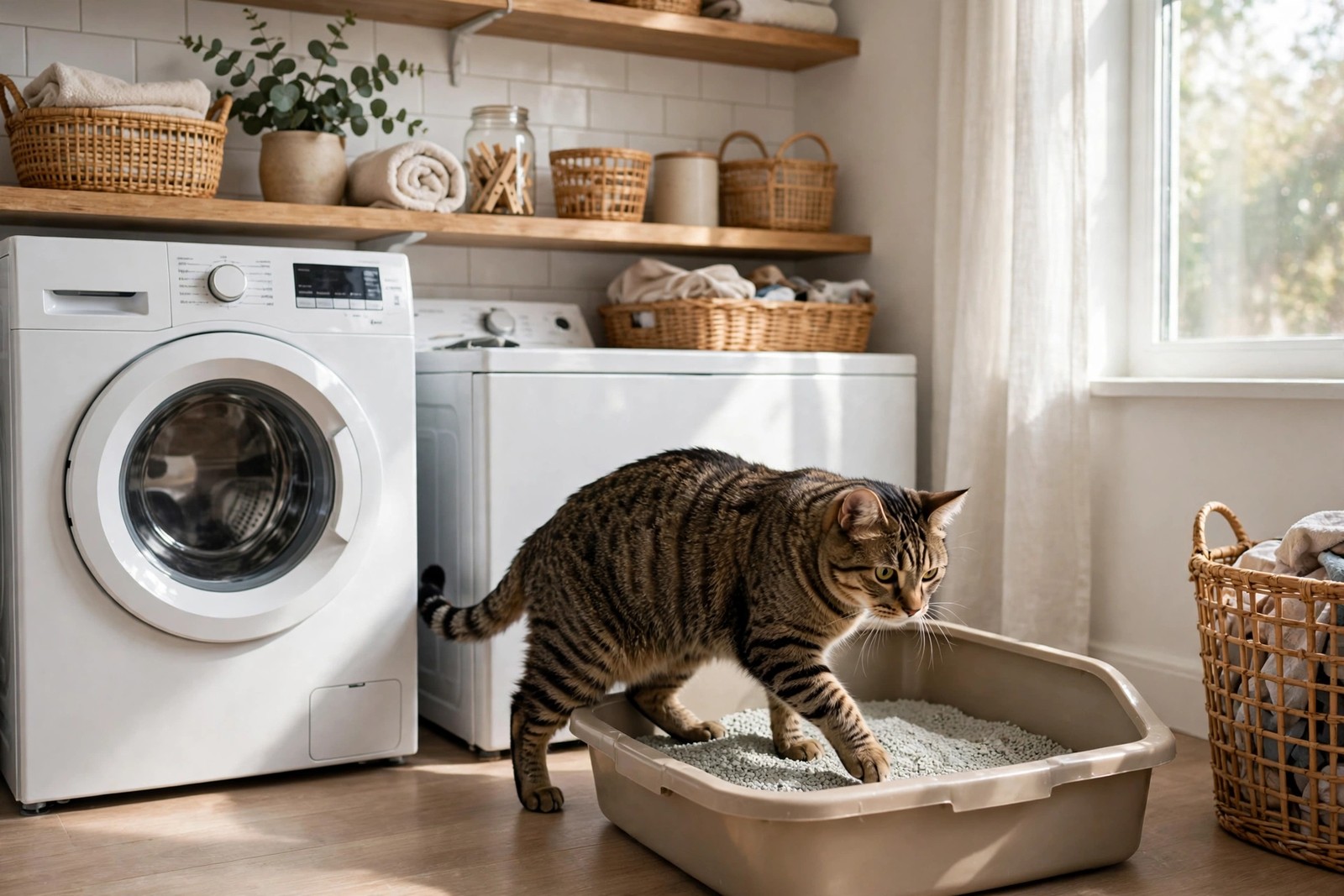
Watch for more or fewer urinations, clumps that are suddenly much larger or smaller, straining, blood, stools that are far looser or harder than usual, and any sharp change in how often your cat goes. A single odd scoop is rarely a crisis, but a clear change lasting more than a day or two — especially with appetite, thirst, or energy changes — deserves a call to your veterinarian.
What Normal Looks Like for Your Cat
You cannot spot a change until you know your cat's baseline. Most healthy adult cats urinate two to four times a day and pass stool once or twice daily, though diet, age, and water intake shift that range. A cat on wet food usually produces larger urine clumps than one eating mostly kibble, because she is taking in more moisture. Kittens go more often in smaller amounts, and seniors may go more frequently as kidneys and digestion age.
Learn your own cat's pattern over a normal week: roughly how many clumps you scoop, their typical size, and what her stools usually look like. That snapshot makes a real change stand out later.
Urination Changes to Take Seriously
Frequent trips that produce only tiny clumps, or a cat who enters the box repeatedly, strains, cries, or licks herself afterwards, can signal urinary irritation or a partial blockage. Male cats who cannot urinate at all are in an emergency — that is never a wait-and-see situation.
At the other end, noticeably larger or more numerous clumps can accompany increased thirst and urine output — worth mentioning at your next vet call, particularly for a middle-aged or senior cat.
Blood deserves attention whenever you see it: pink-tinged urine, red streaks in stool, or spots outside the box where your cat tried to go. Do not try to decide at home which organ it came from — note when you saw it, take a photo for the clinic if you can, and call.
Stool Changes and What They Can Suggest
Stools that become persistently watery, mucus-coated, black and tarry, or hard dry pellets are all departures worth tracking. A new food, a stolen bite of rich human food, or stress can loosen stool for a day, but diarrhoea beyond 48 hours, or paired with vomiting and lethargy, needs veterinary advice.
Constipation is quieter and easy to miss in a multi-cat home. If your cat strains, produces tiny hard stools, or skips days, mention it promptly rather than waiting.
Making the Box Easier to Monitor
Keep these habits simple and consistent:
- Scoop at least once daily, at roughly the same times, so counts stay comparable.
- Use one litter type consistently; switching litters can itself change habits.
- In multi-cat homes, provide enough boxes — a common guideline is one per cat plus one extra — and note which cat uses which area if you can.
- Write down changes with dates instead of relying on memory three weeks later.
- Photograph anything alarming, like blood, before you clean it away.
Avoid punishment or fuss if your cat goes outside the box. Accidents are often a symptom or a signal that a box is dirty, poorly placed, or hard for an arthritic senior to climb into — a low-entry box can make a real difference for older cats.
How KinsLe Care Teams Help You Catch Changes Early
In a busy household, litter duty is exactly the kind of task that gets assumed rather than done — and changes slip past because three different people scooped on three different days. KinsLe Care Teams make litter duty an assigned, timestamped task: feeding, walks, medications, grooming, and chores like box checks can be assigned to specific people, and completed tasks are marked with a timestamp. Whoever scoops can note "two tiny clumps, Miso strained" right away, and everyone else sees it instead of the observation evaporating.
That shared record turns vague worry into a clear timeline you can read to your veterinarian. Write the pattern into the Care Teams log on KinsLe, with the scooper noting clump size, straining, or blood and marking it done, so a call to a veterinarian starts from dated facts.