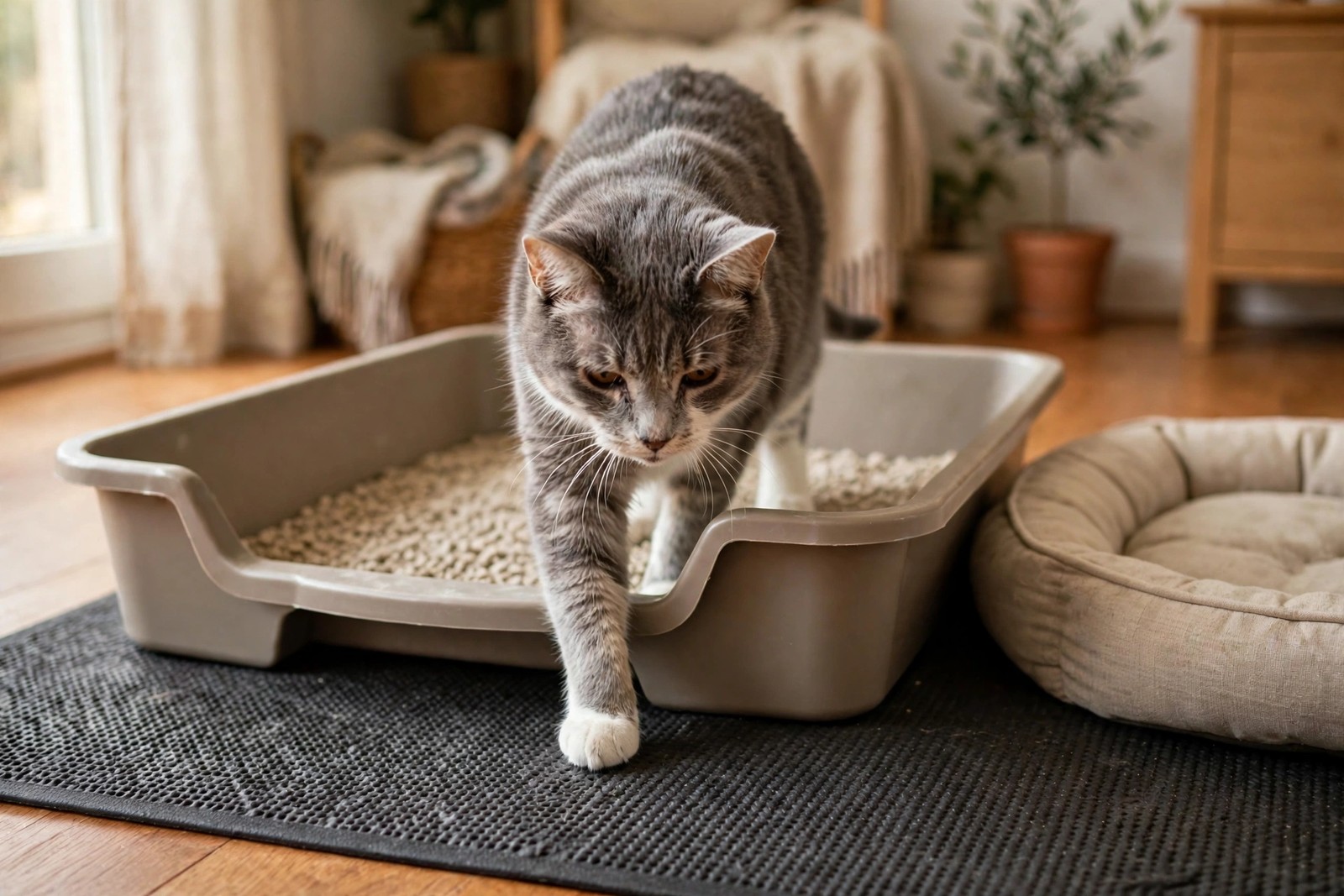
Arthritis changes litter tray use one small movement at a time. A cat who once stepped in without thinking now has to lift sore legs over a side, balance on loose litter, turn in a tight space, and step out again, several times a day. The three features in the question all help, but they do not help equally, and ranking them honestly tells you where to spend attention first.
First: A Low Entry
The step over the side is the daily pain point, so a low entry matters most. A tray with one genuinely low side, or an entry cut down so the cat can walk in almost at floor level, removes the lift that stiff hips and elbows find hardest. Watch how your cat enters now: a pause at the side, a front leg hooked over first, or accidents just outside the tray all suggest the entry is part of the problem. Walk-in access, by contrast, asks almost nothing.
Second: Room to Turn
Size comes next, because a cat who cannot turn comfortably cannot posture comfortably. A large tray lets the cat step in, turn without crouching against a wall, dig, and settle into position without bracing its body against the sides. Cramped trays force exactly the twisted, compressed postures that sore spines and hips handle worst, and a cat may begin perching on the edge or eliminating half outside. Given a choice between a modest tray in a perfect spot and a generously sized one, most arthritic cats benefit more from the space.
Third: A Base That Stays Put
A non-slip base ranks third, and it is still a real factor rather than a finishing touch. A tray that slides as a sore cat leans its weight on the rim, or that skids across a hard floor during digging, is a deterrent a cat remembers. Movement underfoot makes an unsteady cat feel less safe at the exact moment it is balancing on three legs, and some cats begin avoiding a wandering tray altogether. A tray with a grip base, or one set on a mat that holds it still, removes that wobble. It cannot fix a painful entry, which is why it sits third, but on smooth floors it can be the difference between a tray that is used and one that is merely nearby.
The Supporting Details
Around those three features, placement and litter do quiet work. Keep litter at a comfortable depth, deep enough to dig in but not so deep that walking through it feels like wading, which tires sore legs. Place at least one tray where the cat already rests and spends its day, because a cat with stiff joints should never face stairs as the price of reaching the only tray. In a larger home, more than one tray, on more than one level, is usually worth offering. Scoop steadily, since a fastidious cat with sore joints has even less patience for a dirty tray than a young cat does.
This is where dated notes earn their keep. Writing the tray choice, its location, and the cat's mobility observations into the Pet Passport packet on KinsLe means the next vet visit starts from a record: when entry accidents began, which tray change helped, and whether stiffness is progressing. Mobility shifts are gradual, and gradual shifts are exactly the ones memory flattens.
Reading Avoidance as Information
A cat who stops using the tray is rarely being difficult. Avoidance usually reports something specific: entry pain, a tray that moves, a location that now involves stairs, or discomfort that has grown beyond the current setup. Treat the change as a conversation to have with a vet, who can consider pain and other possibilities and discuss whether the cat's overall comfort plan needs adjusting. Changing the tray and reporting what changed, and when, gives that conversation substance.
Pet Passport on KinsLe holds the tray details alongside weight, stiffness notes, and vet visit summaries, making gradual changes in mobility easier to spot over time.