
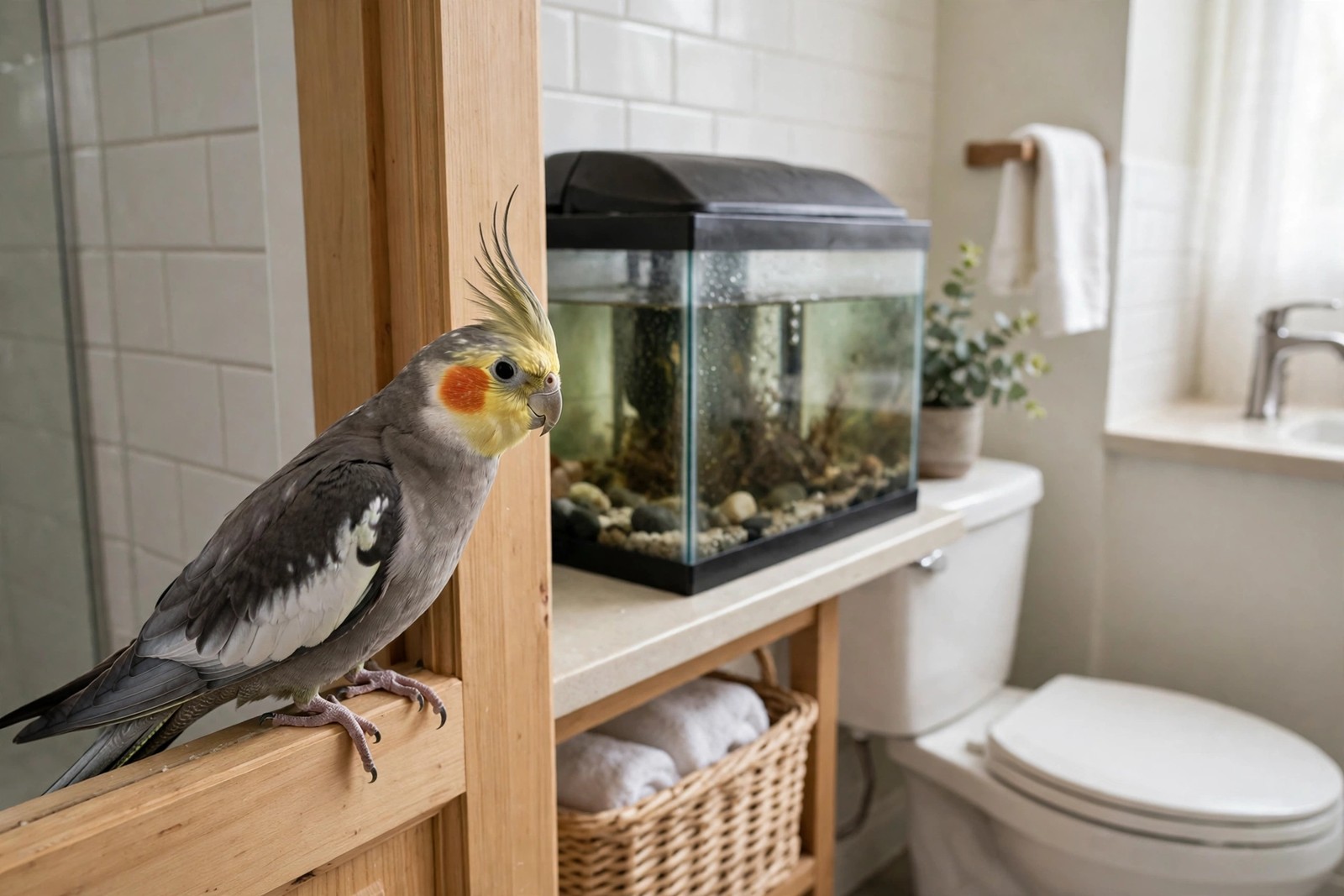
Toilets with the lid up, sinks and buckets of water, uncovered fish tanks, and even deep drinking glasses are all drowning hazards for a pet bird. A small bird that lands in water often cannot climb out — wet feathers get heavy, smooth sides offer nothing to grip — so every open water source in the flight room should be closed, covered, or removed before your bird comes out.
Why Water Traps Birds So Quickly
Owners imagine a bird in water simply flying out again, but that is not how it usually works. A budgie or cockatiel that slips into a toilet bowl or bucket faces steep, slippery walls well above its head. Each fluttering attempt soaks the feathers further, and soaked flight feathers lose the lift a bird needs to escape.
Size is deceptive, too. Water that looks shallow to you can be chest-deep to a lovebird. A half-filled mop bucket, a sink soaking dishes, a large dog bowl, or a vase of flowers can all be deep enough to exhaust and drown a small bird in minutes — often silently, while you are in the next room.
Cold and hot water add further danger. A sink of hot dishwater can scald, and cold water accelerates exhaustion and shock in a tiny body that loses heat fast.
Room-by-Room Water Checklist
Before out-of-cage time, walk the space your bird can actually reach — including hallways if the door will be open — and check:
- Bathroom: toilet lids down, every time. Make it a whole-household habit, not just a bird-time rule. Empty bathtubs and sinks, or close the bathroom door entirely.
- Kitchen: cover or empty sinks of soaking dishes, move buckets and stockpots, and never let a bird fly free while cooking — steam, boiling water, and hot oil are hazards beyond drowning.
- Living areas: cover fish tanks with a secure lid, move large drinking glasses and pitchers, and check plant saucers and pet water bowls.
- Laundry and utility spaces: top-loading washers, utility sinks, and cleaning buckets should stay closed or behind a shut door.
Fish tanks deserve special mention because birds are drawn to them — the movement, sparkle, and a rim that looks like a perfect perch. A screen or loose cover is not enough for a determined bird; use a solid, fitted lid.
Baths Your Bird Chooses vs. Water That Traps It
This does not mean birds and water do not mix. Many parrots love a shallow bath dish or a gentle misting. The difference is control and exit: a safe bath is shallow — belly-deep at most for a small bird — with sloped sides the bird can walk out of whenever it wants, offered under supervision, and emptied afterwards. Be extra careful with young, elderly, ill, or clipped birds, whose strength may not match their enthusiasm.
If You Find Your Bird Wet and Struggling
Act immediately but gently. Lift your bird out, wrap loosely in a soft towel, and keep them warm and quiet. A bird that has inhaled water or become chilled needs an avian veterinarian promptly, even if it seems to recover. Do not squeeze or shake the bird, and do not delay the vet call to see how things go.
Sharing the Checklist So It Actually Happens
Water hazards are a household problem, because anyone can refill a sink or leave a lid up five minutes before flight time. A written pre-play checklist beats good intentions.
KinsLe's Family Sharing helps here: as the per-pet care circle with roles, it lets you share that pre-play safety checklist — lids down, tanks covered, buckets emptied — with everyone who lets your bird out, so the routine does not depend on one person's memory.
Family Sharing on KinsLe puts the lid-down, tanks-covered, buckets-emptied notes where every household member can read them before flight time begins.