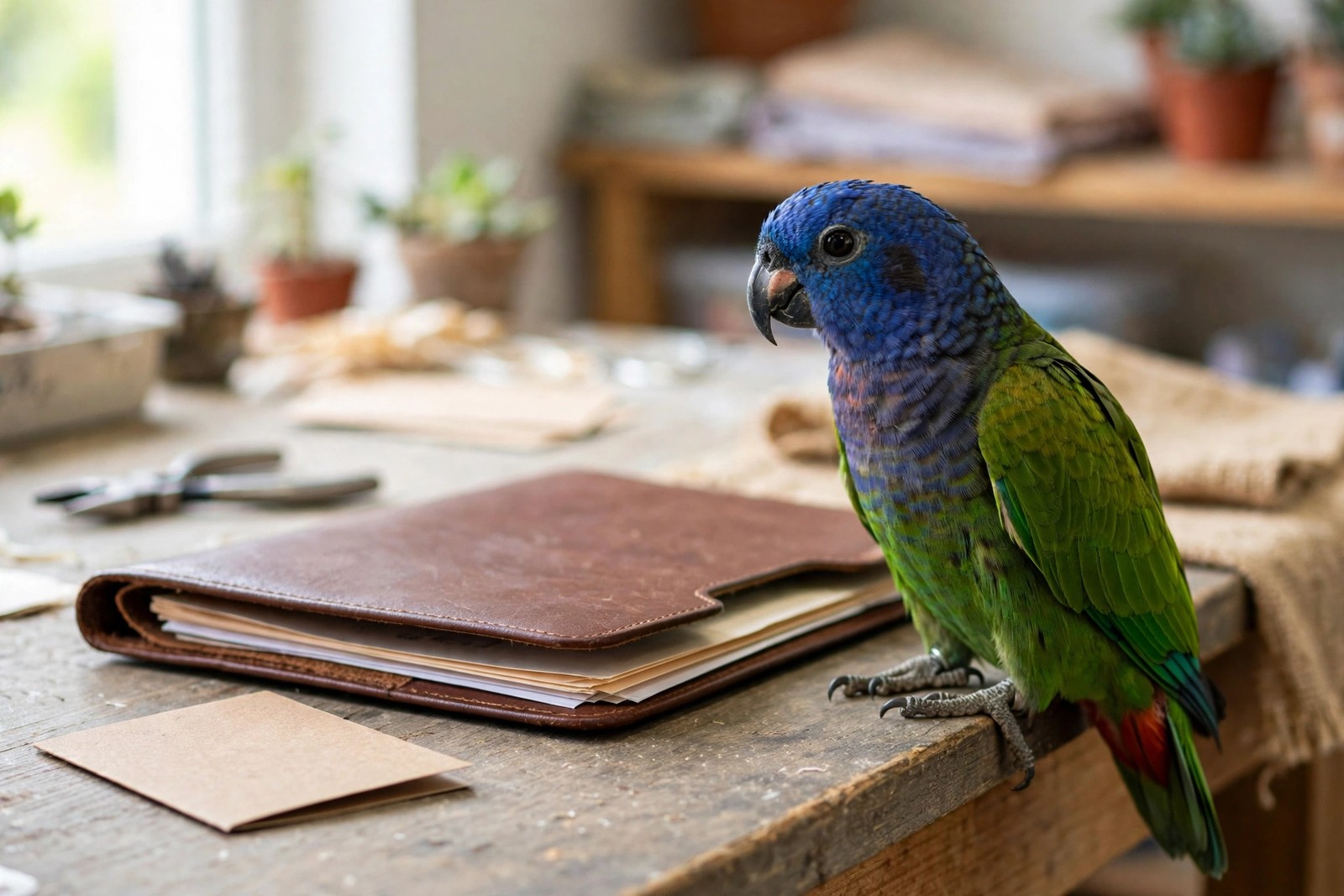
A pionus can live for decades, travel with you between homes, and need vet care, boarding, or rehoming paperwork many years from now. The documents you collect on purchase day are the foundation of all of that. A good breeder expects these questions and hands the file over proudly; a seller who waves them away is telling you something.
The Core Identity Documents
Start with the hatch certificate. It should name the species and subspecies, because pionus types such as blue-headed, white-capped, and bronze-winged differ in price and appearance, and record the hatch date, the breeder's name and contact details, and the band number. Next check the closed band itself: a seamless ring fitted in the nest in the first days of life, which cannot be put on an adult bird. Read the letters and numbers on the leg and confirm they match the certificate exactly, and write them into the bill of sale. An open, split band is not proof of captive breeding and is a question to raise, not a detail to skip. If the bird is microchipped, get the chip number and the registration paperwork as well.
The Bill of Sale and Health Records
The bill of sale should identify the bird by species, band or chip number, and hatch date, state the price and date of sale, and carry both names and signatures. Ask for the health file behind it: any vet examinations, tests the breeder ran on the parents or the chick, weaning records showing the bird is fully weaned and eating independently, and the diet it is currently on, in writing. A written health guarantee, even a short one covering the first vet check, should be part of the paperwork rather than a verbal promise. If the bird is sold as sexed, the DNA sexing certificate from the laboratory belongs in the file too, since pionus sexes look identical.
CITES and Movement Paperwork
Pionus parrots are listed under CITES, the convention controlling international trade in wild species, and most are in Appendix II. For a domestically bred bird sold within your own country, you may simply need the breeder's records proving captive-bred origin. If the bird, or its parents, crossed a border, there should be CITES export and import permits, and you should receive copies, because you may need to show them to move the bird internationally later, and in some places to prove legal ownership at all. Ask the question directly even if you expect a simple answer, and keep the reply with the file.
Red Flags and Filing It All
Walk away from pressure to buy without papers, a band number that does not match the certificate, a bird offered well below the usual price with no history, or a seller who refuses a vet check. Once home, file everything together: hatch certificate, bill of sale, band record, health history, sexing certificate, and CITES copies where they apply. Storing scans of the complete set in KinsLe's Pet Passport means the file is ready in one portable packet for a vet visit, a border crossing, or a future transfer, decades after the purchase-day envelope would have been lost.