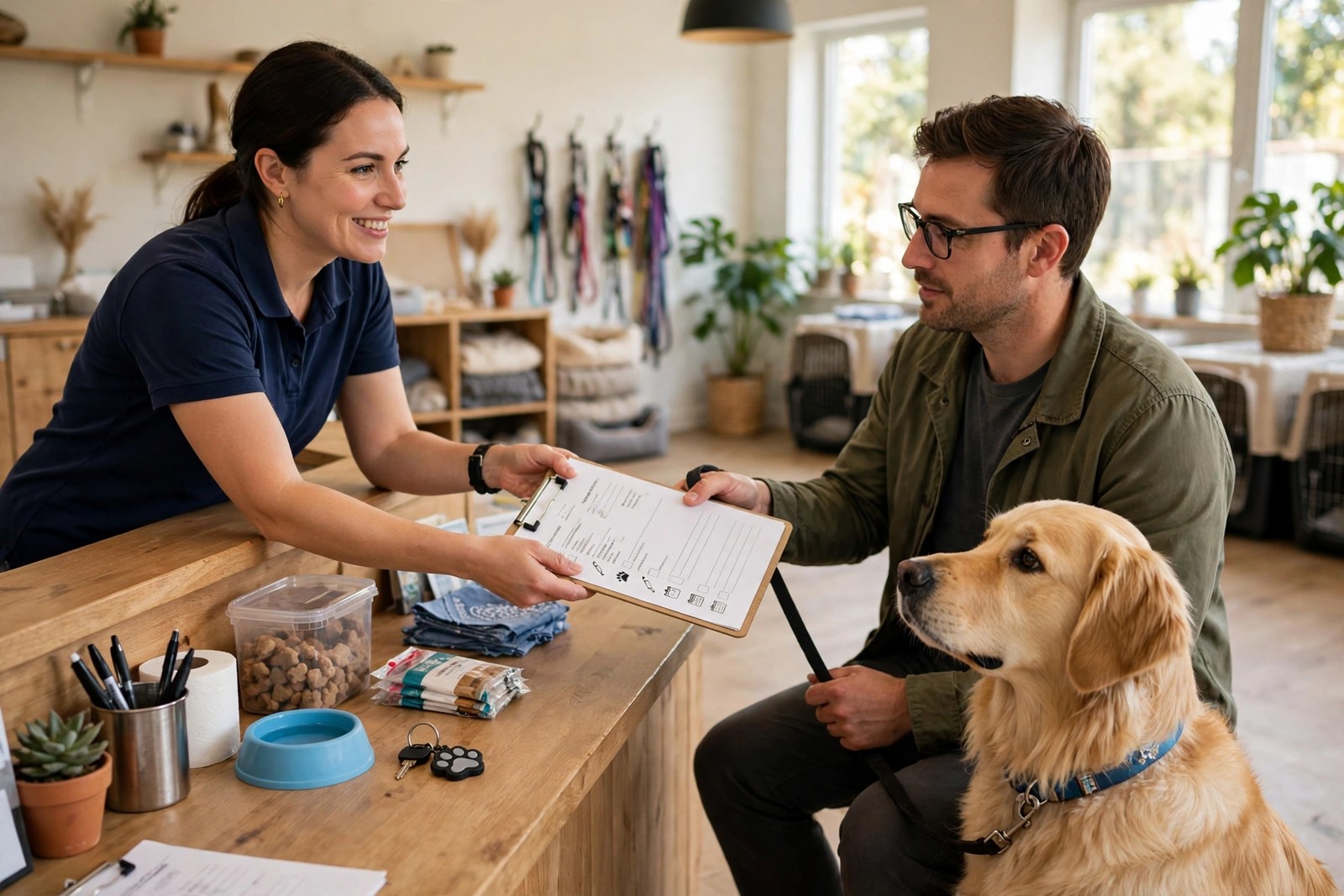
Groomers and boarders ask for paperwork for the same reason vets do: they are taking legal and physical responsibility for your dog around other animals, sharp tools, water, and strangers. The exact list varies by business and by local rules, but the items below cover what reputable groomers and boarding facilities routinely require, and what each one is actually for.
Vaccination Certificates
The rabies certificate is the document asked for most often, and in many places a current rabies vaccination is a legal requirement for dogs using commercial services; bring the dated certificate itself, not just a tag on the collar, because the tag does not show expiry. Boarders, whose dogs sleep and play together for days, require more: proof of current core distemper and parvovirus cover is standard, Bordetella kennel cough vaccination is required by most boarding facilities, and some also ask for canine influenza cover and up-to-date flea prevention. Groomers, whose dogs usually attend one at a time for a few hours, commonly ask for rabies and core vaccines only, although salons that host group play or daycare alongside grooming apply boarding-level rules. Certificates that expire mid-stay can get a booking refused, so check dates when you book, not when you pack.
Intake and Health Disclosure Forms
Both services use an intake form, and honest answers protect your dog. Expect questions about diagnosed conditions such as heart problems, seizures, arthritis, or breathing difficulties, current medication, allergies including reactions to shampoos or flea products, previous injuries, and any history of biting, snapping during grooming, or fighting with other dogs. Groomers ask about coat condition, and a matted coat often requires a signed consent acknowledging the coat may need to be clipped short and that matted skin can hide irritation. Boarders ask about feeding in detail: food, measured amounts, times, treats allowed, and foods that must never be given.
Identification, Contacts, and Consent
Bring identification details: your name and mobile number, a second emergency contact who can collect the dog, your veterinarian's name and clinic number, and microchip information. You will usually sign a service agreement covering emergency treatment authorisation, payment terms, late collection, and what happens if your dog becomes ill or injures another animal. Boarders additionally set out who is authorised to collect your dog, and facilities will not release a dog to an unlisted person, so name your backup collector in writing before you travel.
What to Bring on the Day
For grooming: the vaccination proof if it is your first visit or records have changed, plus a note of anything new since last time, such as a lump the groomer should avoid or a recent ear infection. For boarding: current certificates, medication in original labelled containers with written instructions, measured food, the signed forms, and your emergency contact's confirmation that they are reachable during your trip. Photographing or scanning everything as backup saves a booking when the paper copy stays in the wrong car.
Storing the full set in KinsLe Pet Passport, one portable packet of records, means the certificates and forms a new groomer or boarder requests can be shared complete, without hunting through email threads.