
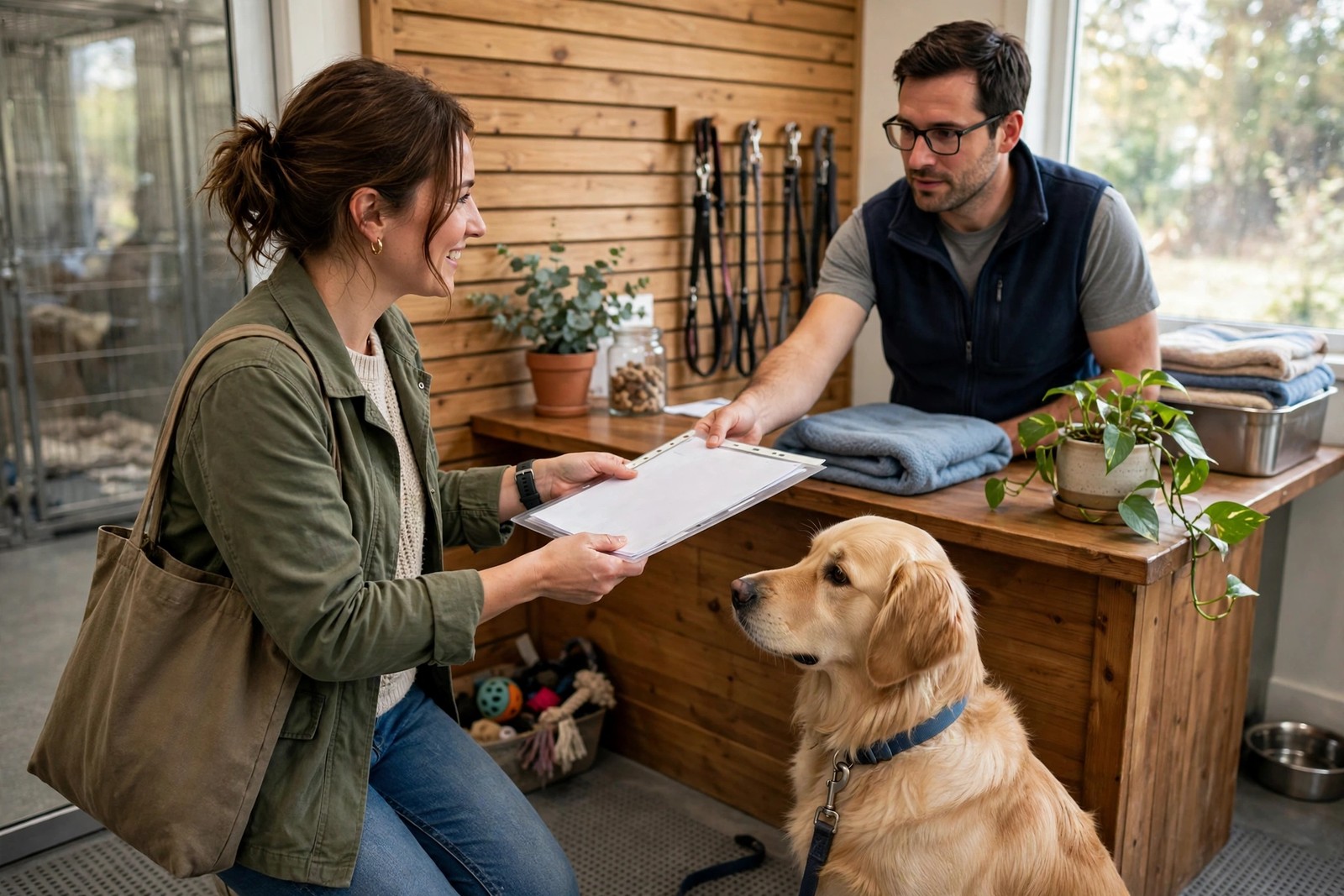
Most boarding kennels will ask for the same core paperwork: proof of current vaccinations, your veterinarian's contact details, an emergency contact, and written information about medications and allergies. Some also require a signed boarding agreement covering fees, pick-up times, and consent for emergency treatment. Gathering it all before drop-off day turns check-in into a calm five minutes instead of a scramble through your inbox at the front desk.
The documents almost every kennel wants
Vaccination records sit at the top of the list. Expect to show rabies vaccination as legally required in most places, plus core vaccines, and many kennels also ask for kennel cough (Bordetella) protection given how easily respiratory infections spread where dogs gather. Records should show dates given and when the next dose is due — a photo of a crumpled certificate may be accepted, but a clean copy from your vet is better.
Alongside vaccines, prepare:
- Your regular veterinarian's name, clinic, and phone number
- An emergency contact who can make decisions and collect your dog if you can't be reached
- A medication list with doses and timing, plus allergy information
- Any relevant health notes: recent surgery, arthritis, seizures, anxiety, or dietary restrictions
- Microchip details and your dog's description, in case of an escape emergency
Why kennels are strict about it
Paperwork isn't bureaucracy for its own sake. Vaccine requirements protect every dog in the building, including yours. Emergency contacts and vet details mean that if your dog is injured or unwell at 9 p.m., staff aren't losing precious time hunting for a number. Medication and allergy records prevent the most avoidable boarding accidents: the missed dose and the well-meant treat that shouldn't have been given.
If your dog's vaccinations have lapsed, book the vet visit well ahead of your trip — some vaccines need time before they're considered effective, and kennels may decline a dog vaccinated only yesterday against kennel cough.
Getting organised before you book
Create one boarding folder — paper or digital — the first time you board, and update it after every vet visit. Check expiry dates when you book the kennel, not the week you travel. Confirm who your emergency contact will be and actually tell them; the title is meaningless if they're on a plane themselves.
Also read the boarding agreement before signing day. Note late pick-up fees, required drop-off windows, and what level of emergency vet spending you've authorised, so there are no surprises on either side.
Pet Passport: the records packet built for this moment
KinsLe's Pet Passport is exactly this folder, done properly: your dog's records packet holding vaccines, medications, allergies, and documents in one place, shareable with vets, sitters, and boarders. Instead of forwarding three PDFs and a photo of a vaccine card, you share the Passport and the kennel has everything check-in requires in a single consistent packet. Keep it current after each vet visit and every future boarding, grooming, or travel check-in gets easier.
Good paperwork is invisible when it's done early — and priceless when something goes wrong. Present the Pet Passport packet on KinsLe at check-in, and kennel staff can read dated vaccine entries, allergy notes, and your veterinarian's contact details without sorting loose certificates.