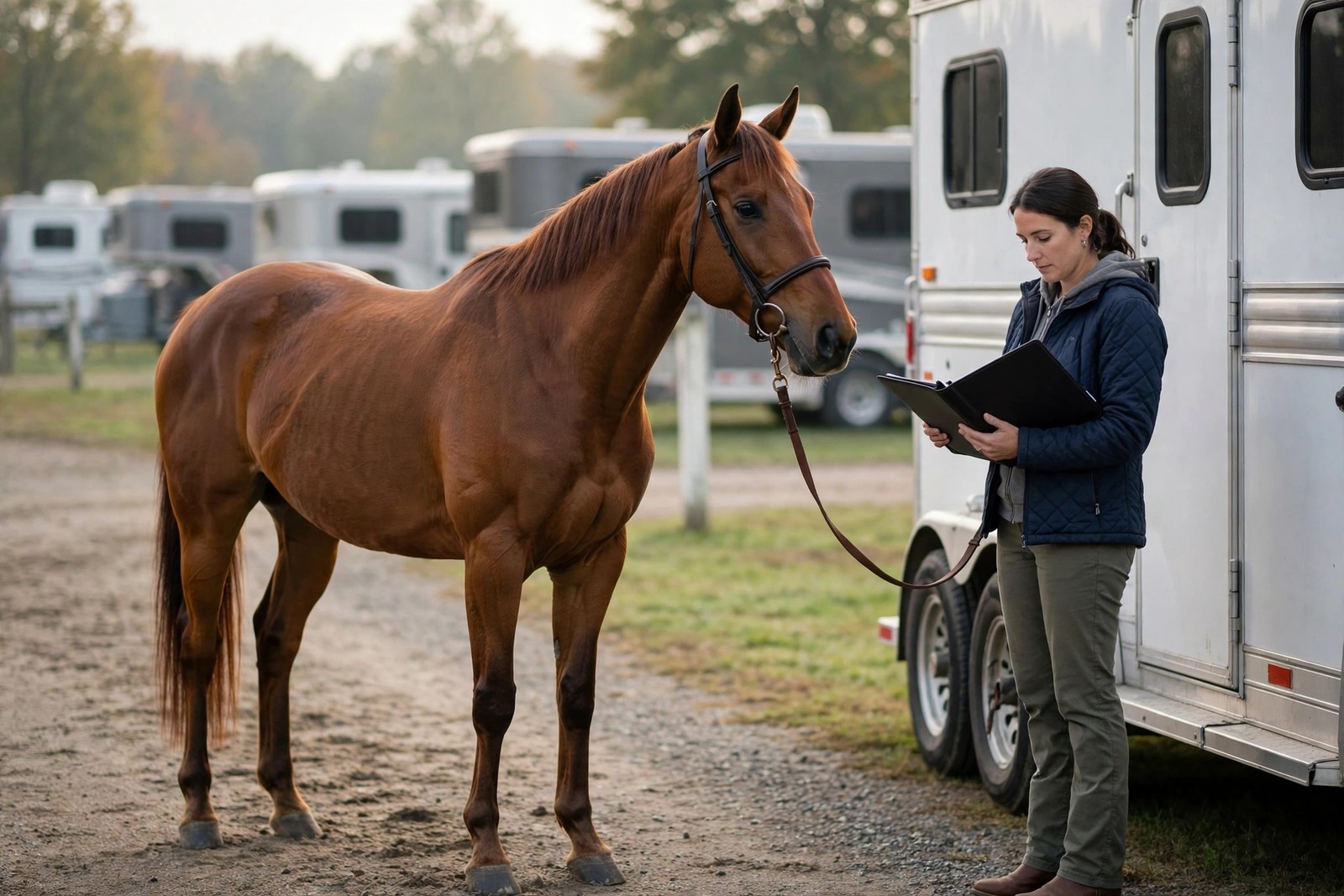
Horse paperwork is not one form. It is a small packet, and the gate steward or an official at a state line can ask for any part of it. Three documents form the core for most travel and competition in the United States, with registration and entry papers added for particular shows. Because validity windows and entry rules vary by state, venue, and governing body, confirm what your destination requires well before loading day — a missing certificate cannot be fixed in the trailer park.
The Negative Coggins Test
A Coggins is a blood test for equine infectious anemia, a viral disease with no cure that spreads between horses, mainly through biting flies. The test is named for the veterinarian who developed it, and a negative result is the standard proof a horse is not carrying the disease. A veterinarian draws the blood and records the horse's markings for identification on the form. Many venues and states treat a negative result as valid for twelve months, though some shows demand a more recent test, so read the event rules rather than assuming last season's paper still counts. Keep the original or the official digital copy with the horse whenever it travels, including to clinics and schooling shows that ask at the gate.
The Health Certificate
For interstate travel, and for many shows, a horse also needs a certificate of veterinary inspection — the health certificate. An accredited veterinarian examines the horse, confirms it shows no signs of contagious disease, records its identification and temperature, and signs the certificate for a named destination. These certificates are short-lived, commonly covering travel within thirty days of the inspection, and some destinations require an entry permit number or specific statements on the form. Book the vet visit to fall inside the window your trip needs, and check that the destination address, horse description, and owner name on the certificate match your other documents exactly, because a mismatch can stall you as surely as a missing page.
Vaccination Record and Registration Papers
Carry a dated record of the vaccinations your vet has given, signed or stamped by the practice where possible. Some venues set their own record requirements for entry, and the record is also the first thing a treating vet wants if a horse becomes ill away from home. Where the show or breed class requires it, add breed registration papers in the correct owner's name, plus any membership cards, entry forms, and lease or ownership documents the class rules call for. Identification ties the packet together: clear photographs of both sides and the face, and microchip details where the horse is chipped, help prove that the paperwork belongs to this horse.
Travel with originals protected in a dry folder and phone photographs as backup, and review expiry dates at the start of each season rather than the night before a show. KinsLe's Pet Passport holds the Coggins result, health certificate, vaccination record, and registration copies in one organised packet, so everything a gate or official asks for is in your hand at once.