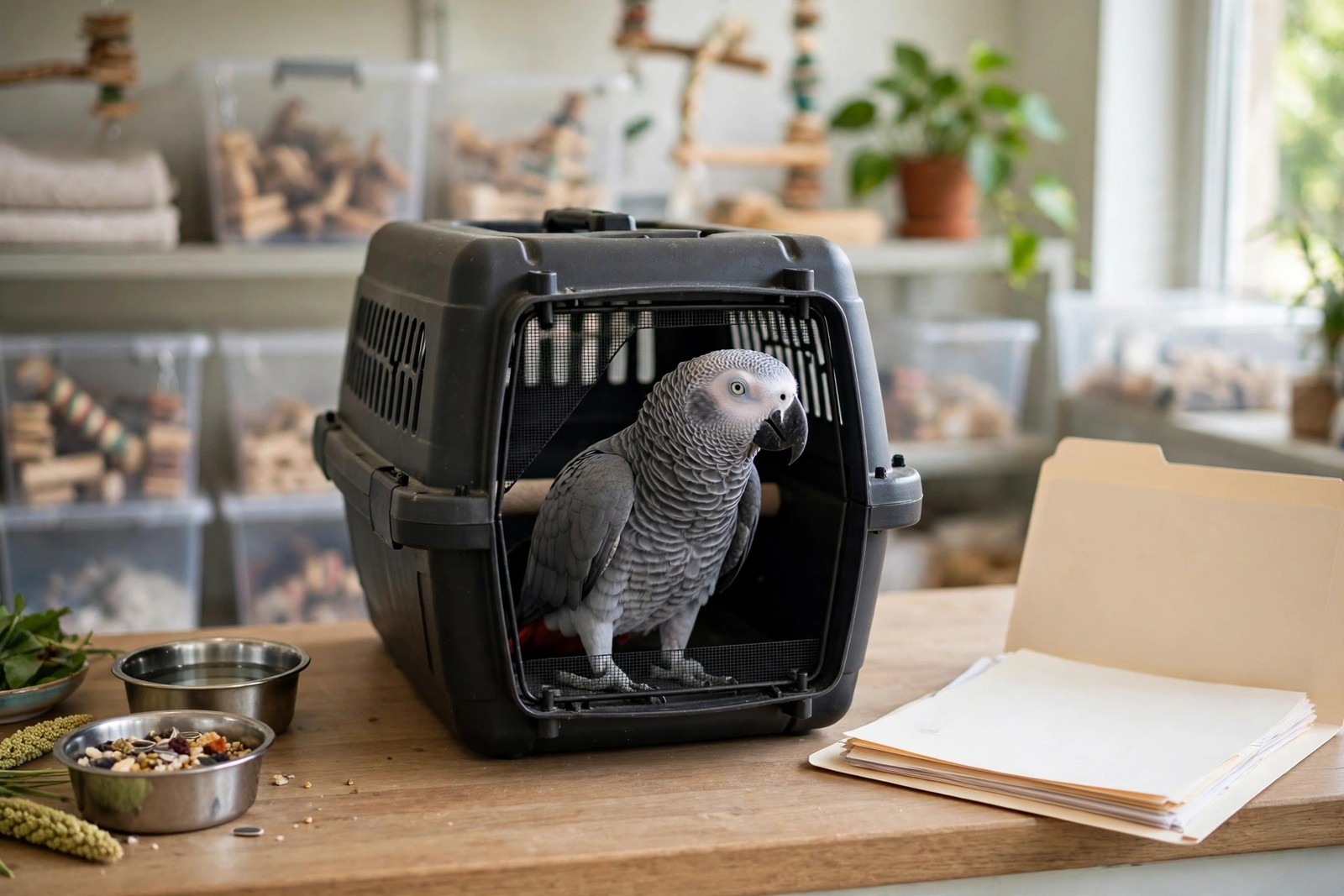
Bird boarding is stricter than most owners expect, and the reason is sound: boarding birds share airspace, and several serious avian diseases spread through feather dust and droppings before a bird looks ill. A careful boarder protects every bird in the room, including yours, by asking for health proof and detailed care instructions before accepting a booking.
Health Proof and Disease Testing
Most reputable bird boarders ask for evidence of a recent examination by an avian veterinarian, often within the past year, and many require a health certificate or a written statement that the bird is currently in good health. Depending on the species and the facility's policy, testing may be required for diseases such as psittacosis, which can also affect people, and beak and feather disease, which is highly contagious among parrots and devastating to young birds. Some boarders ask about polyomavirus vaccination status for species where it applies. Rules differ because risk differs: a facility boarding only small finches and budgies runs a different protocol from one housing large parrots, so ask exactly which documents and tests apply to your bird when you book, and allow time for a vet visit and lab results if testing is needed, because results can take days to return.
Identification and Ownership Details
Expect the intake form to record species, age if known, sex if known, colour mutations, and identification: a leg band number, a microchip number, or both, alongside clear photographs. Birds can be hard for non-owners to tell apart, and a boarder caring for several similar budgies or cockatiels relies on these details. Your own contact information, a second emergency contact who can make decisions, and proof the bird is yours complete the identification section.
Vet Contacts and Emergency Authorisation
The boarder needs your avian veterinarian's name, clinic, and phone number, plus the nearest emergency clinic offering bird care, because not every emergency practice treats birds confidently. Written authorisation for emergency treatment, with a clear statement about how costs will be covered, matters even more for birds than for dogs: a sick bird deteriorates in hours, and a boarder cannot wait for you to land and check messages before acting. State plainly any limits or instructions you want followed, and confirm the boarder can reach you or your named contact at all hours during the stay.
Diet, Medication, and Behaviour Instructions
Birds are creatures of routine, and abrupt diet change is dangerous because many parrots will starve rather than eat an unfamiliar food. Write down the exact staple diet, the fresh foods offered and how they are prepared, treat rules, and water routine, and supply the bird's own food where the boarder allows it. Medication instructions need the same precision a sitter would get: name, the amount your veterinarian prescribed, timing, and how it is given. Finish with behaviour notes: handling tolerance, step-up reliability, known fears such as towels or brooms, sleep routine including cage cover and lights-out time, favourite toys, and any feather-damaging behaviour the staff should monitor rather than mistake for a new problem.
Keeping the health proof, test results, and care instructions together in KinsLe Pet Passport means the packet a boarder requests can be handed over complete at booking, not assembled in a rush at drop-off.