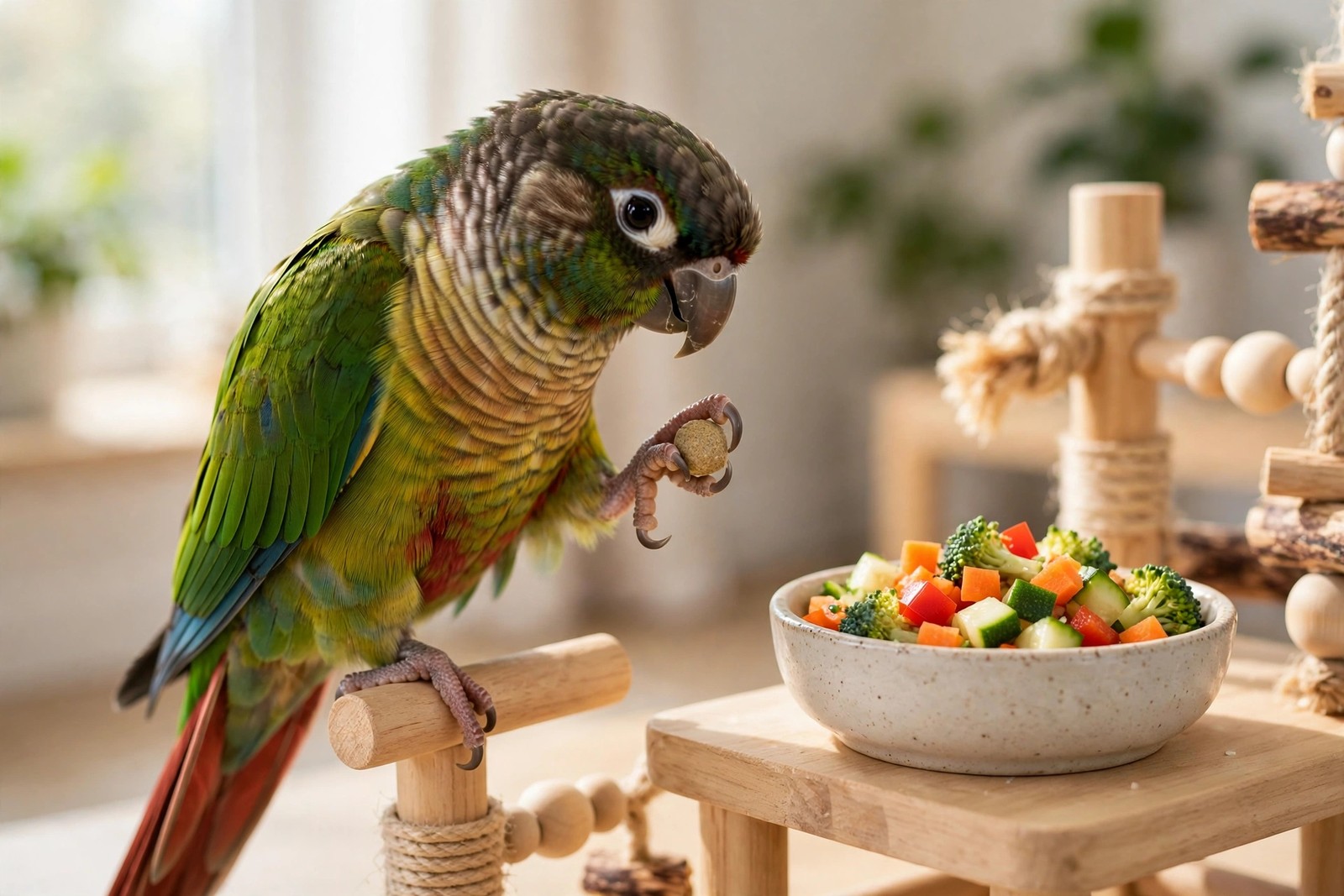
A pellet earns its place in a conure's bowl by doing the nutritional work that a seed-heavy diet cannot. Seed alone is fatty and short on calcium and several vitamins, and a conure picking favourites from a mix eats an even narrower diet than the bag promises. A formulated pellet is ground ingredients baked into a uniform piece, so every mouthful carries the same balance. Choosing well comes down to size, formulation, freshness, and how honestly the label reads.
Size and Form That Suit a Conure
Match the pellet to the beak. A green-cheeked conure handles a small crumble or mini pellet, while a larger sun or jenday conure manages a small-to-medium piece it can hold in one foot and bite. Oversized pellets mostly become floor confetti, which wastes money and makes it impossible to judge how much the bird actually ate. Undersized dust is ignored the same way. Buy a small first bag, watch what disappears from the bowl over several days, and check the droppings and the cage floor before committing to a larger sack.
Reading the Label Like an Owner, Not a Marketer
Choose a pellet described as formulated or complete for parrots, with recognisable whole ingredients listed first. Keep added sugar low, and be wary of rainbow-coloured, fruit-scented mixes: the colours add nothing for the bird, and bright dyes can tint droppings, which removes one of your easiest daily health checks. A plain brown or tan pellet looks dull and does the job better. Check the bag is sealed, in date, and stored cool and dry once opened; stale, dusty pellets that smell rancid or musty should go in the bin, not the bowl. Bulk-bin pellets of unknown age are a false saving for a bird this small.
Pellets Are the Base, Not the Whole Diet
Pellets should form the main share of what a conure eats, but the bowl still needs company: chopped vegetables such as sweet pepper, carrot, broccoli, and leafy greens offered daily, a little fruit, and seed reserved as a training reward or a small measured extra rather than a second full bowl. Fresh water goes in daily, and uneaten fresh food comes out after a few hours before it spoils. If your vet advises a different balance for a bird with a specific condition, that advice outranks any general rule here.
Changing Over Without a Hunger Strike
Never swap a seed-eating conure by simply removing the seed; a bird that does not yet recognise pellets as food can starve beside a full bowl. Mix a few pellets into the familiar seed, raise the proportion gradually over several weeks, offer pellets first in the morning when the bird is hungriest, and weigh your conure weekly on a gram scale through the change. Steady weight plus normal droppings mean the new food is genuinely being eaten. Note the starting product, the mix stages, and those weights as you go, and KinsLe's Pet Passport keeps that changeover record with your conure's other health notes, ready for the next vet visit.