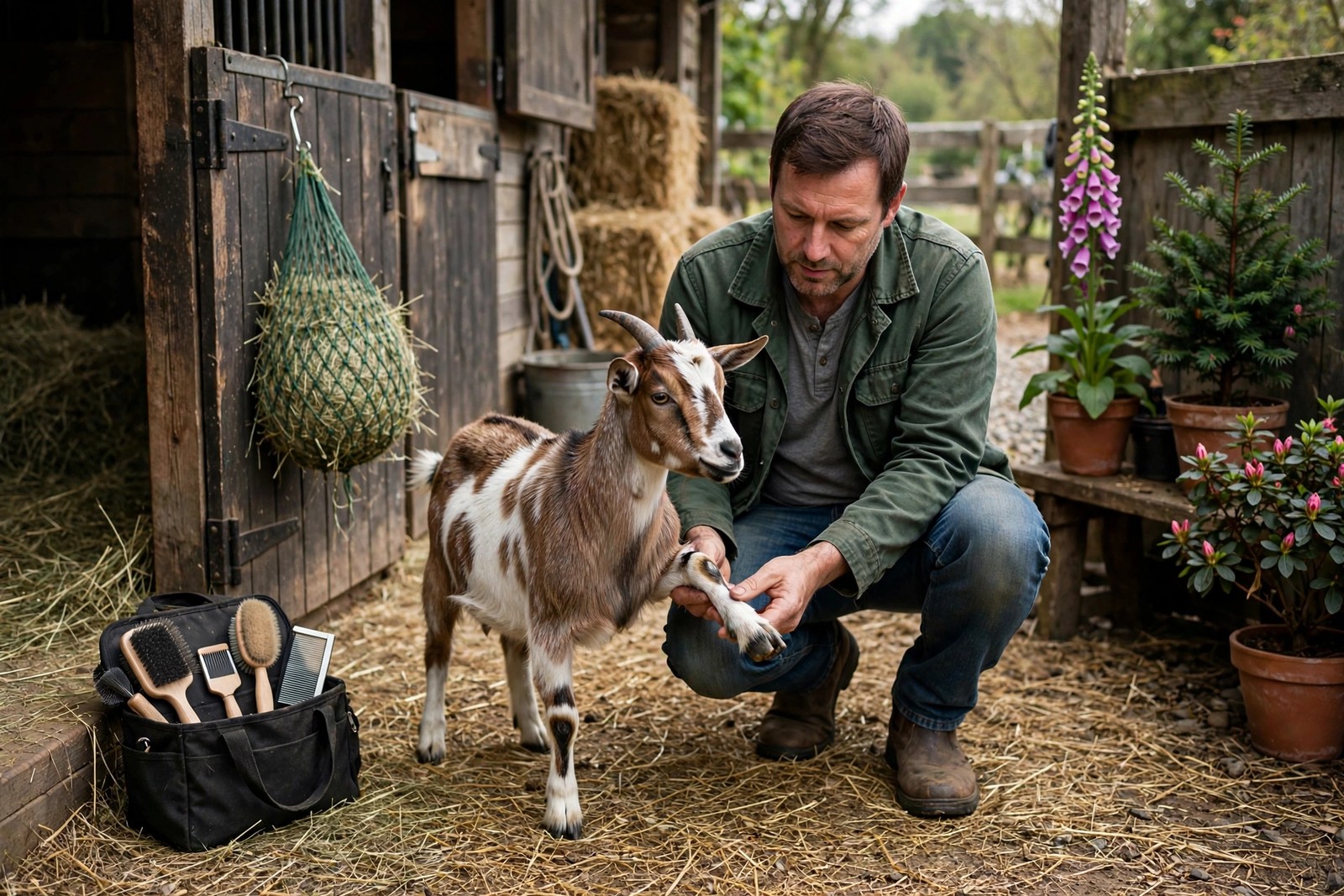
The dangerous list for goats is long, but the headline plants are: rhododendron, azalea, and other Pieris-family garden shrubs (among the commonest goat poisonings — even a few leaves can cause vomiting, drooling, weakness, and heart problems), yew (extremely toxic, tiny amounts can be fatal — garden clippings are the classic route), ragwort (cumulative liver poison, most dangerous dried in hay), bracken fern (cumulative, damages bone marrow and causes bleeding disorders with long exposure), laburnum, laurel, oak in quantity (acorns and young leaves — tannin poisoning of gut and kidneys), hemlock and water hemlock, foxglove, nightshades, plus stone-fruit leaves once wilted (cherry, plum — wilting concentrates cyanide compounds). Goats are browsers who try a bit of everything within reach, so a paddock containing toxic plants puts the whole herd at risk rather than testing only the cautious.
Clippings and Boredom Are the Usual Routes
Most goat poisonings follow a pattern: garden clippings thrown over the fence by a kind neighbour, hedge trimmings left within reach, a goat escaping into a garden, or hungry goats in a bare paddock stretching through fencing to reach shrubs they would ignore with full bellies. So prevention is fencing, full forage, and talking to neighbours — nobody dumps clippings into your field, ever. Walk your boundaries knowing your own plants, remove ragwort from grazing and hay ground (and wear gloves; it is toxic through skin over time too), and never let goats browse unknown hedges on the way to anywhere. If you suspect poisoning — drooling, vomiting attempts (goats rarely vomit, so retching matters), staggering, weakness, abdominal pain — remove the animals from the source, keep a sample of the plant, and call a vet immediately with the plant name if you know it: treatment is time-sensitive and generic 'watch and wait' loses goats.
Working with your vet after a suspected poisoning
Ring the vet as soon as poisoning is suspected, not after a night of watching. The details that shape the call are specific to this risk: which plant was within reach, how much of it looks eaten, when the goats were last seen behaving normally, and which signs are showing now — retching, drooling, staggering, weakness or pain. Photograph the plant where it grows and take a sample along, because naming it correctly can change what the vet does next.
Leave diagnosis and any treatment decisions to that examination. Your part is the record around it: note the hour signs began, which animals shared the paddock, and what was removed or fenced off afterwards. A dated paddock note — plant checks walked, ragwort pulled, clippings found and cleared — shows the pattern across a season far better than memory does when the vet asks what changed.
When a goat is rushed in after eating something suspect, its dates and earlier vet history can go with it inside KinsLe's Pet Passport.