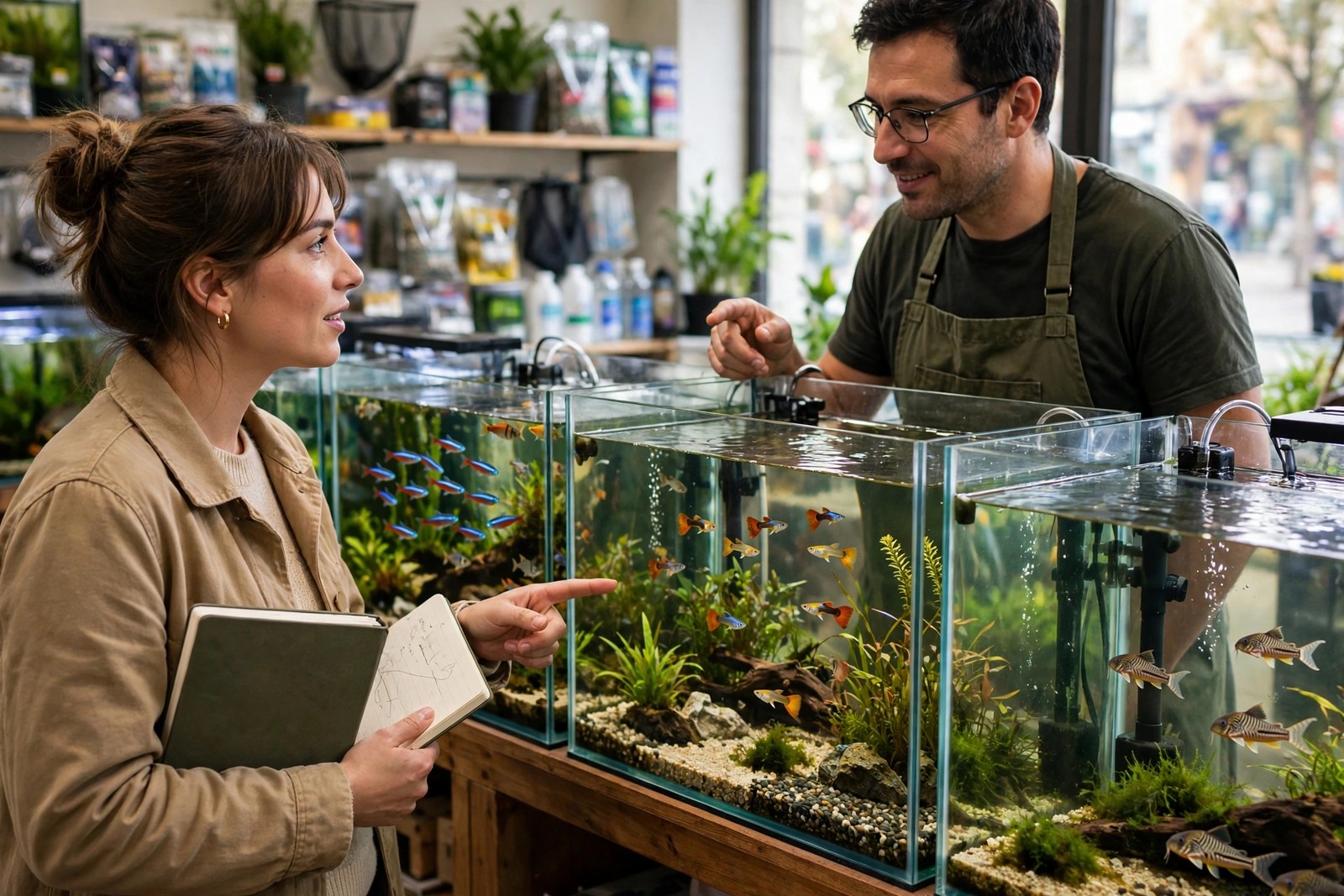
Questions about the fish in front of you
Start with the individual fish, not the species label. Ask how long this fish has been in the shop or the seller's tank, what it has been eating, and whether it feeds eagerly when food goes in. Ask whether it has been treated for anything, quarantined after arrival, or kept with fish that later became ill. A seller who can answer plainly, and who will let you watch the fish swim and feed before you commit, is giving you useful information; vague answers about a fish that hides, gasps or carries spots are a reason to walk away from that fish, however much you liked its colours.
Questions about water, asked before money changes hands
A fish moves from one body of water to another on buying day, so ask what it is living in now. What temperature is the shop tank held at, and roughly how hard and acidic is the water? How does that compare with your tank at home, and how long should acclimation take? Ask, too, whether your home tank is actually ready: has it finished cycling, and can the seller see a recent test result? Buying fish for a tank that is still cycling is the classic first mistake, and a good seller will happily hold a fish, or sell you the tank first and the fish a few weeks later.
Questions about the adult fish, not the juvenile
The fish in the sales tank is often a youngster, so ask what you are really signing up for. How large will this species grow, how long does it usually live, and does it need company of its own kind to settle? Ask what it eats as an adult, whether it digs, jumps, nips fins or rearranges plants, and what tank mates keepers pair with it successfully. Ask also the awkward question early: if this fish outgrows your tank or your circumstances change, will the shop take it back or help rehome it? Hearing the answer now is far kinder than searching for one later with a bucket in your hands.
Questions about cost and the first month
Finally, price the whole commitment, not the fish alone. Ask what food it needs and how often, what a month of water conditioner, filter media and electricity roughly adds up to, and which spare items — a backup heater, a small hospital tank, basic medicines kept in date — are worth having from the start. Ask who feeds the fish when you travel, and what the plan is during a power cut. Write the answers down while they are fresh, because the first month throws up enough new questions without re-litigating the old ones.
Should the fish change homes later, KinsLe's Transferrable Profiles pass the profile along, records included, for the next keeper.