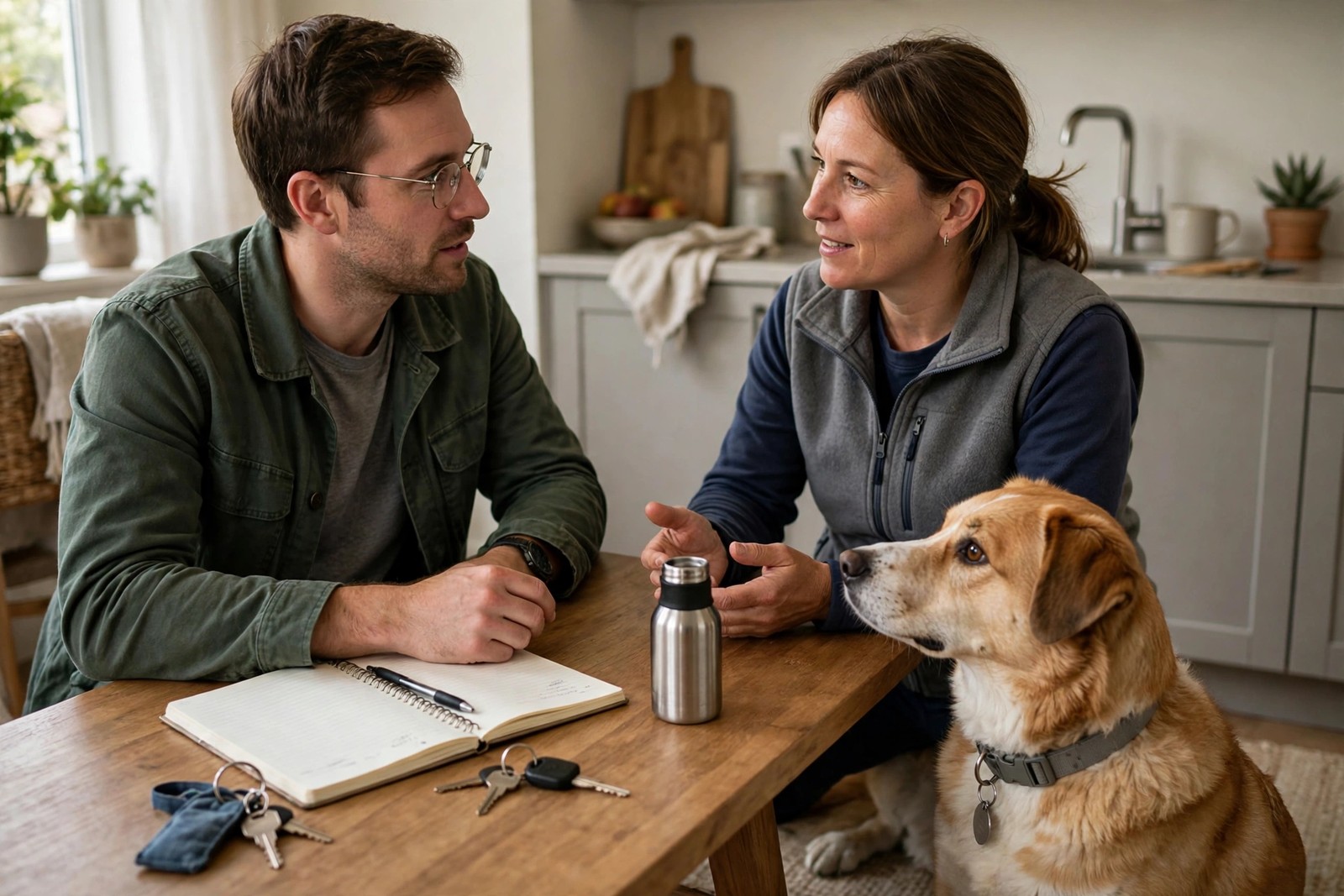
A rescue interview can feel personal, and it helps to know that the questions follow a pattern. Staff are testing one thing: whether a specific dog's needs fit the shape of your working week and your home. The two areas that decide many matches are time and territory, your schedule and your property, and a rescue will explore both in detail before talking about which dog might suit you.
Questions About Your Working Week
Expect to be asked what hours you work, whether those hours are fixed or rotating, how long your commute takes, and which days you work from home, if any. The follow-up questions matter more than the headline answers. How long would the dog be alone in one stretch on a normal day? Who lets the dog out for a toilet break during that stretch, and is that arrangement already in place or still a hope? What happens during overtime, work trips, and holidays: does the dog travel with you, stay with family, or use kennels or a sitter, and have you costed that cover? A rescue is listening for a plan that survives a bad week, not a perfect week, so answers that name a backup person carry weight.
Some rescues set a guideline for alone time, often around four hours for an adult dog without a break, though the figure varies by organisation and by dog. A puppy, a newly retired racer, or a dog with separation worries will be matched only to homes with far more cover. Say plainly if your pattern is changing soon, because a match made on a schedule you are about to leave helps nobody.
Questions About the Home Itself
On the home side, expect questions about the type of property, the floor you live on if you are in a flat, and access to outdoor space. Garden questions get specific: how high and secure is the fencing, do gates close and latch, is the garden shared, and could a dog dig under or jump over any section? If you rent, expect to show written permission from your landlord or housing provider that covers keeping a dog, because verbal assurance is rarely accepted. The checker may ask where the dog will sleep, where the dog will be left when you go out, and which rooms are off limits, along with hazards such as unfenced ponds, steep open stairs, or a front door that opens straight onto a road.
Questions About Who Lives There
A rescue will ask who lives in the home full time, who visits often, and the ages of children in the household, because a dog who is calm with teenagers may be a poor match for toddlers. Other pets get their own questions: species, age, temperament, neutering status, and where a new dog would be fed and rested away from resident animals during settling. Expect questions about your experience with dogs, any training classes you would attend, your arrangements for exercise in bad weather, and how you would handle a dog who chews, barks, or toilet-trains slowly. These are matching questions rather than traps, and a thoughtful answer with a small uncertainty in it reads better than a polished promise.
How to Prepare Your Answers
Before the interview, walk your own week and property as a checker would. Time your absence honestly, photograph fencing and gates, obtain landlord permission in writing, and agree cover with the people who would provide it. Bring questions of your own about the dog's alone-time tolerance and exercise needs. Presenting that preparation as a simple rota, and later running the same rota through KinsLe's Care Teams once the dog arrives, gives the rescue a worked example rather than a hopeful description.