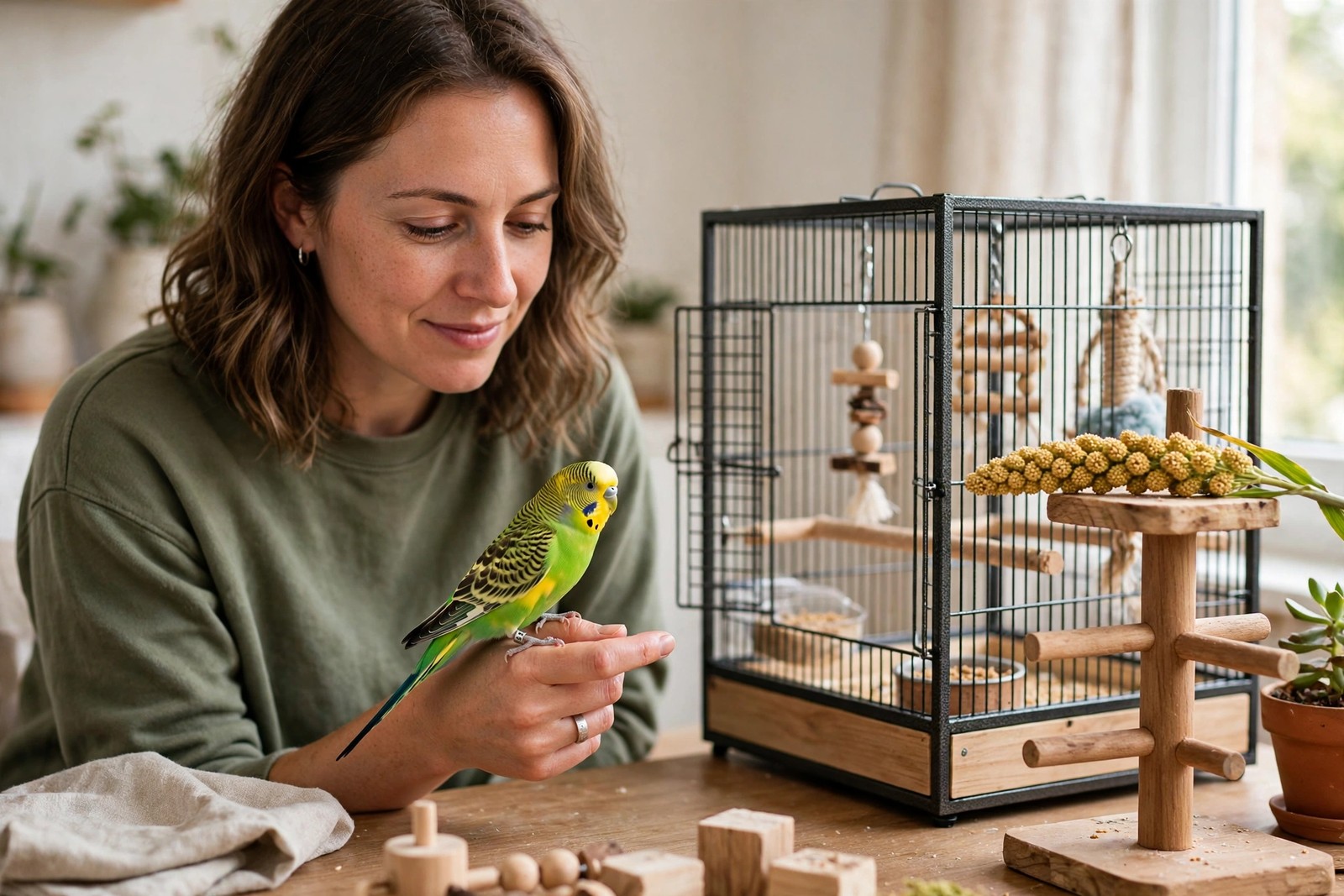
The paperwork that follows a lineage-recorded or banded bird is its identity file, and it starts with the breeder. Expect a hatch record giving species, hatch date and the closed band number fitted as a chick, the parents' details behind any lineage claim, and — where the breeder arranged them — sexing results and early health checks. Weaning notes and the diet the young bird was eating complete the handover, because they let the next home continue what the bird already knows.
What Owners Need to Know
These breeder records matter long after sale day: a vet meeting the bird for the first time, a boarder checking identity, or a future owner tracing age all start from the band number and hatch date the breeder supplied. Keep identification, health history, feeding notes and emergency contacts with those original papers, updated as things change rather than reconstructed from memory under stress.
A banded bird's own signals still deserve watching — droppings, appetite, vocalisation and posture report on health in ways no certificate can. What the paperwork adds is certainty about species and age, and those two facts shape almost every care and behaviour answer for the bird's whole life.
Practical Steps That Help
Work through these in order and give each one time to become routine before you judge it:
- Keep ID details, microchip or band numbers, and a recent clear photo together
- Store vet history, vaccinations, and medication notes in date order
- Write the daily routine down — food, amounts, times, quirks, and vet contact
- Update records the day something changes, not at the next visit
- Share a copy with your emergency contact and your regular sitter
Small and steady beats big and occasional in almost every area of pet care. A few calm minutes spent filing each new record as it arrives — a vet receipt, a weight note, a change of diet — will keep the bird's file trustworthy more reliably than one long sort-out a year, and it is far easier on a busy owner.
Making It Part of Everyday Life
Keep a simple note alongside the breeder papers of what changes over time: foods accepted, vets seen, anything unusual. A young bird's file grows fast in its first year, and a dated note makes that growth obvious — and gives a veterinarian, boarder or future owner the bird's real story rather than a summary. Owners who can produce a banded bird's full history on request are rarely doing anything complicated — they filed the breeder's papers on day one, matched the band number to the bird, and added each new record as it arrived. Review the file whenever something changes: a new vet, a new home, or the bird passing to a new owner. Filed in KinsLe under the bird's own Pet Passport, the file simply grows: each certificate, check-up note and change of keeper joins the last, so the story stays continuous from the nest onwards.