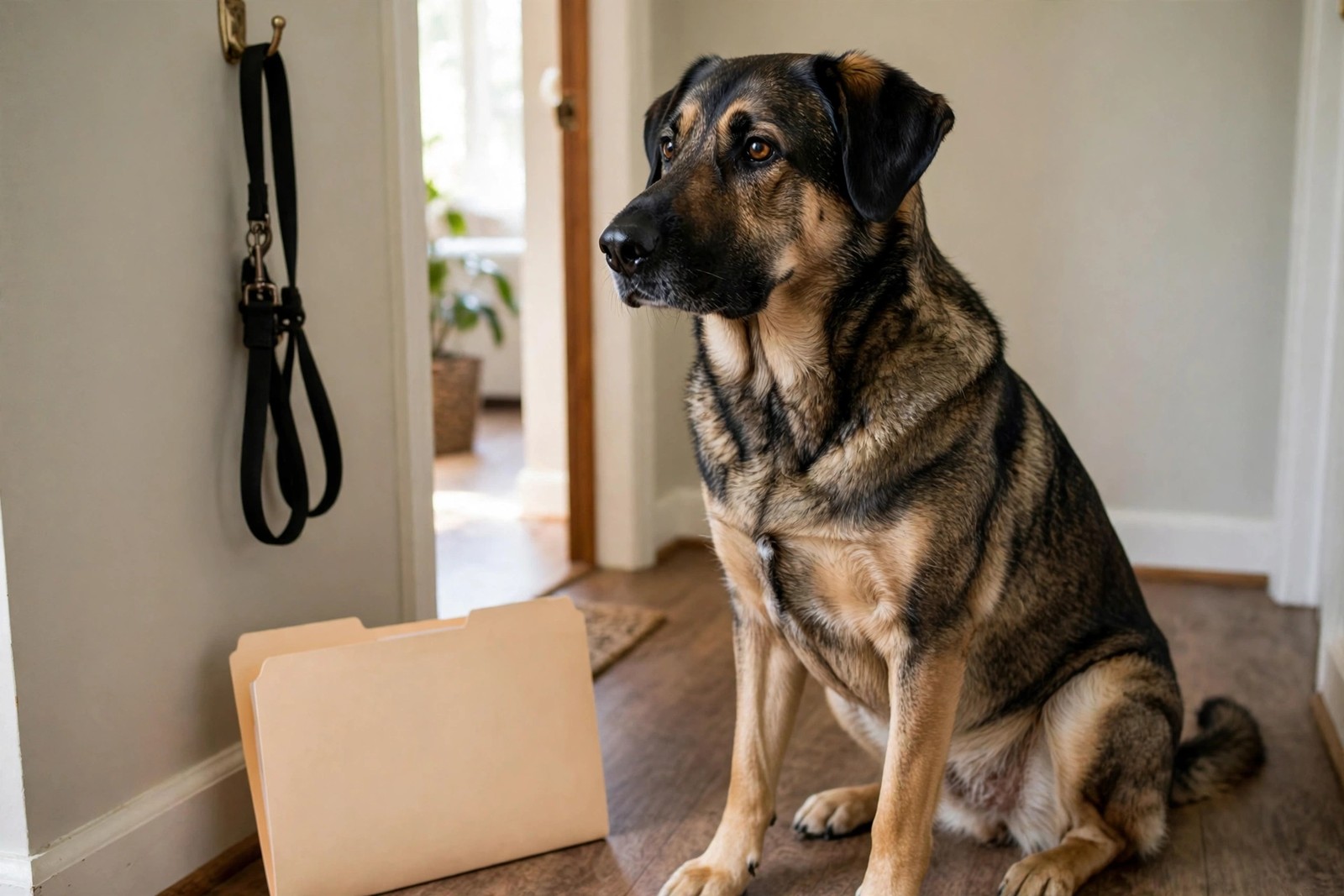
A dog's file is bigger than most owners expect, because dogs leave the house, meet other dogs, and are licensed in a way indoor pets often are not. Build it in layers: legal papers, health history, prevention dates, and the written routine another person would need to run your dog's day safely.
Legal and Identity Papers
Keep the current dog licence receipt where licensing applies, the rabies certificate with its expiry date, and proof of ownership such as adoption or purchase paperwork. Record the microchip number and keep the registration confirmation showing your current address and phone number, then check that registration after every move. Add recent photos from the front and side, plus close-ups of distinctive markings, a docked tail, or a greying muzzle. If your housing or home insurance ever asked about your dog, keep that correspondence too; producing it months later from memory is miserable work.
Vet History and Prevention Dates
File visit summaries, vaccination records, laboratory results, imaging reports, surgery and dental notes, and discharge instructions in date order. Keep a separate dated line for parasite prevention: which product type was given, on what date, and when the next one is due, without relying on an empty box in a cupboard to remind you. Note allergies, past reactions to anaesthesia or medication, chronic conditions, and your dog's weight at each visit. For a senior dog, that weight and bloodwork trail is often the first place a vet spots a change worth investigating.
The Papers Other People Will Ask For
Boarders, daycares, groomers, and trainers each ask for slightly different proof, usually current vaccinations and an emergency contact, sometimes a recent vet statement. Keep one clean copy set for handing out so your originals stay home. Add training certificates or class notes if your dog is working on reactivity or has completed a course a new trainer should know about. Then write the routine page: food and measured amounts, walk times and distances, exercise limits, commands used, triggers on walks, favourite settling cues, and who may authorise emergency treatment if you cannot be reached.
Keeping the File Alive
Store paper originals in one folder, digital copies where a partner or family member can reach them, and review everything twice a year and after any vet visit, move, or new medication. KinsLe's Pet Passport keeps a dog's licence, certificates, and routine page together in one portable packet, so whoever needs the file gets the current version rather than last year's copy.