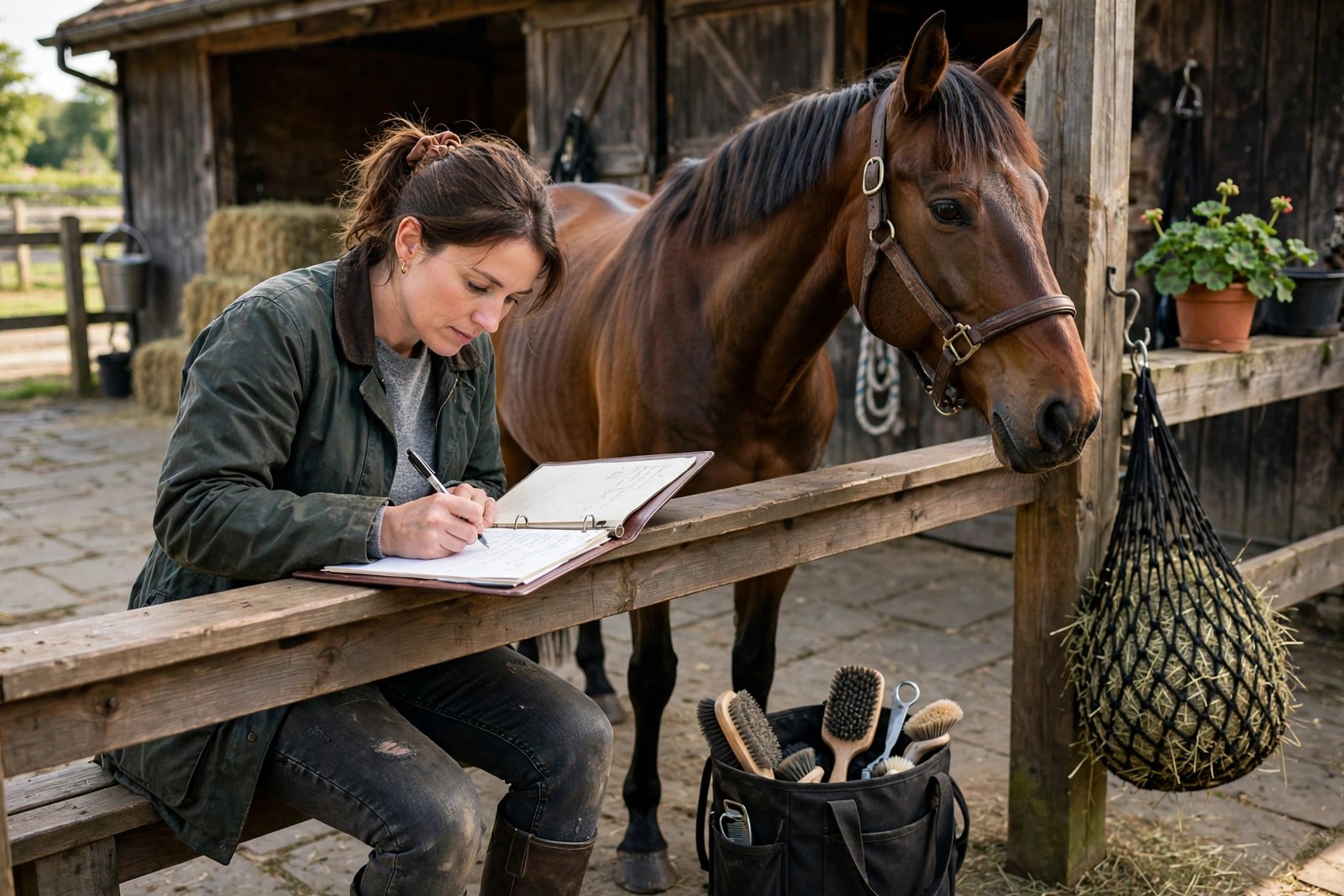
Keep a file for each horse that covers identity, health and everyday management, rather than a single yard notebook where one horse's history blurs into another's. A useful record answers practical questions quickly: when were his teeth last checked, which feet were shod and how, when was the last Coggins test taken, what feed is he on now, and what did that earlier lameness look like before it settled?
Identity and ownership papers
Start with clear recent photographs from both sides, front and back, plus close views of markings, whorls, scars and brands. Record colour, height, age, sex, microchip number where one is held, and passport or registration details where they apply to your horse. Keep purchase papers, loan agreements, insurance documents and previous owner details in the same section, so identity can be proved and history can be traced without hunting through messages on the day it matters.
Update the photographs when a coat changes with the seasons, a scar appears, or a young horse matures, because an old summer photo may not help anyone identify a clipped horse in winter rugs.
Preventive health: vaccinations, dental, deworming and tests
Log vaccination dates, what was given as recorded by your vet, and the next due date your vet sets, because yards, competitions and transport may ask for that history. Log dental examinations and work in the same way, noting sharp points, extractions, wolf teeth or a recommendation to recheck sooner, since dental notes explain later changes in eating, bit acceptance and condition.
Record deworming dates, the product name as advised by your vet, and any worm egg count results you keep, without turning the file into a self-written treatment plan; parasite decisions belong with your vet and your yard's programme. Keep Coggins test dates and results where that test is required for travel, shows or boarding, filed by date so an expiring result is obvious before a journey is booked. Add routine vet visits, blood results and imaging reports in date order.
Farrier, feet and soundness history
Farrier records deserve their own section: visit dates, whether the horse was shod or trimmed, shoe type and size if you record them, stud holes, pads, remedial work, and comments about cracks, thin soles, imbalance or a foot that wears unevenly. Feet change slowly, and a farrier who can read two years of notes works differently from one who sees only today's hoof.
Beside those notes, keep a lameness and illness history: the date signs began, which leg or system seemed affected, what work the horse was doing, what your vet found, what rest or treatment your vet prescribed, and when the horse returned to work. Record injuries, colic episodes, skin problems, eye problems and allergic reactions in the same dated style, including photographs where they help show healing or recurrence.
Feed, condition and daily management
Write down current feed, forage, supplements, quantities by weight where you measure them, turnout, stabling and rug routines, and any rule that matters, such as a horse who must not share a rich paddock or who needs hay soaked as your vet advised. Track weight or condition regularly using the same method each time, and note the score or tape reading with the date, because gradual loss is easy to miss when you see the horse daily.
Finish the file with emergency contacts, your vet and farrier numbers, transport details, and handling notes a yard manager would need at midnight: where he loads well, where he is needle-shy, and which gate or stable he uses. Review the whole file when something changes, not only when a visit is due.
In KinsLe's Pet Passport, those identity, health, farrier and feeding records sit together in one portable packet for each horse, ready for a vet visit, a farrier handoff, travel paperwork or a new yard.