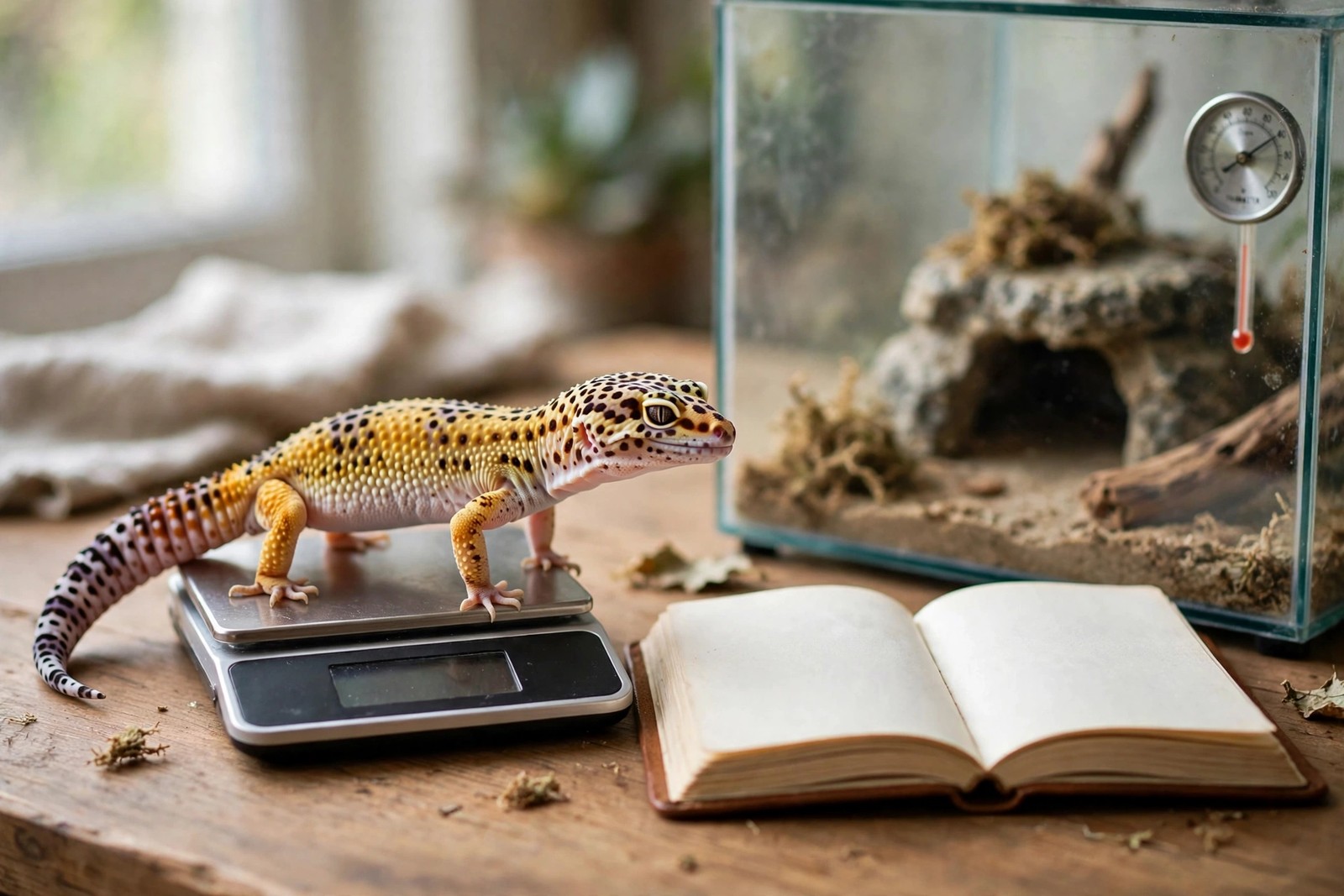
A reptile's health story is written in logs, not in the vaccination files owners of dogs and cats rely on. Reptiles are not routinely vaccinated, and most problems a vet is asked about — a refused feed, a stuck shed, slow weight loss — are diagnosed from patterns over weeks. The keeper who can say exactly what was eaten, when the last complete shed happened, and what the enclosure temperatures were gives that vet something solid to work from.
The Feeding Log
Record the date of every feed, what was offered, its size, and the outcome: eaten at once, taken later, or refused. Note live or pre-killed prey where that applies, supplements used, and any regurgitation. A single refused meal in a healthy adult snake may mean little; three refusals alongside a falling weight is a pattern, and the log shows where it began. For lizards and tortoises, note staple greens or insects offered and anything new that was rejected or caused loose stools, because appetite changes in herbivores are judged against what the bowl actually held.
Sheds, Weight, and Growth
Log each shed with its date and whether it came away in one piece or in patches, including whether the eye caps and tail tip cleared. Retained shed is often the first visible sign that humidity is wrong, and dates prove whether the problem is new or repeating. Weigh monthly on a kitchen gram scale for small species, more often for growing juveniles, and measure length a few times a year. Sudden loss, or a juvenile that stops gaining, belongs in a vet conversation, and a written series of weights carries far more weight, in every sense, than a keeper's impression that the animal feels thinner.
Enclosure Settings and Identity
Because the enclosure drives appetite, digestion, and shedding, record its settings alongside the animal: warm-end and cool-end temperatures, humidity range, the type of ultraviolet lighting and the date the lamp was fitted, since output fades long before the bulb fails, plus substrate changes and deep-clean dates. Keep identity records too — species and morph, sex if known, arrival date, source, and the diet the animal arrived on — and clear photographs of both sides and any distinctive patterning, updated as colours change with growth. Add vet visit summaries, faecal test results, and any medication the vet has prescribed, kept as a record of professional care rather than instructions to repeat it.
A notebook by the enclosure works; a shared digital record works better when a sitter or a second keeper is involved. KinsLe's Pet Passport gathers the feeding and shed logs, weight history, enclosure settings, photographs, and vet summaries into one portable packet, so the complete story travels with the reptile to any appointment or new home.