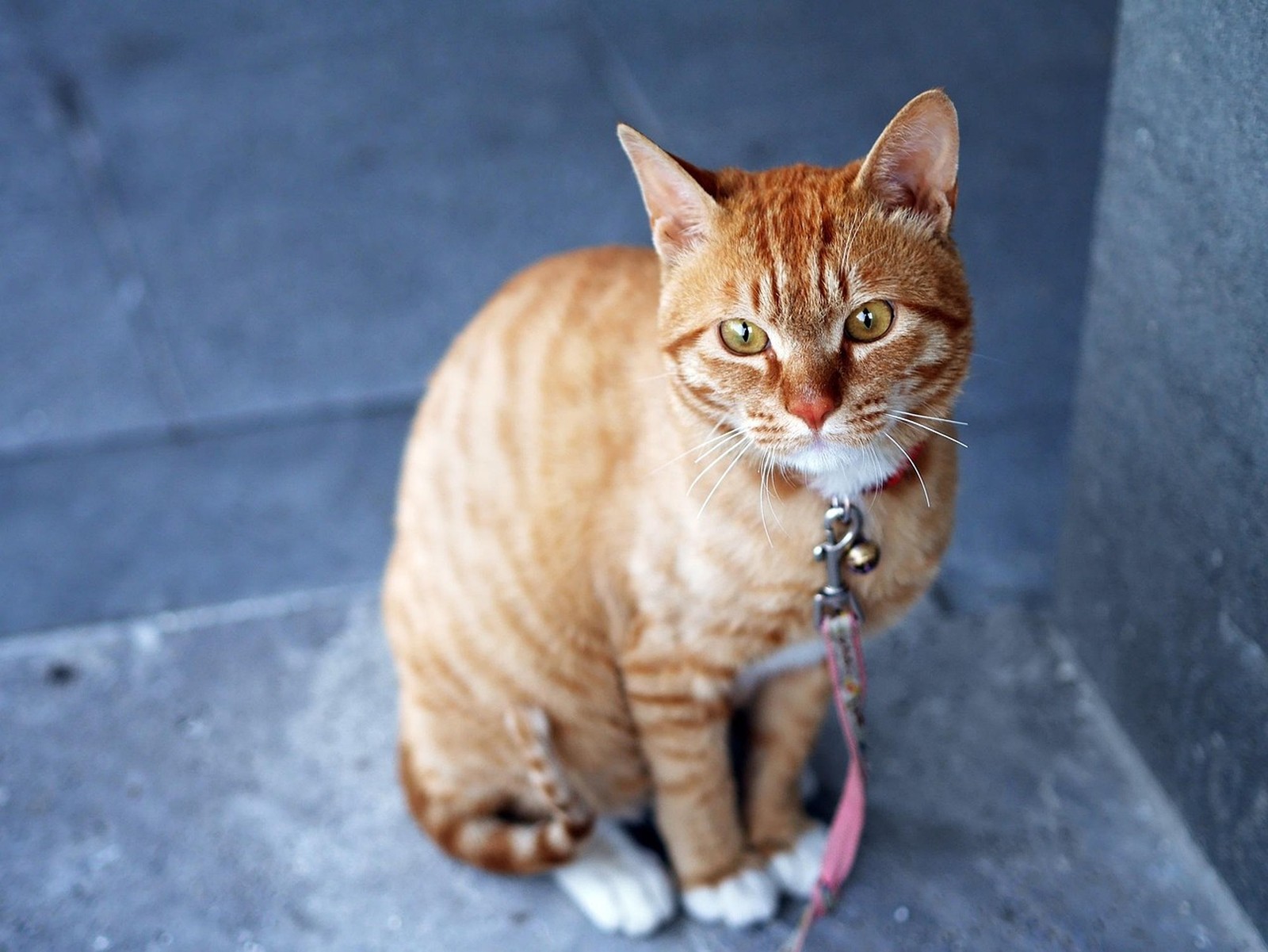
For a cat who goes outside, one feature outranks colour, material, and style: the collar must break away. Cats squeeze through gaps, climb, and drop from fences, and a collar that catches on a branch, a hook, or another animal's claw becomes a trap around the neck. A breakaway collar uses a clasp designed to open under a sharp load, so the cat pulls free and loses the collar instead of being held by it.
Why Other Collar Types Fail Cats
An ordinary buckle collar that stays fastened is the dangerous default, however sturdy it looks. Stretchy all-elastic collars carry a different risk: a cat working to remove one can trap a front leg or its lower jaw inside the loop, and injuries from exactly that are a familiar sight in vet clinics. Harnesses are for supervised lead walks, not for wearing loose outdoors, where straps offer even more snag points. If a collar does not release, it does not belong on an unsupervised cat — that rule has no exceptions for cats who have worn one safely so far, because the accident only has to happen once.
Fit, Tags, and Night Visibility
Fit the collar snugly enough that it cannot slip over the jaw or a paw, with room for two fingers laid flat between the collar and the neck. Check the fit weekly on a growing kitten and whenever an adult's weight changes, and test the clasp by hand: it should hold through normal scratching and play but open to a firm tug. Expect to replace lost collars; a missing collar is the system working, and keeping a spare at home is part of the cost of outdoor access.
Identification rides on that collar. A small, light, engraved tag with your mobile number is the fastest route home, because the finder can call without any equipment or a trip to a vet for a chip scan. A reflective strip or stitching earns its place if your cat is out at dawn or dusk near roads, and a bell may reduce, though never remove, the chance of a successful hunt on wildlife. Microchipping remains the backup identification that cannot fall off, and the two work as a pair: the collar speaks to anyone who finds the cat today, the chip speaks when the collar is gone.
Inspect the collar monthly for frayed edges, a clasp that has gone slack or stiff, and a tag whose engraving is still legible. With KinsLe's Verified QR ID Pet Profiles, a lightweight scannable tag on that breakaway collar opens your cat's verified profile for a finder, so contact and care details are one scan away.