
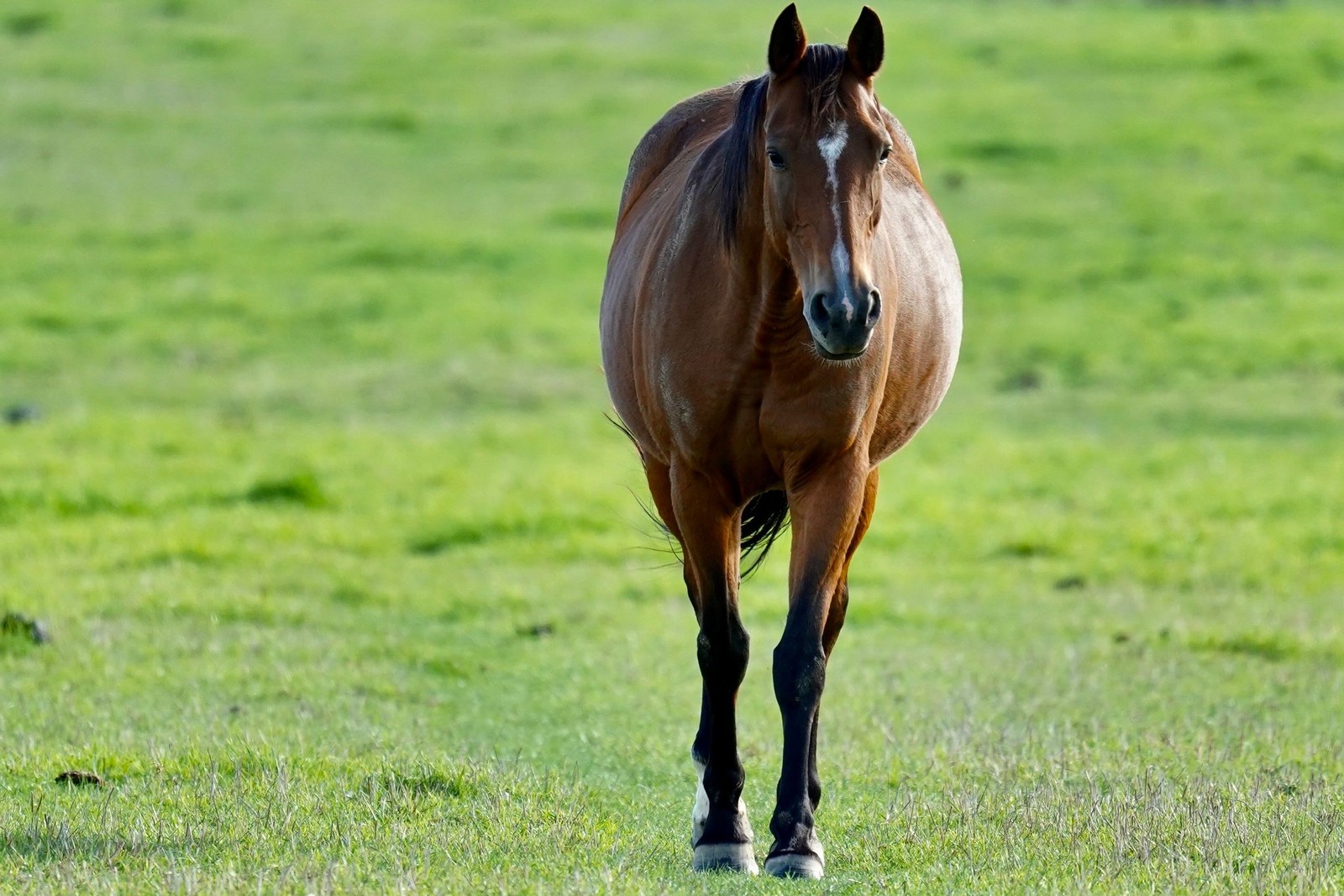
Pasture is living grass your horse harvests himself by grazing, while hay is grass or legume forage that was cut, dried, and baled for later feeding. Both count as forage — the foundation of every horse's diet — but they behave differently once eaten. The short version: grazing is natural and self-paced; hay is managed by you, which gives you more control but more responsibility.
What makes pasture special
A horse at pasture chooses when to graze, moves between bites, socializes, and chews for up to sixteen hours a day — exactly what his digestive tract expects. Fresh grass is highly palatable, high in moisture, and rich in vitamins A and E that degrade during hay curing. Grazing also keeps horses moving, which supports hoof health, digestion, and sane behavior. The catch is that you do not control intake: rich spring grass can be very high in sugars (fructans), and a horse turned out on lush pasture all day can founder or blow up like a balloon.
What hay gives you that pasture cannot
Hay is forage on your schedule. You can weigh it, choose the cutting, and feed a consistent amount rain or shine. Second-cutting hay is generally leafier and softer than coarse first cutting; alfalfa runs richer in protein and calcium than timothy or orchard grass. Hay also keeps horses eating when pasture goes dormant in summer heat or winter cold. The tradeoff: hay loses some vitamins in curing, it can carry dust and mold if baled wrong, and you must supply the chewing time the horse would otherwise get for free.
Managing the mix through the seasons
Most owners blend the two. In spring, introduce pasture gradually — an hour a day building up over two weeks — because a horse that has wintered on hay cannot handle sudden access to sugar-loaded grass. In summer drought, pasture may be little more than a dirt lot, and hay carries the load. In winter, dormant grass offers almost no nutrition, so hay becomes the entire forage program. Muzzle use, strip grazing with temporary fencing, and nighttime-only turnout (grass sugars peak in afternoon sun) are all legitimate tools for horses that need limited grazing.
Safety notes
Check pasture for toxic plants — yew, oleander, red maple, and black walnut are genuinely dangerous to horses — and walk fence lines regularly. Horses turned out on pasture still need fresh water and mineral access, and overweight horses or those with metabolic issues need veterinary guidance on grazing limits, not guesswork.
One profile, the whole feeding picture
Because pasture time and hay rations change with the season, it helps to keep the whole picture in one place the family can see. KinsLe's Family Sharing gives each horse a per-pet care circle with roles, so pasture schedules, hay changes, and notes stay visible to everyone helping. Family Sharing in KinsLe also shows a spouse or barn helper checking from home which field your horse grazed today and what forage went out at night.