
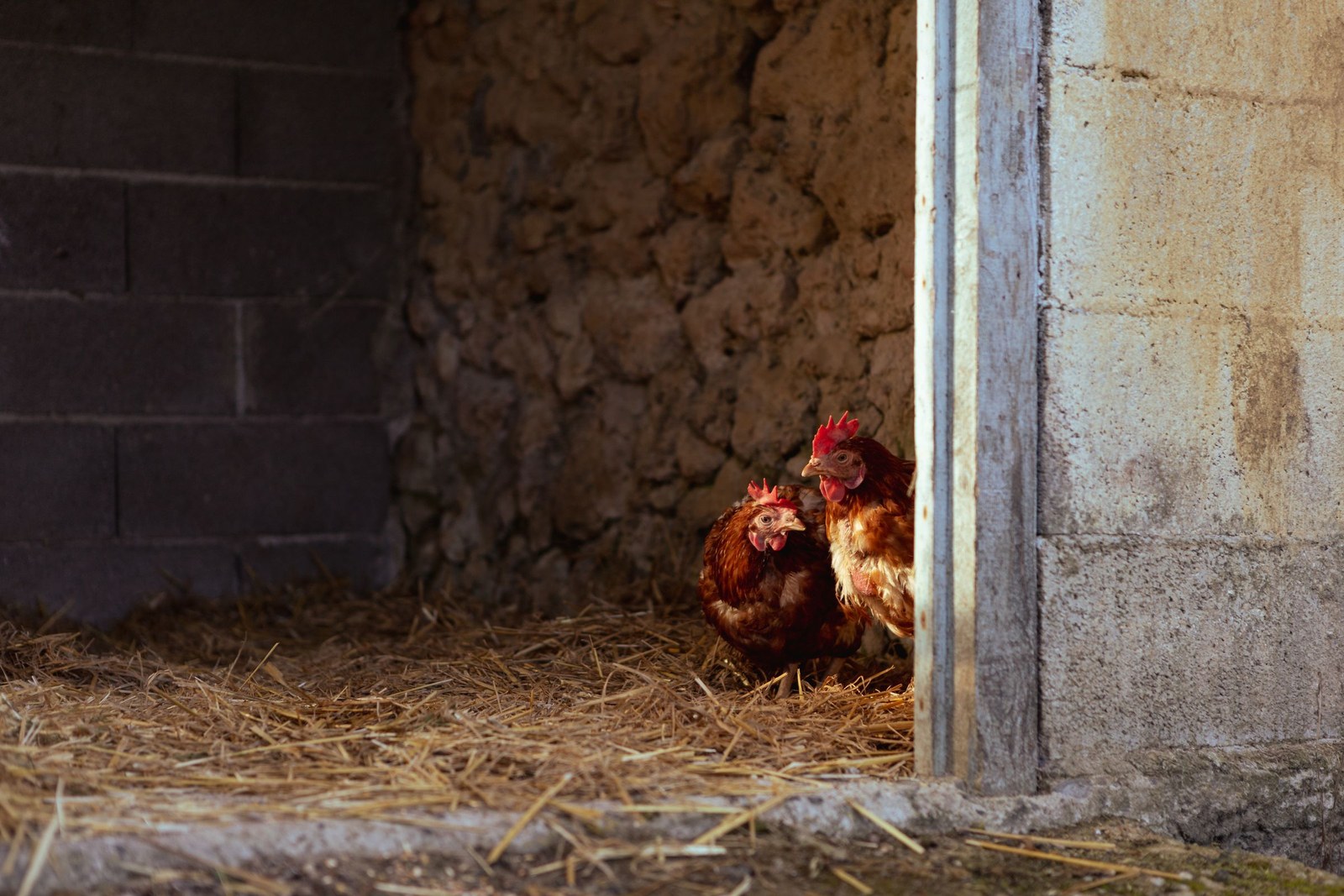
Backyard farm animals need, at minimum, a dry, draft-free shelter with room for every animal to lie down at once, protection from wind and driving rain, and shade in summer. That is the non-negotiable baseline whether you keep hens, goats, sheep, pigs, or a small cow — everything else is species-specific detail built on top of it.
Start with the basics every species shares
Dryness matters more than warmth for most hardy livestock. A goat with a wet coat and a draft at its back loses condition fast, while the same goat in a snug, well-bedded, draft-free shelter handles serious cold comfortably. Aim the shelter opening away from your prevailing wind, raise the floor or bedding pack above surrounding ground so rainwater never pools inside, and make sure the roof overhang keeps driven rain off the bedding. Ventilation still matters — stale, ammonia-heavy air damages lungs — so you want air exchange up high without a breeze blowing across the animals at body level.
Chickens: a coop, not just a box
Hens need a secure, lockable coop because raccoons, foxes, and neighborhood dogs treat an open coop as an invitation. Inside, provide roost bars — a sturdy rounded bar or a wide board works — set higher than the nesting boxes so birds roost instead of sleeping in the boxes and fouling them. Give roughly one nesting box for every three to four hens, line boxes with clean straw or shavings, and allow enough floor and roost space that the whole flock fits without crowding on a stormy day. Hardware cloth, not chicken wire, is what actually stops a determined predator.
Goats, sheep, pigs, and cows: the three-sided workhorse
In many climates, a sturdy three-sided shelter with a solid back wall to the wind serves ruminants and pigs perfectly well. Goats in particular hate getting wet and will crowd into shelter at the first raindrops, so give them a dry standing area plus room to lie down without being stepped on. Pigs need a dry sleeping corner deeply bedded in straw and, in summer, shade and a wallow or sprinkler — pigs cannot sweat, so heat is their real enemy. Sheep tolerate weather better thanks to their fleece but still need a dry place out of driving rain and lambing-time shelter if you breed.
Bedding, space, and little details that matter
- Deep, dry bedding — straw or shavings — insulates animals from cold ground and absorbs moisture; add fresh layers before the pack gets damp or smelly.
- Room to move apart: low-ranking animals need space to eat and rest away from herd bullies, or they quietly lose weight.
- A hay rack or feeder kept under cover keeps feed dry and reduces waste.
- Lighting and a clear path: you will do chores in the dark in winter, so plan for it.
- Fencing that meets the shelter: a gate or run-in arrangement means animals can choose shelter freely rather than being shut out.
Safety checks worth building in
Walk your shelter monthly. Look for protruding nails, splintered boards, gaps a predator could widen, and bedding that has gone moldy. Check that latches work with gloved hands, that water lines or troughs near the shelter do not freeze solid in your climate, and that there is no standing mud at the entrance — constant mud invites hoof problems and parasites.
Handing the routine to a sitter with KinsLe
Shelter care is a routine someone else may need to run while you travel: which gate to close at night, how deep to bed the goat corner, when to lock the coop. KinsLe's Care Pass is a temporary, scoped link you can share with a farm sitter — the recipient needs no account and no app — so your shelter, bedding, and lock-up instructions arrive clearly instead of as a scribbled note on the feed bin. You can hand your farm sitter, for this weekend only, the Care Pass on KinsLe carrying just the nightly coop lock-up, the depth of bedding in the goat corner, and the gate to leave shut.