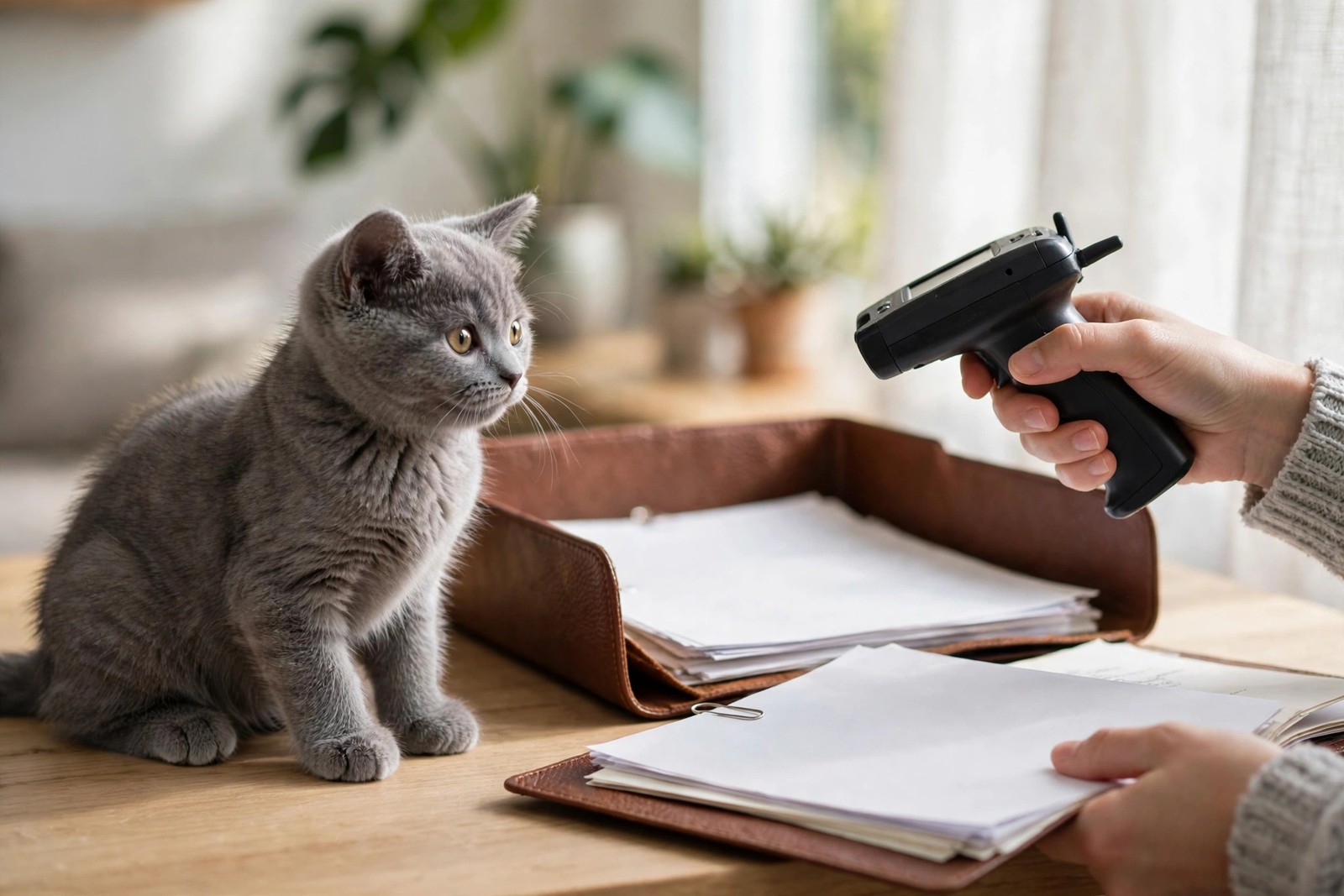
Collection day is exciting, crowded, and exactly the wrong conditions for checking paperwork carefully, which is why the checking needs a list made in advance. Work through the documents at the breeder's table, while the people who wrote them are in front of you and anything missing can still be produced, rather than discovering gaps at home that evening.
The Written Contract and the Kitten's Papers
The handover starts with a written contract, signed by both of you, covering the kitten's identity, the price and what it includes, any conditions the breeder sets, and what happens if the kitten becomes ill shortly after collection or if your circumstances change. Read it at the table and keep your signed copy; a verbal understanding at a kitchen table is not a contract.
Alongside it come the kitten's registration papers, the documents recording the kitten's lineage and registered identity. Check that the papers describe this kitten: the registered name or number, the color and markings as written, the date of birth, and the parents named the same way they are named everywhere else in the pack. A mismatch between the papers and the kitten in your arms gets resolved before you leave, not explained away for later.
Matching the Microchip Number
Ask for the kitten to be scanned in front of you, and match the microchip number the scan shows against the number on the paperwork character-for-character, digit by digit, reading it aloud if that helps. Understand what the scan does and does not do: the scan yields the number only. The contact record, whose name and phone number the chip points to, lives with the registry, so confirm with the breeder, in writing, how and when that record transfers into your name, and then confirm the transfer actually happened once you are home. The number itself is never something to publish or post publicly.
If the scan shows no chip, or the number differs by even one digit, stop and sort it out at the table; this check binds the physical kitten to the paper identity as no photograph can.
Health Records and the Parents' Results
The vaccination record should carry the practice's details, the name and stamp or signature of the veterinary practice that gave the vaccinations, with entries that fit the kitten's age: a kitten leaving at about twelve weeks or later will usually show a course begun well before collection day, in a sequence that makes sense. The same pack should note worming and any treatment the kitten has had, in writing, with dates.
The parents' health-test results come in writing too, not as a summary over coffee. For the breed's known inherited conditions, look for the actual result documents for the mother, and for the father where the breeder holds them, with the cats named identically to the registration papers so you can tie each result to the right animal.
Food, Leaving Age, and Filing It All
Finally, the practical handover: the food the kitten is currently eating, named plainly, and a supply of it to take home, so the first days involve no sudden food change on top of a new home. Confirm the leaving age against the date of birth; a kitten leaving at about twelve weeks or later is the good-practice marker most keepers work to, and a kitten leaving notably younger deserves a direct question and a clear answer.
At home, everything handed over, contract, registration papers, vaccination record, and health-test results, is filed together as the beginning of the kitten's own records packet. That filing is the start of the Pet Passport on KinsLe for this kitten: the packet that will hold vaccination entries, visit notes, and care details from then on, opened with the breeder's documents as its first section.
File each checked document the day you collect the kitten, building the Pet Passport on KinsLe from a breeder's handover into the record you carry to the first vet visit.