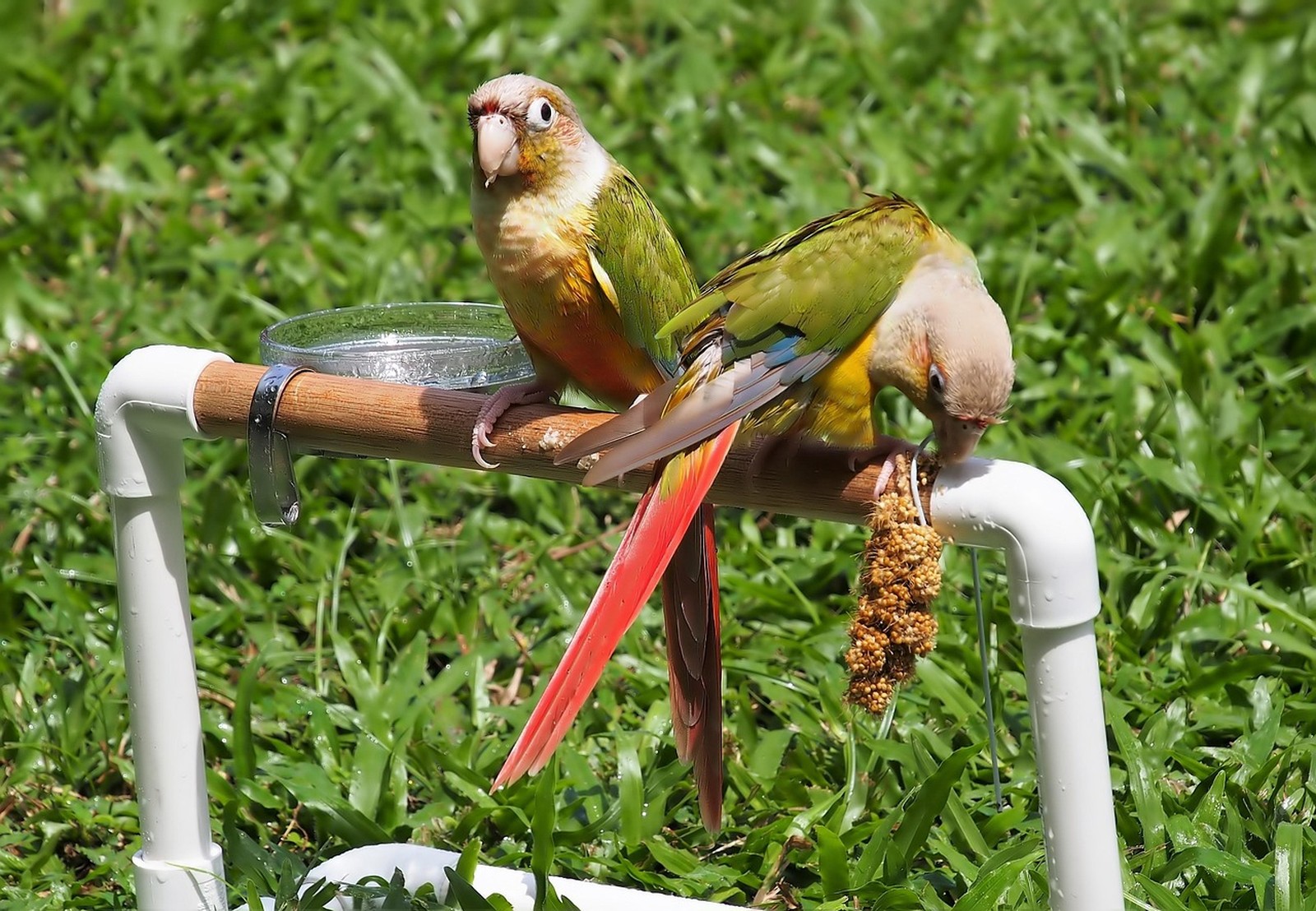
A conure's daily bowl should look mostly green and measured, not like a bag of sunflower seeds. Conures are enthusiastic, persuasive eaters who will happily choose the fattiest item offered, so the structure of the day matters as much as the ingredients.
The Daily Base: Pellets and Vegetables
Offer a quality formulated pellet made for small parrots as the measured staple, following the portion guidance for your bird's size and adjusting with your avian vet if weight drifts. Alongside it, serve fresh chop every day: finely chopped leafy greens, carrot, sweet pepper, broccoli, courgette, and cooked sweet potato work well, and chopping small suits a conure's habit of holding food in one foot and taking many small bites. Remove uneaten fresh food after a few hours so it does not spoil in the cage, and wash bowls daily.
Fruit, Seeds, and Extras in Proportion
Fruit is a topping, not a course: a few small pieces of apple without seeds, mango, papaya, berries, or melon is plenty. Keep seeds, including sunflower and safflower, for training rewards and foraging toys, where a conure works for each one instead of filling up at a bowl. Through the week, rotate in cooked plain grains or lentils, sprouted seeds prepared hygienically, and a small piece of cooked egg occasionally. Offer a cuttlebone or mineral source if your vet recommends one for your individual bird.
Water, Timing, and Watching Weight
Give fresh water at least twice a day; conures dunk food, so the bowl clouds quickly. A morning routine of pellets, chop, and clean water, an afternoon check, and an evening top-up suits most households. Weigh your conure weekly on a small scale, at the same time of day, and write the number down: gradual loss or gain is easy to miss by eye under feathers. Watch droppings, energy, and how much chop is actually eaten rather than scattered, and adjust the mix slowly over a week when you change anything.
Foods That Stay Off the Menu
Do not offer avocado, chocolate, caffeine, alcohol, salty or fried food, or fruit pits and apple seeds, and keep that list consistent for everyone in the house, including guests who want to share a snack. Sudden appetite loss, fluffed sitting, or changed droppings in a conure deserves prompt advice from an avian vet rather than a diet experiment. KinsLe's Care Teams turns this daily pattern into assigned jobs — morning chop, water changes, and the weekly weigh-in — each marked complete with a timestamp so a busy household never guesses whether the conure has been fed.