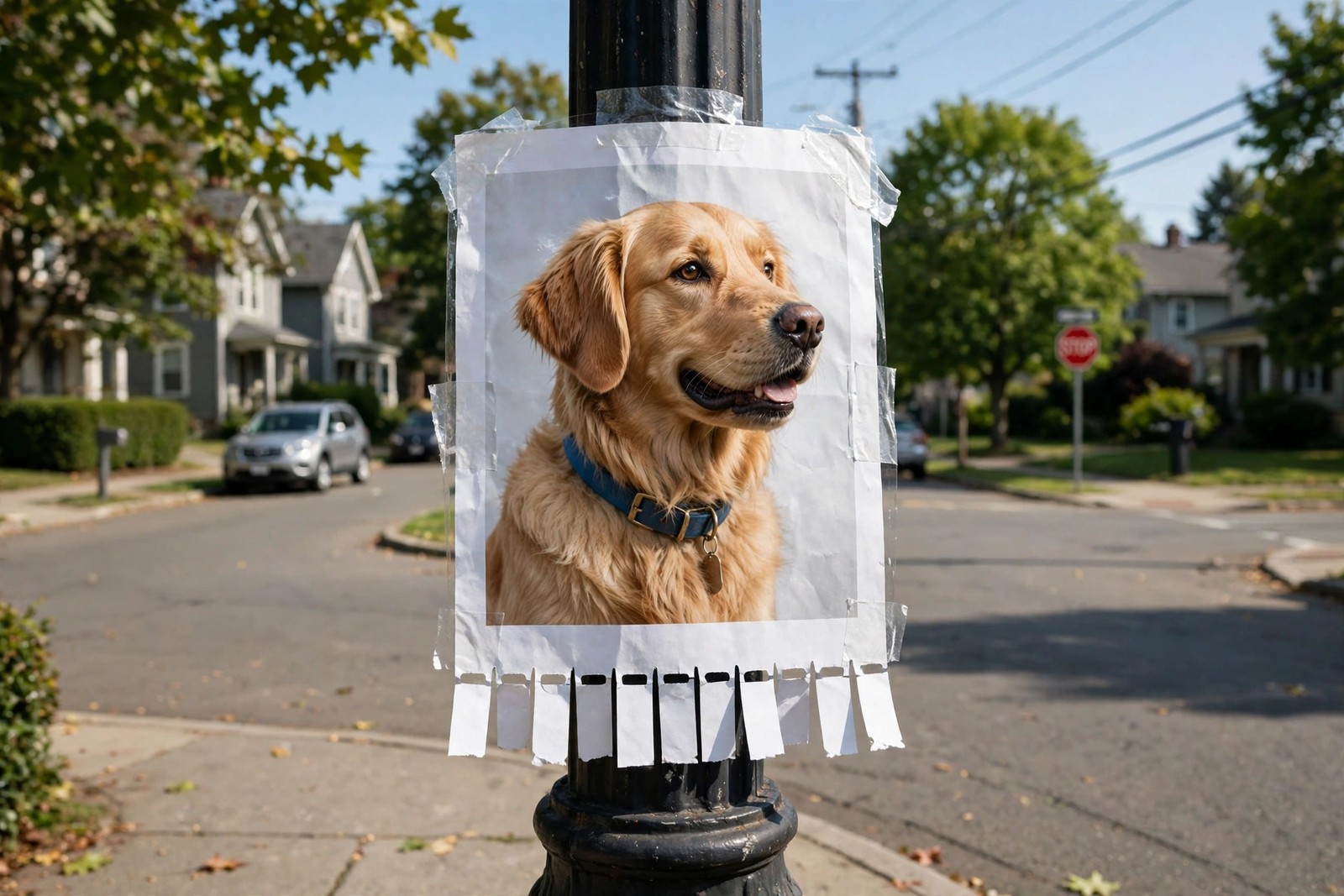
A lost dog poster is not a leaflet. It is a road sign competing for two seconds of attention from people walking or driving past, and it succeeds when a stranger can absorb it, remember the dog, and know exactly what to do. Most homemade posters fail on clutter: small photos, paragraphs of biography, and a phone number in ordinary type. Build yours the other way around.
The Five Elements That Do the Work
Start with the headline: LOST DOG, in the largest, boldest letters the page allows, ideally readable from a moving car. Under it goes one photograph, and only one: large, in color, recent, showing the whole dog standing, in focus, with nothing cropped away. A muddy phone snap of a face on a sofa does not help a stranger recognize a dog trotting across a park. Next, a short description in plain words: breed or type, main colors, size, and the one or two features that separate your dog from similar ones, such as a white-tipped tail, one folded ear, or a graying muzzle. Then location and time: the street or neighborhood where he was last seen and when, because sightings near that point are the ones that matter. Finally the contact number, in type nearly as large as the headline, on tear-off tabs at the bottom if the poster will be somewhere people can stop.
The Line That Saves Dogs: Do Not Chase
Add one instruction that owners often leave off: please do not chase, call the number immediately with the location. A lost dog in survival mode may bolt from friendly strangers, run into traffic, or leave the area where searchers are concentrating. A phoned-in sighting with a time and a place is worth far more than a well-meant pursuit. If your dog is nervous, say so plainly on the poster: shy, do not approach, call owner. Adding the word reward can increase calls and shares; keep the amount off the poster, and withhold one identifying detail, such as a specific marking, so you can check genuine finders and sight callers.
What to Leave Off
Skip your home address, your dog's sentimental story, lists of favorite foods, and multiple photos that shrink the main one. Medical details belong on the poster only when a finder needs them, for example if the dog needs daily medication, which also adds honest urgency. Avoid printing the dog's name in huge type; strangers calling a name the dog associates with family rarely helps and can complicate your own searching.
Printing and Placing Them
Print on bright, heavy card, protect outdoor posters from rain in clear sleeves or laminate, and place them at driver and pedestrian eye height at junctions, park entrances, trailheads, vet surgeries, and shops near the last sighting, widening the circle as days pass. Replace faded copies rather than assuming they still work. While the posters go up, the same photo and details can already be moving: KinsLe's Lost Pet Alert System sends a free alert to nearby Circle of Love members who can message you directly, so a sighting reaches your phone even between poster runs.