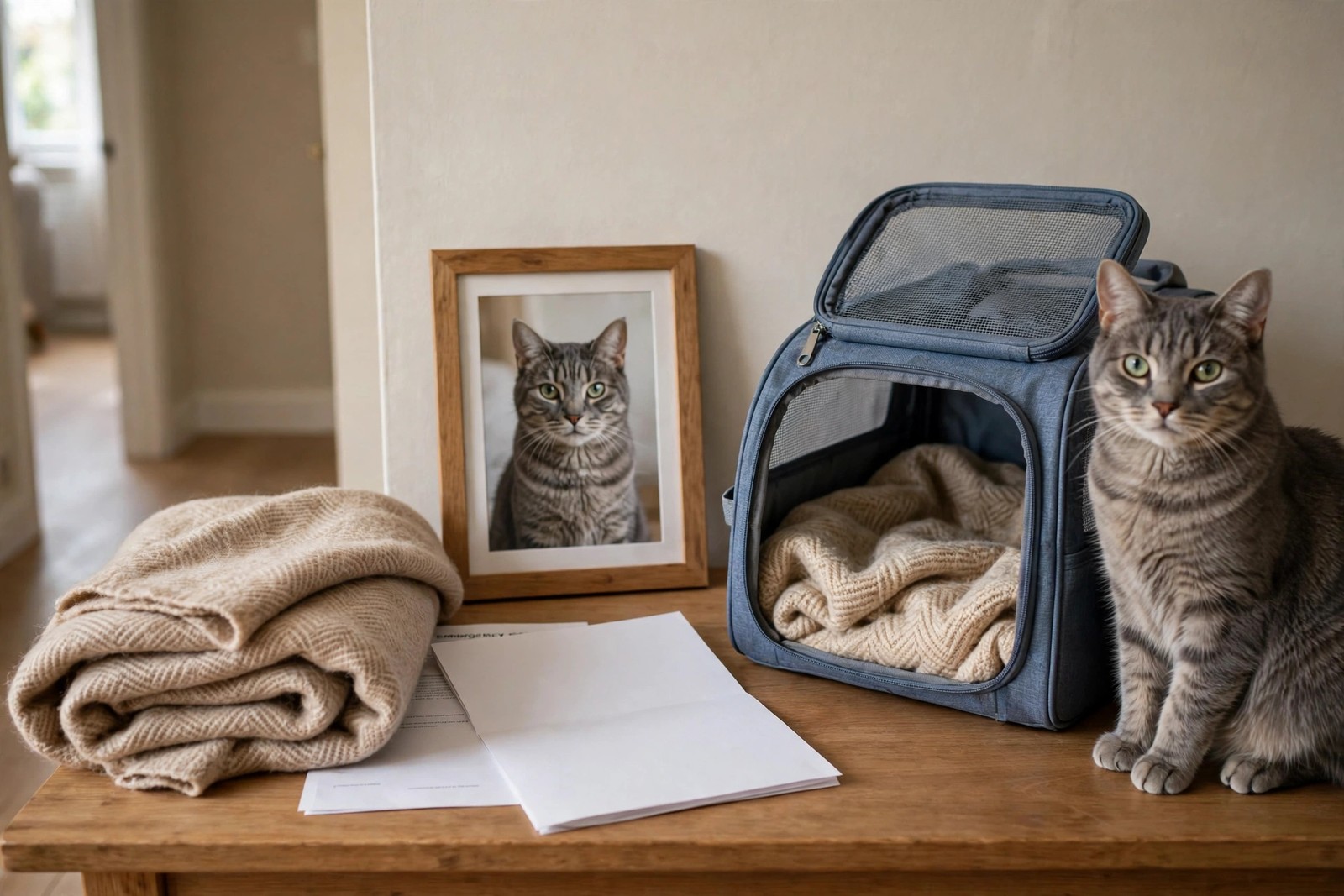
Write instructions for the day you cannot get home, rather than a general record of your cat's life. An emergency sheet has a different job: it lets a neighbour, friend or sitter who may be stressed, and who may not know cats well, keep your cat safe, fed and reachable by a vet until you return. Every item on it should answer a question that person will face in the first hour.
Who she is and where she will be hiding
Start with her name, age, colour and markings, a clear recent photograph, microchip details where held, and whether she is indoor-only or allowed outside, stated unambiguously. Then add the information only you know: where she hides when frightened, such as under a particular bed, behind a boiler or inside a wardrobe, and how to approach her there without grabbing. Note whether she can be picked up, whether she tolerates a carrier calmly, and where the carrier is stored, ideally with a familiar-smelling blanket already inside.
Add temperament facts that change handling: whether she runs for an open door, hides from children, dislikes other cats, or becomes still and silent rather than vocal when she is unwell. A stand-in keeper who expects hiding will search properly instead of assuming she has escaped.
Feeding, water and litter on emergency terms
Write food type, exact amounts, feeding times and where food is stored, plus any food that must never be offered and any rule about treats. State where water bowls are, how often to refresh them, and whether a fountain needs checking or unplugging if it runs dry. For litter, name the tray locations, the litter you use, how often to scoop, where waste bags go, and where spare litter is kept.
Keep the routine close to normal even in an emergency. A cat whose person is missing is already unsettled, and a new food, a moved tray or a locked room can add avoidance, missing the tray or not eating on top of the original crisis.
Medication, conditions and veterinary authorisation
List any ongoing conditions, allergies and recent vet treatment in plain language, with your usual vet's name, address and phone number and the out-of-hours service to call when that practice is closed. If she takes medication, write the medication, the timing and how it is given exactly as your vet directed, plus what to do and who to call if a dose is missed or she refuses it; do not expect a stand-in keeper to improvise, and never leave instructions that change a dose.
The item many sheets miss is authorisation. Name the person who may take her to the vet, state in writing that they may authorise emergency treatment on your behalf, explain how payment or reimbursement will be handled as far as you have arranged it, and give your contact details and a backup contact if you may be unreachable on a flight or in hospital. Clinics vary in what they accept, so discuss the arrangement with your practice in advance where you can.
Access, safety and when to call you at once
Add practical access details: keys, alarm, rooms that stay closed, plants or hazards to keep her away from, and what to do if the house itself is the problem, such as a flood or a fire alarm. End with clear triggers for an immediate call to you and to the vet, including not eating, repeated vomiting, difficulty breathing, straining in the tray, bleeding, collapse, or a suspected fall or ingestion.
Keep one copy at home where the named person can find it, share another in advance, and review it whenever food, medication, vet or contacts change.
With KinsLe's Care Pass, those emergency instructions, feeding details and vet contacts can be shared with your named stand-in as temporary access ahead of time, so nobody is searching for a sheet in a crisis.