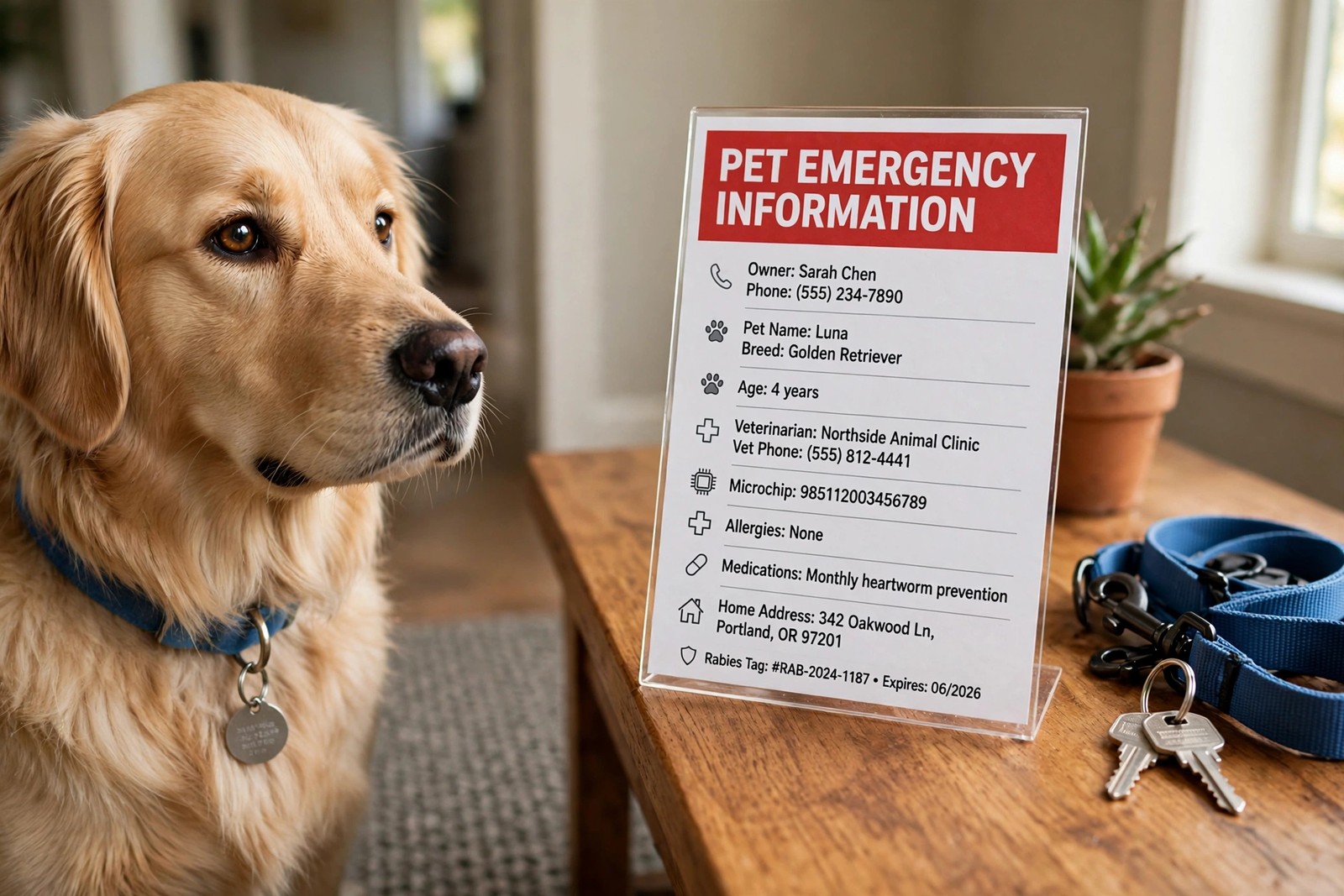
An emergency card is read by a stranger, under pressure, possibly while your dog is frightened or hurt. Every line has to earn its space, and anything vague — 'he is nervous,' 'she takes tablets' — wastes the seconds the card exists to save. Build it in the order a finder, a neighbour, or a clinic receptionist will use it.
Who This Dog Is, and Who to Call First
Start with your dog's name, breed or best description, colour and markings, sex, approximate age, weight, and a clear recent photo printed on the card itself, because phones die and descriptions blur. Follow with your name, mobile number, and home address, then a backup contact: a named person, with their number, who knows your dog, lives within reach, and has agreed in advance to collect the dog or speak for you. Add a second backup if the first travels often. A card whose only contact is the owner fails in exactly the accident it was written for.
Vet Details, Chip Number, and Medical Lines
Print your regular vet's clinic name, address, and phone number, and the emergency or out-of-hours clinic's details underneath, because emergencies rarely keep office hours. Add the microchip number in full and note any insurance policy number if you have one. Then list medical conditions in plain words — heart condition, seizures, diabetes, arthritis — current medications with amounts and times copied from their labels, and allergies, especially any known drug reaction, written prominently rather than buried in a paragraph. If your dog needs a particular handling approach for injections or examinations, say so here.
Feeding and Temperament, Written Honestly
Give the food, measured amount, and feeding times, plus anything your dog must not eat. Then write temperament as useful facts, not reassurance: 'frightened of loud male voices; crouch and let him approach,' 'pulls hard at cats,' 'resource-guards food bowls; feed separately,' 'muzzle-trained and calm wearing one.' Note triggers, calming cues that genuinely work, and whether your dog can be housed near other dogs. Honest lines protect both the dog and the person holding the lead.
Copies, Authorisation, and Updates
Add one explicit line about authorisation: who may approve emergency treatment for your dog, and how that person can be reached, so a clinic is not stalled. Keep printed copies in your wallet, a car glove box, the sitter's folder, and on the fridge for anyone entering your home. Review the card whenever a medication, vet, weight, or phone number changes, and at least twice a year. KinsLe's Pet Passport stores the full records behind the card in one packet, so reprinting an updated emergency card takes minutes instead of an evening of hunting through messages.