
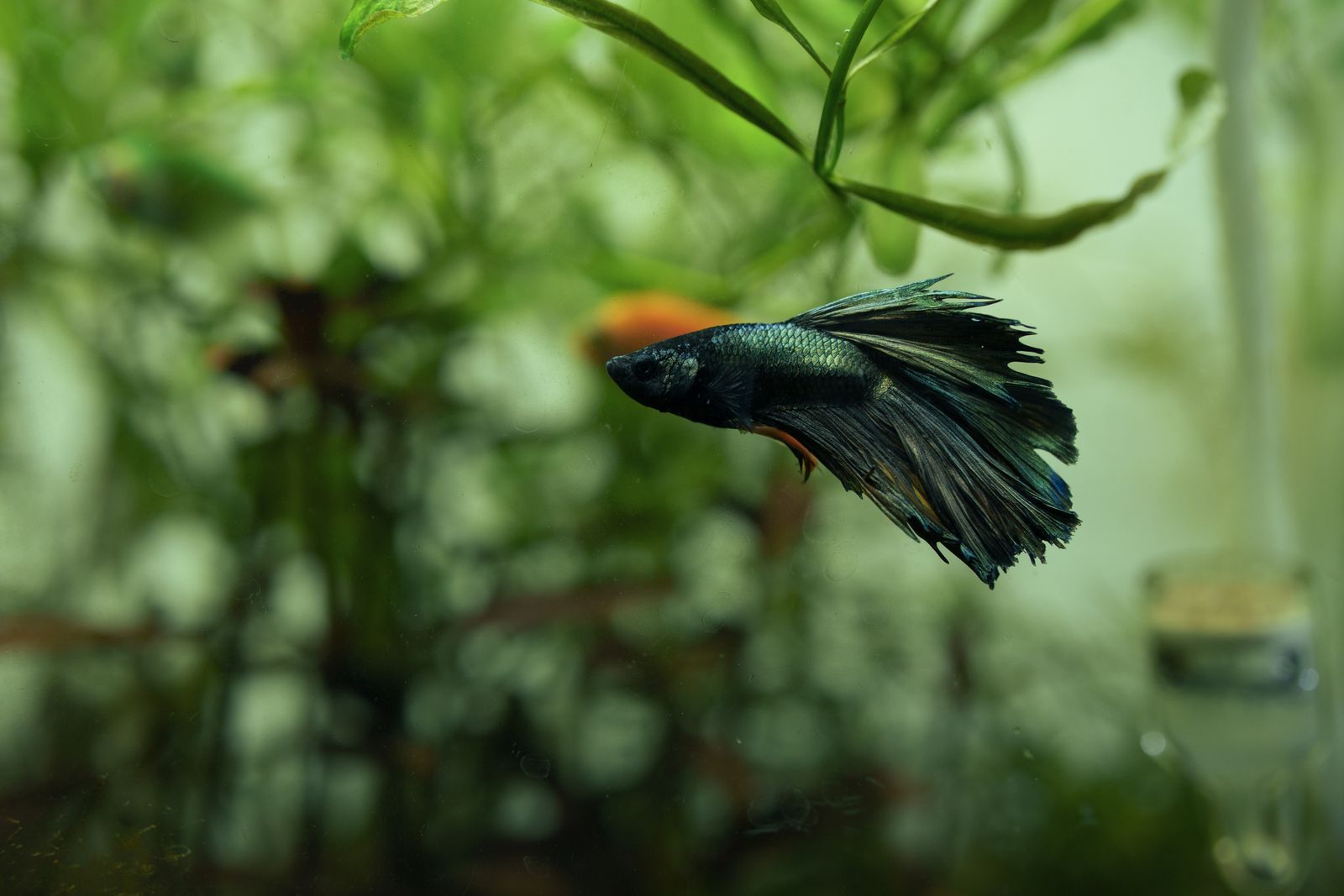
The Direct Answer: Meat-Based Food, Made for Bettas
Bettas are carnivores — insectivores, to be precise — so their staple diet should be a high-quality betta pellet or food specifically formulated for bettas, not generic tropical flakes alone. Look for products listing whole fish meal, krill, or shrimp among the first ingredients rather than fillers like wheat and soy. Variety matters too: supplement the staple with occasional frozen or freeze-dried treats such as bloodworms, daphnia, or brine shrimp, offered in small amounts a couple of times a week. A betta fed like the carnivore it is shows brighter colors, more energy, and stronger finnage than one surviving on generic flakes.
Why Generic Tropical Food Isn’t Enough
Walk down any fish-food aisle and most options say “tropical fish” — but that label covers everything from algae-grazing mollies to plant-nibbling tetras, and the formulas lean heavily omnivore. Bettas need significantly more protein (think 35–45%) and far less plant matter than those blends provide. Generic flakes also tend to be low-density, so bettas — surface feeders by nature — often ignore food that sinks past them, and the uneaten portion decays into ammonia. Betta-specific pellets are sized for small mouths, float long enough to be noticed, and pack the protein profile a carnivore’s metabolism expects. It’s a small price difference for a large nutritional upgrade.
How Much and How Often
Overfeeding kills more bettas than underfeeding — uneaten food fouls the water, and a bloated betta is a sick betta. The reliable rule: feed only what your betta eats in about two minutes, once or twice a day, which usually works out to 3–4 small pellets per feeding for an adult. A betta’s stomach is roughly the size of its eye, so those tiny portions are genuinely enough. Many experienced keepers build in one fast day per week — no food at all — which mirrors natural feast-and-famine rhythms and gives the digestive tract a rest. Watch the belly after feeding: slightly rounded is perfect, visibly swollen means cut back, and a pinched, concave belly over several days warrants attention.
Treats, Variety, and Foods to Avoid
Treats are where feeding gets fun — and where discipline matters most. Frozen bloodworms, daphnia (a natural laxative that helps prevent constipation), and brine shrimp make excellent twice-weekly supplements; thaw frozen foods in a little tank water first and offer only what’s eaten in a minute or two. Freeze-dried versions work too but should be soaked briefly so they don’t expand inside the fish. Skip the well-meaning human foods — bread, crackers, and vegetables offer a carnivore almost nothing and pollute the tank. And never use wild-caught insects from pesticide-treated yards; what’s harmless to you can be lethal in a five-gallon ecosystem.
Ask Kinny the Feeding Questions That Come Up
Plenty of feeding questions surface once a betta is in front of you: whether a new pellet is small enough for its mouth, whether bloodworms suit a fish that has turned picky, or whether a skipped morning feeding matters. That is where asking Kinny in KinsLe earns its place — bring the question your tank raises, in plain words, and weigh the reply against its appetite, its leftovers, and how it looks week to week.
When a feeding question comes up later, ask Kinny in KinsLe about betta portions, treat frequency, or a fast day, with replies drawn from the KinsLe Answers library.