The best questions test whether a breeder plans for problems before they happen. A responsible breeder expects to be interviewed, answers in specifics, and asks you nearly as many questions back. Work through health, upbringing, paperwork, and the terms of the sale, and walk away from pressure to decide on the spot.
Parents, Screening, and Health Proof
Ask to meet the mother with her kittens and the father too if he is on the premises, and ask how many litters the mother has had and how old she is. Ask what screening both parents have had for the conditions relevant to the breed — for example heart or kidney screening where those are known breed concerns — and ask to see the actual results or certificates, not a summary. 'Vet checked' is not screening. Ask which vaccinations and worming treatments the kittens will have had, whether they will be microchipped before leaving, and whether a vet has examined each kitten; then ask what happens if that examination finds a problem.
Socialisation and the First Weeks
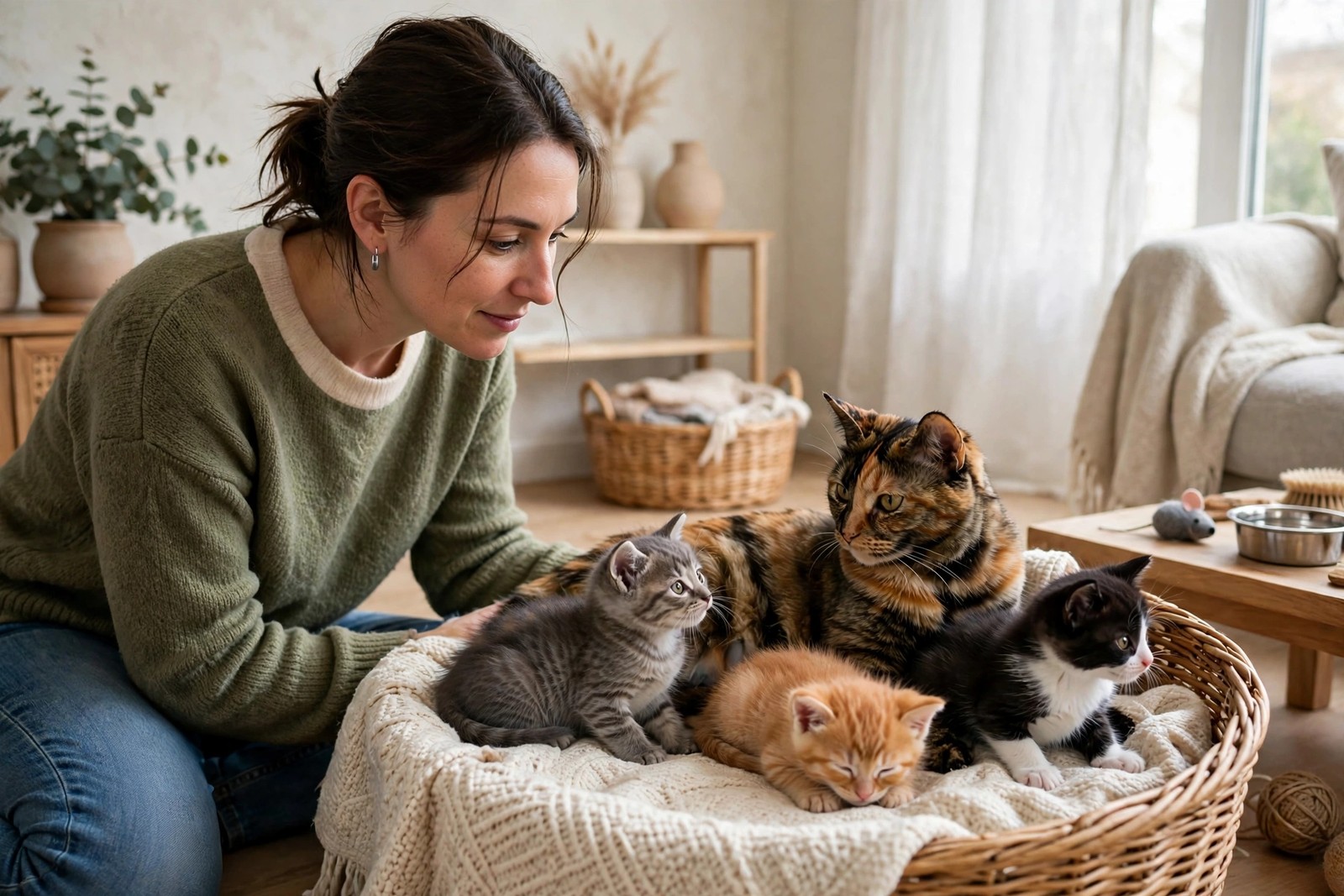
Ask where the kittens are raised: underfoot in a home, hearing vacuums, doorbells, children, and ordinary handling, or shut away in a separate building. Well-raised kittens are handled daily, meet different people, start litter training, and learn to eat solid food confidently before they leave. Ask what food they are weaned onto and whether you will be given some for the transition, what scratching and play they have had, and how the breeder matches kittens to homes. A breeder who steers you away from a bold kitten for your quiet flat is showing exactly the judgment you are paying for.
Contract, Guarantee, and Homing Age
Ask for the written contract before you pay anything, and read the health guarantee in detail: what it covers, for how long, and whether a problem means a refund, a replacement, or help with costs. Look for a return clause stating the breeder will take the cat back at any age rather than see it rehomed casually, plus any conditions about neutering. Ask at what age kittens go home; responsible breeders typically keep kittens to around twelve weeks or later, because those extra weeks with their mother and littermates build bite inhibition and confidence. Early release at seven or eight weeks 'because they are eating' is a warning sign, as are multiple unrelated breeds on offer, no visit allowed, and cash-only urgency.
After the Answers
Add up the whole picture rather than grading one reply, and get records copied to you at handover: vaccination card, chip details, screening copies, and feeding notes. KinsLe's Transferrable Profiles lets the breeder hand the kitten's profile over with that history, its records, and its routines intact, so your kitten's care continues from what the breeder started instead of beginning again from a blank page.