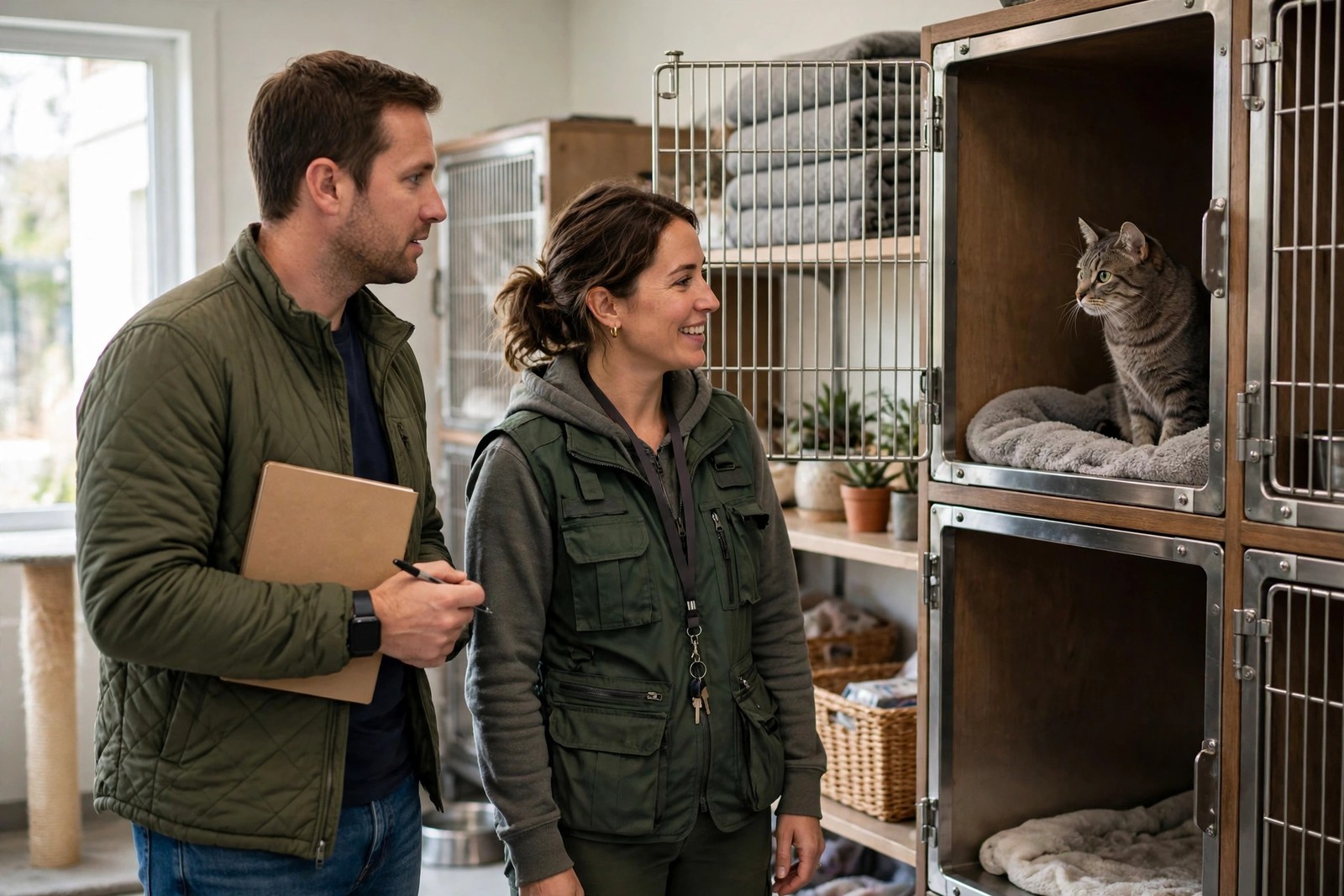
A good rescue expects questions and answers them with records, not reassurance. The conversation you have before adoption decides how smooth the first month at home will be, because nearly every early problem, from a refused food to a hidden litter box, traces back to a detail nobody asked about. Take notes, ask for copies of anything written, and treat vague answers as information in themselves.
Where Did This Cat Come From?
Start with history. Ask where the cat came from: found as a stray, surrendered by an owner, transferred from another shelter, or born in foster care. Ask why the cat was surrendered if that is known, and listen for specifics rather than judging the reason.
Ask how long the cat has been with the rescue and whether it has been adopted and returned before. Ask, too, whether the cat lived with children, dogs, or other cats in its previous home, and how those arrangements went, because a known history with other animals is worth more than any guess made in a visiting room.
Health Checks and Treatments to Confirm
Ask exactly which health checks and treatments the rescue has already done, and get them in writing. A thorough rescue can usually tell you whether the cat has been spayed or neutered, vaccinated, treated for fleas and worms, and tested for common infectious concerns where that is their practice, and whether a veterinarian has examined the cat during its stay. Ask about anything found along the way: a heart murmur noted at intake, dental tartar, an old eye injury, ear mites treated last month.
Also ask what the rescue has noticed day to day. Has it needed any medication, and is any course still running that you would need to continue? If the cat is older, ask whether blood work has been done. You are establishing a baseline, so that a change in your first month at home is recognizable as a change, and so your own veterinarian starts from facts instead of a blank page.
Behavior the Rescue Has Actually Seen
Ask what staff and volunteers have observed, and push gently past the adoption-profile adjectives. Litter habits come first: does the cat use the box reliably, prefer it uncovered, or bury waste at all? Then sociability: does it approach strangers, tolerate being picked up, enjoy brushing, or prefer company at a distance? Ask about handling limits, because a cat who adores petting for two minutes and then nips is a wonderful cat for an adult home and a poor match for a toddler, and the rescue usually knows which cat that is.
Ask about fears and stress signals specifically. If the cat has been in a foster home, ask for the foster's observations above all, since a foster home reveals the household version of the cat, its nighttime habits, its reaction to doorbells and visitors, and whether it wants laps or windowsills. Honest rescues share the difficult notes too, because a failed adoption helps nobody.
Food, Litter, and the Return Policy
Ask what food the cat is eating, brand specifics aside, meaning the type, flavor family, feeding schedule, and amounts, plus which litter fills its box and how many boxes the rescue recommends for your home. Bring the same food and litter home for the first weeks even if you plan to change later; a new house, new people, and a new diet all at once is how good adoptions wobble. Transition foods gradually over a week or more once the cat is settled and eating confidently.
Finally, ask plainly about the return policy if the adoption fails. Reputable rescues state a trial period or a standing commitment to take the cat back, and knowing the terms, the time frame, and who to call removes the panic from a bad first month. From adoption day forward, KinsLe keeps the Transferrable Profiles file attached to your cat, so answers gathered at the rescue never get lost.