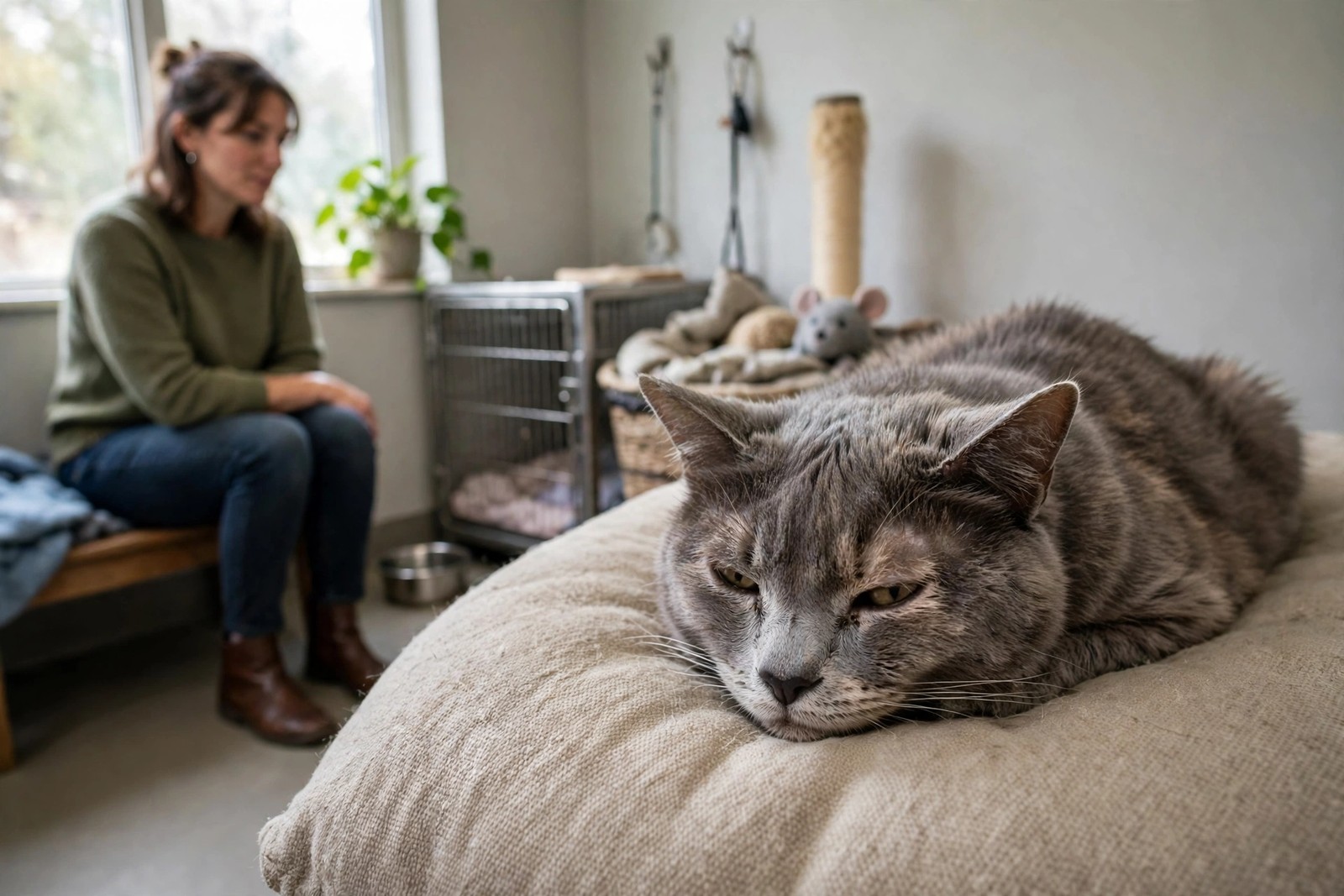
A senior cat is often the calmest, most grateful adoption in the building, but it is not a low-paperwork one. Older cats commonly carry conditions that are manageable when known and expensive when discovered late, so the checks below are about walking in with your eyes open, not about looking for perfection.
Known Conditions and Recent Bloodwork
Ask what health conditions are already known — kidney, thyroid, joint, dental, and heart issues are among the common senior concerns — and how each is currently managed. Ask when the cat last had a full vet examination and bloodwork, and request a copy of the results for your own vet rather than a verbal 'all fine.' Ask about weight trend, appetite, thirst, and litter habits, because changes in those everyday numbers often matter more than one test. If no recent bloodwork exists, budget for a senior work-up soon after adoption and ask the shelter what their vet found at intake.
Mobility, Senses, and Daily Function
Watch the cat move: can they jump, climb stairs, and step into a litter box with a raised side, or would a low-entry box and a ramp to a favourite perch help? Check how they respond to sound and movement, since hearing and vision loss change how you should approach and handle them. Ask about grooming tolerance, because arthritic cats often stop grooming hard-to-reach areas and need gentle help. Look at the mouth if the cat allows it, and ask about dental history; sore teeth are a frequent, fixable cause of a senior cat eating less.
Food, Medication, and Real Monthly Costs
Write down the exact food, amounts, and feeding times, and keep that diet unchanged at first, because a senior gut tolerates sudden swaps poorly. List every medication, how it is given, and what it costs monthly, then price the realistic routine: prescription or senior food, litter, twice-yearly vet visits, bloodwork, and a reserve for a dental procedure or a new diagnosis. Ask why the cat was surrendered and what home suited them before, including other animals, children, and how long they are happy being left alone.
Settling In and Planning Ahead
Book a vet visit soon after adoption to transfer records, confirm medications, and set a monitoring rhythm. Talk honestly, before you sign, about end-of-life planning: how you will judge quality of life, who your vet will be for those conversations, and that choosing a senior means this chapter may come sooner. That honesty is part of the gift, not a reason to refuse it. KinsLe's Transferrable Profiles brings the senior cat's vet history, medication notes, and routines across to you intact, so the knowledge gathered by the shelter or previous owner is never the thing that gets lost in the move.