
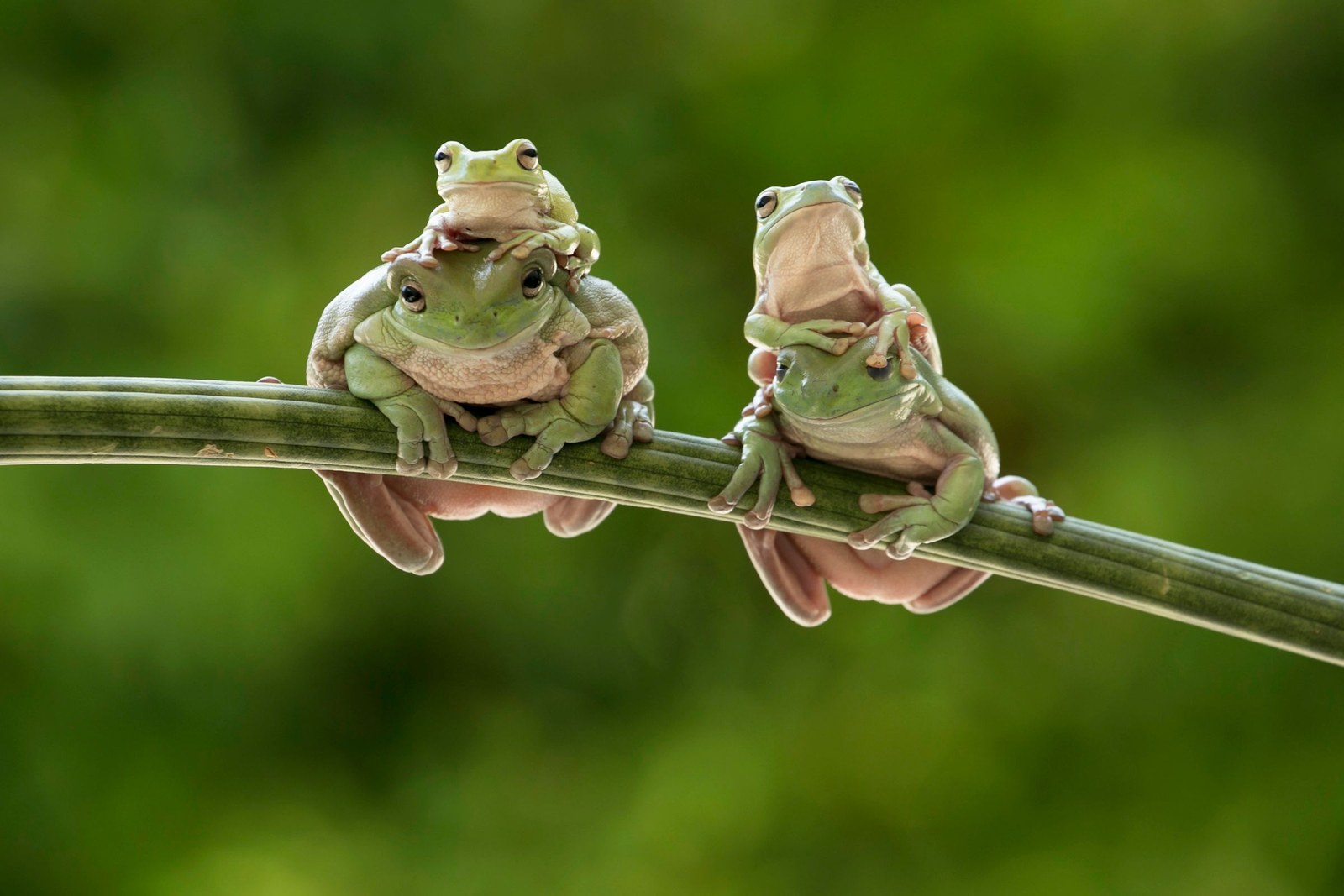
Before getting a pet frog, understand that frogs are look-don't-handle pets with delicate, absorbent skin, precise humidity and temperature needs, and mostly nocturnal habits — they suit patient observers far better than anyone hoping for a hands-on cuddle pet. Budget for the complete setup first — enclosure, heating or lighting, misting, and a reliable live food supply — and have it running and stable before the frog arrives. If that picture excites you rather than putting you off, a frog may be a wonderful fit.
The Skin Rule That Changes Everything
A frog's skin drinks in the world: water, moisture, and anything dissolved in it, including lotions, soaps, and salts from your hands. Handling should be rare, brief, and done with wet, powder-free gloves or freshly rinsed wet hands when it is truly necessary. All water that touches your frog — drinking, soaking, misting — must be dechlorinated. This is the biggest mental shift from furry pets: love a frog with your eyes, your setup, and your routine, not your hands.
The Setup Is the Pet Care
Most frog health problems trace back to environment, so the enclosure deserves your money and attention first:
- Humidity and temperature held in the species' range, usually with misting by hand or an automatic mister, plus a thermometer and hygrometer you actually check
- A proper enclosure: size, ventilation, and either height for climbing species or floor space for ground-dwellers
- Live plants and hides so the frog can thermoregulate, hide, and feel secure
- Lighting appropriate to the species, and a day-night cycle that respects a nocturnal animal
Run it empty for days before the frog arrives. Numbers that hold steady in an empty tank are the ones that keep a frog healthy.
Feeding a Frog Means Keeping Live Food
Nearly all pet frogs eat live insects — crickets, roaches, worms — which means you are also keeping feeder insects, dusting them with appropriate supplements as your research for your species directs, and offering food mostly in the evening when your frog wakes up. If live insects in the house are a dealbreaker for you or your family, a frog is not your pet, and it is far better to know that now.
The Lifestyle Fit
Frogs sing at night (males of many species, sometimes surprisingly loudly), sleep through your day, and can live well over a decade in good care. They are fascinating, beautiful, and low-allergen — and boring to someone who wants interaction at 2 p.m. Match the pet to the life you actually have.
Learn From Keepers Who Have Done It
Care sheets give you ranges; experienced keepers give you judgment. KinsLe's Circle of Love connects you with other pet lovers — including seasoned frog keepers happy to share what worked, what failed, and what they wish they had bought first. Within the Circle of Love on KinsLe, frog keepers trade hard-won setup lessons, from misting schedules that held humidity steady to feeder routines that finally worked.