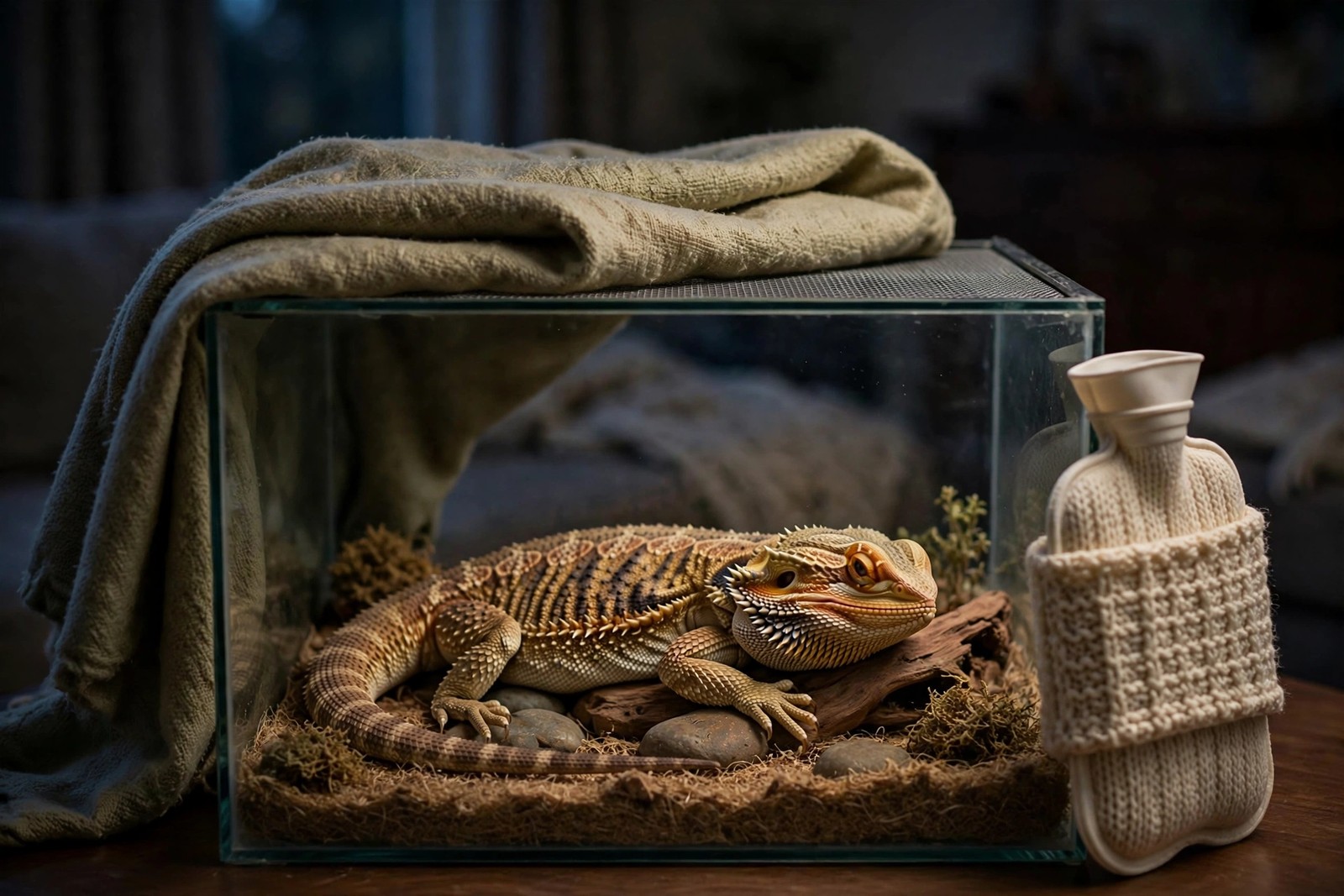
Leave the lights alone and think about temperature instead. Your basking lamp and UVB tube do two different jobs, and only one of them matters tonight: the heat lamp holds the warm end of the temperature gradient your reptile uses to digest food, fight infection, and stay active. A healthy adult bearded dragon, leopard gecko, or corn snake will shrug off a day or two without UVB light with no lasting harm, because UVB works over weeks and months. A cold night is different, especially for tropical species, very young animals, and any reptile that is already unwell or recovering.
Heat Comes Before Light
Start by doing less. Keep the enclosure doors shut, because every opening dumps warm air and lets the whole setup cool faster. Resist checking every few minutes; look through the glass instead, and read the thermometer you already trust. Most common pet reptiles cope with a short drop toward ordinary room temperature, around 65 to 70°F (18 to 21°C), for a few hours, and a desert species that is used to cool nights usually copes better than a tropical species that never experiences them. What matters is how low the temperature falls and how long it stays there, so note the time the power failed and watch the trend rather than a single reading.
Insulating and Adding Gentle Heat
Drape blankets, towels, or a duvet over the outside of the enclosure, covering the top and sides while leaving a small gap so air can still move. Glass and mesh tops lose heat quickly, and simple insulation can slow that loss a great deal during a short outage. If the cut stretches on, fill hot water bottles with warm, not boiling, water, wrap each one in a towel, and set them against the outside of the glass at the warm end. Disposable hand warmers work the same way once activated: tape or rest them outside the enclosure wall, never loose inside where a reptile could lie directly on one and burn. Renew the bottles as they cool, and recreate a rough gradient rather than heating the whole enclosure evenly, so your reptile can still move away from the warmth.
Feeding, Handling, and When to Move Your Reptile
Do not offer food while your reptile is cold, even if a feeding time comes and goes. A reptile that cannot reach its normal basking temperature cannot digest properly, and undigested food sitting in a cold stomach causes more trouble than one missed meal. Offer water as usual, keep handling to a minimum so you are not opening the enclosure or exposing the animal to cooler room air, and leave misting for later unless the outage is long and humidity is falling fast for a species that needs it damp. Plan to relocate if the temperature keeps falling despite insulation and bottles, if the outage will clearly run overnight in a cold house, or if your pet is a hatchling, ill, or a tropical species with little tolerance for cool air. The practical options are a friend's heated home, a car journey in a secure, ventilated tub lined with a towel once the car itself is warm, or a generator used safely outdoors to run just the heat lamp. When power returns, let the enclosure warm back up gradually, confirm the basking spot is back to normal before the next feed, and watch appetite and droppings over the following days. Keeping those target temperatures and the outage steps in KinsLe's Family Sharing means any family member who gets home first follows the same plan instead of improvising.