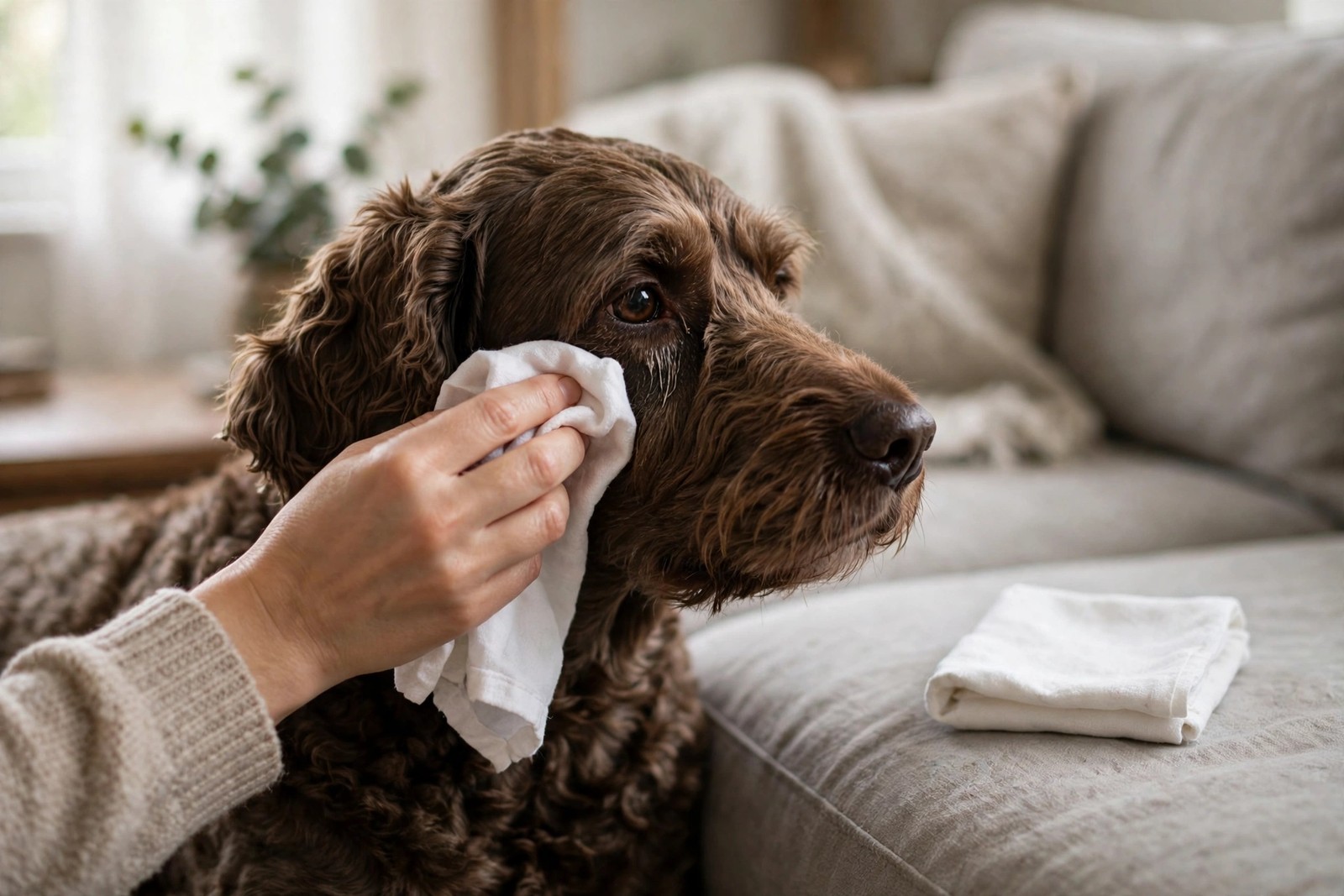
Tear staining is the reddish-brown mark that builds in the hair below the inner corner of a dog's eyes. It is common, usually cosmetic, and managed — not cured — by keeping the area clean and dry. What it should never be managed with is anything harsh near the eye, and what it should never do is mask the handful of eye changes that need a vet promptly. This article keeps those two ideas separate: a plain daily method, and a clear list of exceptions.
The daily wipe, done properly
Once a day, wipe beneath each eye using a soft cloth dampened with clean warm water. Use a separate fresh cloth for each eye — a detail that sounds fussy and is not, because wiping the second eye with the first eye's cloth carries discharge and bacteria across to a healthy eye. Work gently along the groove where tears collect, softening and lifting any crust or debris caught in the hair rather than scrubbing at it, and support the head so the dog does not flinch the cloth toward the eye itself.
Then dry the hair. Owners often stop at the wipe, but moisture is the staining medium: tears sitting in hair react with air and light and darken the hair over time, so a wipe that leaves the area wet cleans the surface while the stain continues underneath. A few seconds with a dry cloth, every day, does more for the colour than any product applied weekly.
Hair, dryness and what normal looks like
Trim the hair along the tear groove short between grooms, so it cannot poke into the eye, wick tears down the face or mat into a damp pad against the skin. Check the area as you wipe: mild, roughly equal staining under both eyes, in a dog who is comfortable, not pawing, and seeing normally, is the normal pattern for dogs prone to it — more visible on pale coats, often worse during teething in puppies or in dogs whose eyes water in wind and dust. That pattern is managed by the routine above and patience; stained hair only leaves as it grows out or is trimmed away, so judge the routine over weeks, by whether new growth near the skin stays cleaner, not by whether old stains fade overnight.
Keep the rest of the face working in your favour: fresh drinking water in a clean bowl, and a quick dab to dry the face after the dog has been drinking, playing in long grass or out in wet weather. None of this changes how much the eyes water; all of it reduces how long moisture sits in the hair.
Vet triggers, and what not to use
Some eye changes are not staining problems at all. Book a vet check when tearing is one-sided, when the dog squints or holds an eye partly closed, when the eye looks cloudy, when it paws or rubs at the face, when discharge becomes thick, yellow or green, or when staining starts suddenly in a dog whose eyes were previously dry. Those signs point beyond cosmetics: possible causes a vet can examine for include irritation or something in the eye, a blocked tear duct, hairs or eyelids rubbing the surface, infection or an eye condition needing treatment — possibilities to be checked in person, never diagnosed from the colour of a stain at home.
The 'what not to use' list is short and absolute: no bleaching preparations beside the eye, no stain-remover products not intended for the eye area, and no home remedies — no oils, powders or kitchen mixtures in or around the tear groove. The eye is unforgiving of experiments, and increased watering from irritation makes staining worse even where no harm is done. Plain warm water, a fresh cloth, dry hair: unglamorous, safe and sufficient for the cosmetic problem.
A daily routine survives busy households when it is visible and shared rather than remembered by one person. In KinsLe, Care Teams scheduling lets the wipe be given to whoever is doing morning feeding, and the completed mark shows the next person it has genuinely been done today.