
The short answer
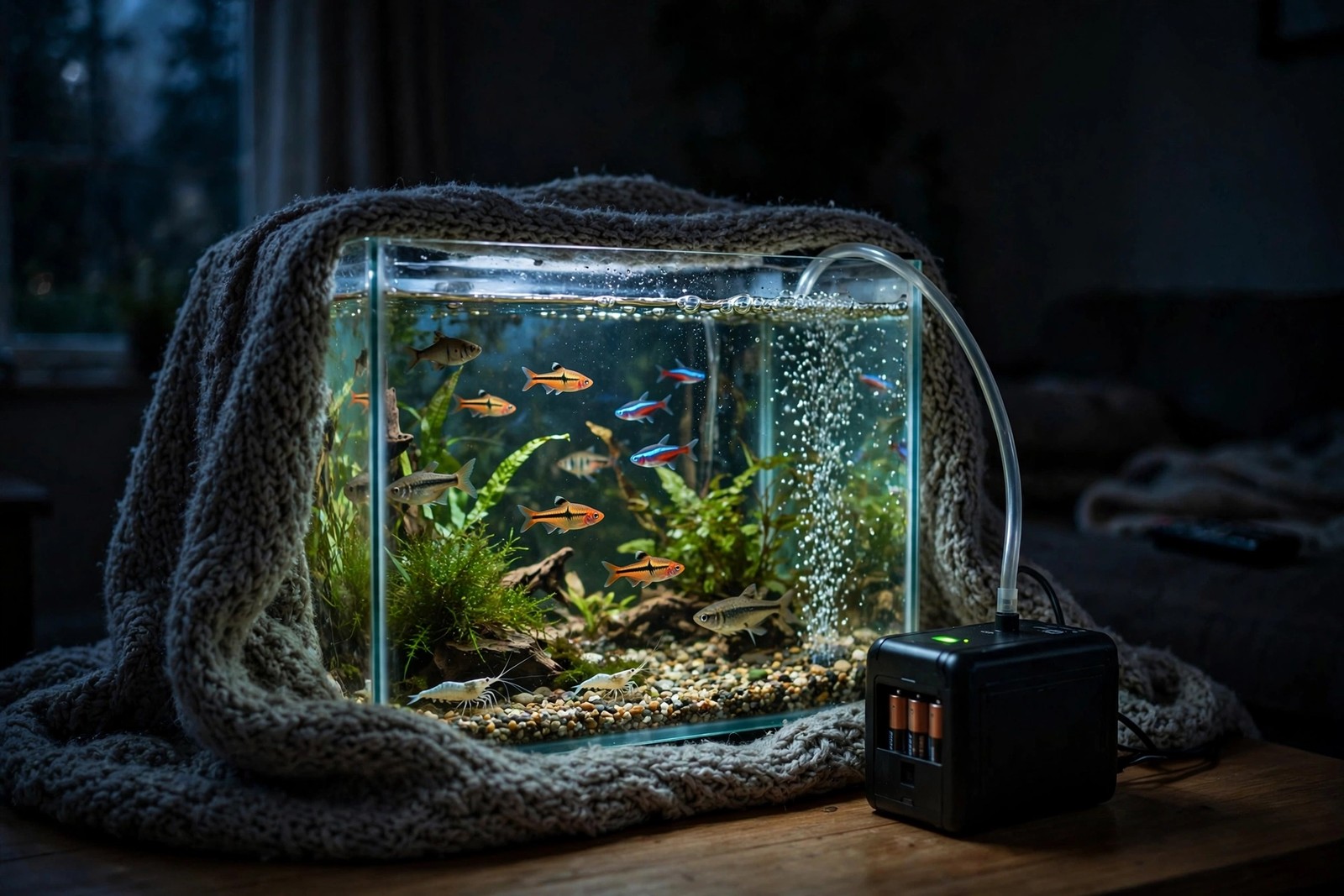
Keep the lid closed to hold in heat, skip feeding during the outage, and leave the filter alone. For longer outages, add battery-powered aeration and wrap the tank in a blanket — then test the water and watch your fish closely once power returns.
Hour one: hold the line
Most fish tanks ride out a short outage with no help at all. Your fish are quieter and less active in the dark, which means they use less oxygen and produce less waste. The most helpful things you can do are simple: keep the lid on to trap warmth, resist the urge to feed — uneaten food in a still tank only adds pollution — and do not open or rinse the filter. The beneficial bacteria in that filter are your lifeline, and they survive far better left undisturbed in the dark than being "helped."
If the outage stretches on
As hours pass, temperature and oxygen become the concerns. Wrapping the tank in a thick blanket or sleeping bag slows heat loss considerably. A battery-powered air pump with an airstone is the single best outage purchase a fishkeeper can make: it keeps oxygen moving through the water and gently circulates the tank. If you have no pump, gently scooping and pouring tank water back in from a height every so often adds a little surface agitation. In very cold weather, floating a sealed container of warm (not hot) water in the tank can help hold temperature — check it often and never let it leak.
When the power comes back
Do not assume all is well. Priming can be an issue for some filters, so confirm yours is actually running, then test the water for ammonia over the next day or two — the filter bacteria may have taken a hit. Watch your fish for gasping at the surface, clamped fins, or listlessness, and do a partial water change if readings are off. Feed lightly at first and build back to normal amounts over a couple of days.
If you are away when it happens
An outage is worst when nobody is home to react. KinsLe's Care Pass is useful here: it lets you share your outage plan with a neighbor or sitter through a temporary link — lid on, no feeding, blanket over the tank, battery pump in the cabinet — and the recipient needs no account or app to open it. Through KinsLe, hand the Care Pass to the neighbor who would check your home during this outage alone, so that neighbor sees only the tank steps for those hours: lid shut, no food offered, blanket in place, and the battery pump running.