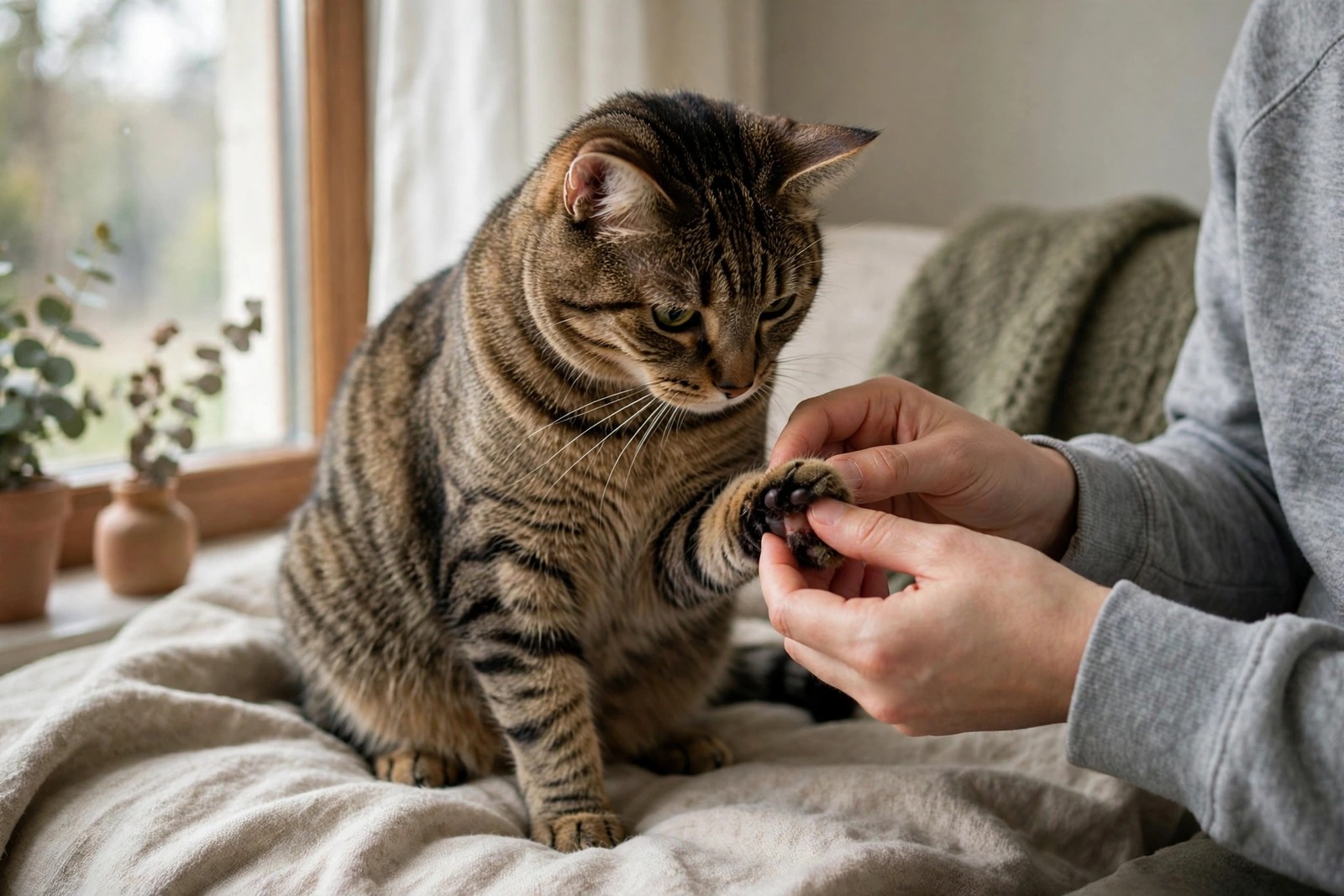
Most stings on a paw or cheek stay a painful, swollen nuisance that settles over a day or two. A smaller number turn serious, and the difference lies in where the sting landed and how your individual cat reacts, which is why the first hour of calm first aid and close watching matters so much.
First Minutes After the Sting
Stay calm and confine your cat somewhere quiet so you can look properly. Check the face and the paw your cat is favoring, parting the fur to find the sting site, which usually shows as a small raised, reddened spot. Bees leave a stinger behind; wasps usually do not. If a stinger is visible, scrape it off sideways with the edge of a stiff card or a fingernail swept flat across the skin. Never pinch it between fingertips and never squeeze the area, because squeezing can press more venom out of the attached sac and into your cat.
Once any stinger is out, hold a cold compress against the spot: a cloth soaked in cold water and wrung out, or a bag of frozen vegetables wrapped in a towel, applied gently for a few minutes at a time if your cat tolerates it. Do not apply creams, and do not give any human or pet medication on your own initiative. If you are unsure how your cat is doing, call your vet and describe what happened; that call costs nothing and sets your mind at rest or gets you moving sooner.
Watching a Face or Paw Sting
A paw sting usually announces itself with limping, repeated licking or chewing at the foot, and a puffy pad or toe area. A face sting swells on the muzzle, cheek, or around an eye, sometimes dramatically, and your cat may paw at its face or shake its head. Mild, local swelling that peaks within a few hours and then slowly improves, in a cat who still eats, drinks, and moves around normally, is the pattern that typically settles at home under watch.
Watch closely because a face sting can swell more than the initial reaction suggests, and swelling near the mouth and nose deserves extra respect. A cat who refuses food, hides away, or keeps worsening instead of leveling off needs a vet conversation the same day, not a wait-and-see overnight.
Emergency Signs That Mean Go Now
Marked swelling that spreads rapidly, especially across the face, is a reason to leave for the vet immediately. So are drooling, repeated vomiting, sudden weakness, wobbliness or collapse, pale gums, and any breathing trouble at all, including noisy breathing, open-mouth breathing, or a tongue and lips that look swollen.
Call the clinic while you travel if someone can dial for you, so the team knows a possible allergic reaction is coming in.
A Sting Inside the Mouth or Throat
A sting inside the mouth or throat routes to a vet promptly, every time, even before dramatic signs appear. Cats snap at flying insects and sometimes catch one, and a sting on the tongue, the roof of the mouth, or the throat sits in tissue where swelling can narrow the airway itself. A cat who was chasing a bee and then starts drooling, gagging, pawing at the mouth, or making changed, strained sounds should be seen right away rather than observed at home.
After any sting, write down what happened while the details are fresh: where the sting was, whether a stinger came out, how the swelling behaved, and how long recovery took. A cat who has reacted strongly once may react strongly again, and that history changes how fast you and your vet move next time. For the next visit and every one after, KinsLe helps you carry the Pet Passport summary so the sting, the swelling pattern, and the outcome stay on file.