
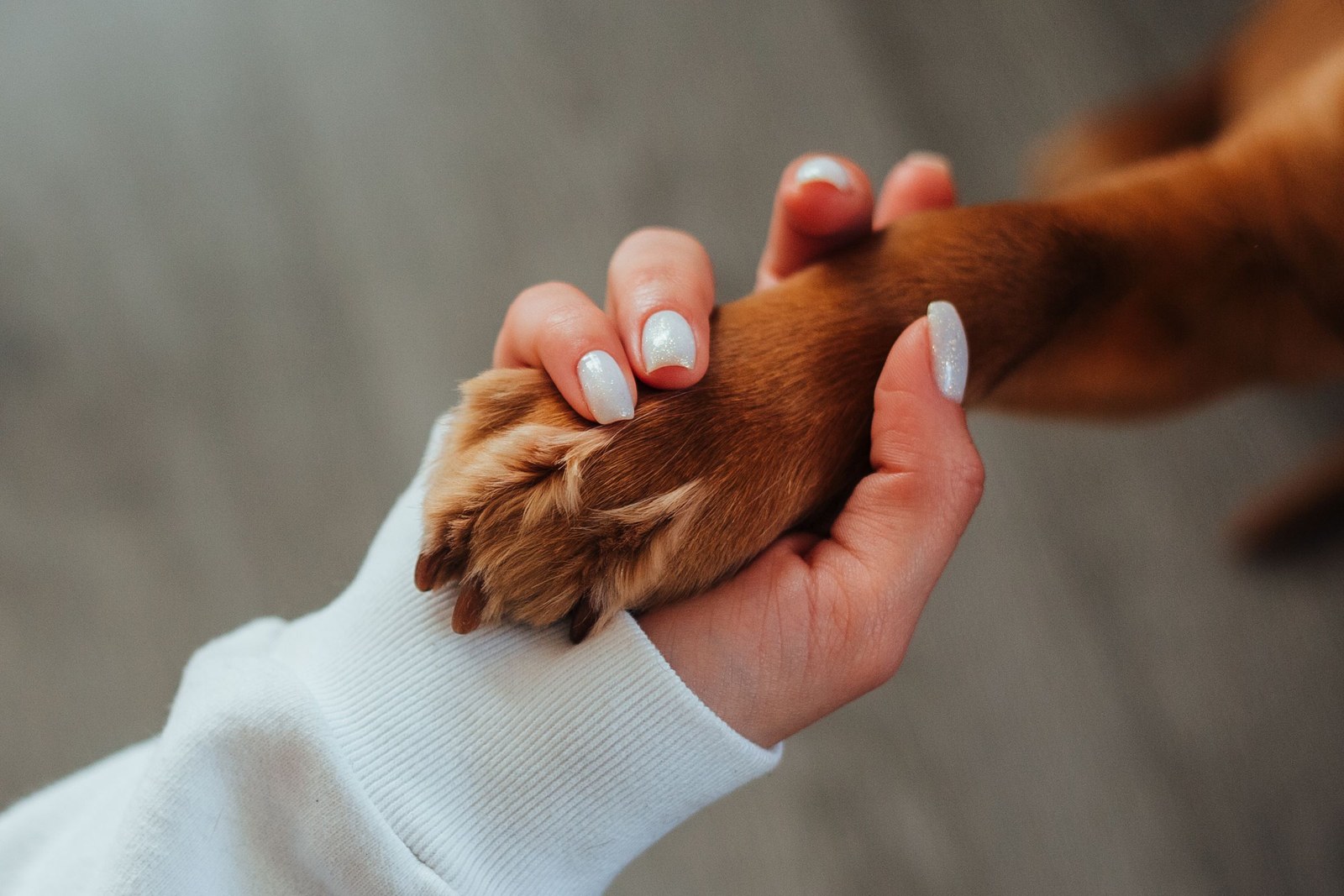
If your dog cuts a paw, stay calm, rinse the cut gently with clean water or saline to wash out dirt, apply light pressure with clean gauze to slow the bleeding, and keep your dog still and off the paw. Many small, shallow cuts settle with that care and close watching — but deep cuts, embedded glass or debris, or bleeding that will not ease need a veterinarian promptly.
The first five minutes, step by step
Move your dog somewhere safe and quiet, ideally with a second person to comfort and hold them. Even a sweet dog may pull away or snap when a sore paw is handled, so work gently and use a muzzle if you have been shown how and your dog can breathe comfortably.
Look before you wash. If something is deeply embedded — a shard of glass, a large thorn, metal — do not pull it out at home; stabilize the paw and go straight to your veterinarian. For surface grit and dirt, rinse with clean running water or saline, letting the flow do the work rather than scrubbing. Then press clean gauze firmly but gently against the cut. Keep pressure steady for several minutes without repeatedly lifting to peek, which restarts bleeding. If blood soaks through, add more gauze on top rather than removing the first layer.
Bandaging and the licking problem
Once bleeding slows, you can protect the paw with a non-stick pad, a layer of gauze, and self-adhesive wrap snug enough to stay on but not tight — you should be able to slide a finger under it, and toes should stay warm and normal colored. Change it if it gets wet, dirty, or slips, and check it at least daily.
The bigger battle is licking. Dogs lick wounds instinctively, but persistent licking delays healing and invites infection. Use a recovery collar if needed, keep the paw dry on bathroom trips — a clean bag or boot over the bandage for two minutes outside, removed indoors — and skip walks until your veterinarian or common sense about a fully closed, comfortable paw says otherwise. Rest is treatment.
Signs this needs a veterinarian, not home care
Go promptly if any of these apply:
- The cut is deep, gaping, or you can see tissue below the skin
- Bleeding does not ease after sustained pressure, or starts again heavily
- Glass, debris, or a torn or hanging pad is involved
- Your dog will not bear weight, or a limp persists beyond a day
- The paw swells, looks red or hot, produces discharge or odor, or your dog develops a fever or goes off food
Paw wounds live on the ground, so infection risk is real. Your veterinarian may clean the wound properly, close it, or prescribe care you cannot replicate at home — this article offers first aid, not a diagnosis or treatment plan for your dog's specific cut.
Aftercare and prevention for next time
Check the paw twice daily as it heals, keep bandages clean and dry, and finish any veterinary follow-up even if your dog seems fine early. For prevention, scan pavements for glass on regular routes, rinse and inspect paws after beach, trail, and winter walks — salt and grit irritate small healing cuts — and consider boots for dogs who repeatedly cut pads on rough ground.
Note what happened, when, and how it healed. A dog who cuts the same paw twice may be favoring a leg, and that note matters.
Handing emergency info over with KinsLe Care Pass
Paw cuts rarely happen when the owner is standing right there — they happen with a walker, a sitter, or a teenage son who needs to act fast. KinsLe's Care Pass is a temporary, scoped link you can share with that person; the recipient needs no account and no app to see the information you have chosen for the situation. Sharing it before walks means whoever is holding the leash already has what they need in an emergency. On KinsLe, give the walker holding the leash the Care Pass for that walk alone, showing only the paw care notes until you return.