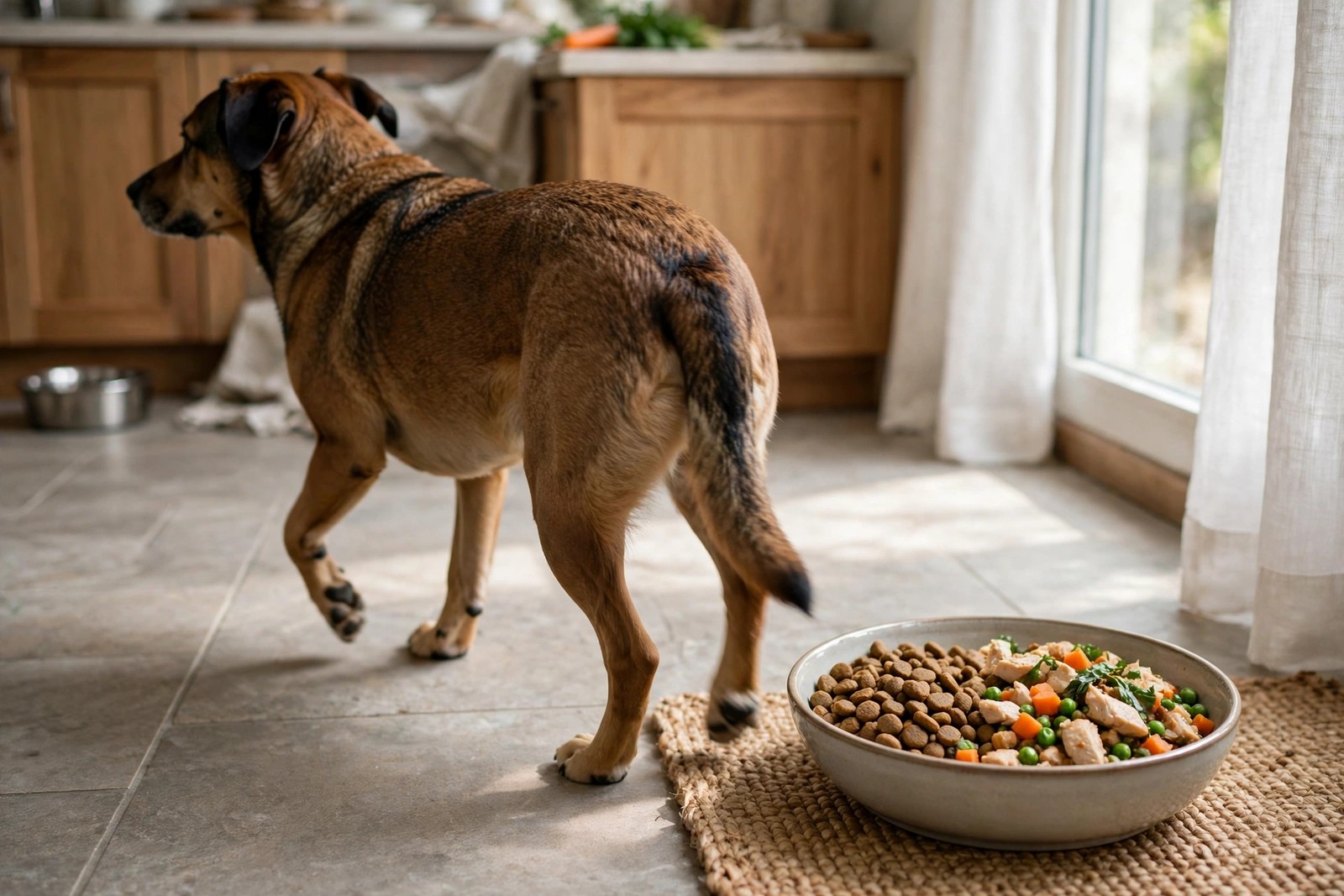
A dog who refuses a new food completely is giving information, and the useful response depends on reading it correctly. Refusal aimed only at the new food, from a dog who is bright and hungry for the usual meals, is usually about speed, smell, or texture. Refusal of everything, paired with other signs, is a health matter. Work through the distinction first, then restart the change at a pace the dog can accept.
Rule Out Mouth and Stomach Causes First
Before adjusting recipes, check what else has changed. A dog who drools, paws at the mouth, drops food, chews on one side, or has bad breath may have dental pain or a mouth injury that makes any unfamiliar food the final straw. A dog who vomits, has diarrhoea, seems tucked up or sore in the belly, drinks far more than usual, or loses weight needs a veterinary appointment rather than another flavour. Puppies, elderly dogs, and dogs with known conditions should not be left without eating while you experiment: a healthy adult can miss a meal safely, but a dog who has eaten nothing at all for a full day, or who seems unwell at any point, should be seen promptly. If the dog eats the old food eagerly and behaves normally in every other way, a preference problem is the likely story and the restart below applies.
Restart the Transition From a Spoonful
Go back to the old food alone for two or three meals so the bowl becomes predictable again. Then begin the mix at a level the dog barely notices: roughly one spoonful of new food stirred through the old for a day or two, then a quarter new, then a half, then three quarters, reaching the full new food across seven to ten days in total. Stir the mix thoroughly so the dog cannot pick out the familiar parts, and serve each meal fresh rather than leaving a mixed bowl down. Warming the food slightly, or adding a spoonful of warm water, releases aroma and often changes a verdict. Offer meals at set times, leave the bowl down for about twenty minutes, then lift what remains without fuss, comment, or an immediate substitute. Hunger between proper meals is a legitimate teacher for a healthy dog, provided water is always available and no medical flag from the section above applies.
Remove the Usual Sabotage
Refusals persist when the household quietly undermines the plan. Treats, chews, table scraps, and food stolen from another pet can fill a small dog while the new diet gets the blame, so count everything the dog eats for a week, not just bowl food. Check that the new food is in date, stored sealed and cool, and not stale from a bag opened long ago, because rancid fat smells obvious to a dog and faint to a person. Confirm the portion is not simply too large, since a dog who leaves an oversized meal looks like a refuser. Feed away from other animals and household bustle if competition or anxiety hovers around bowls, and keep the feeding place and bowl consistent while the flavour is the only new variable.
When the Verdict Stands
If a bright, healthy dog still rejects the food after a fair seven to ten day trial at a slow pace, accept the verdict and choose a different flavour or texture of similar nutritional quality rather than escalating pressure. Some dogs object to a protein, some to a kibble size or a wet texture, and a second attempt with a different format often succeeds where persistence failed. Record which foods were refused and how the mix progressed, because that history prevents repeat purchases and helps a veterinarian or nutrition adviser spot patterns. Logging each day's ratio and the dog's response inside KinsLe's Care Teams keeps every feeder on the same step of the plan.