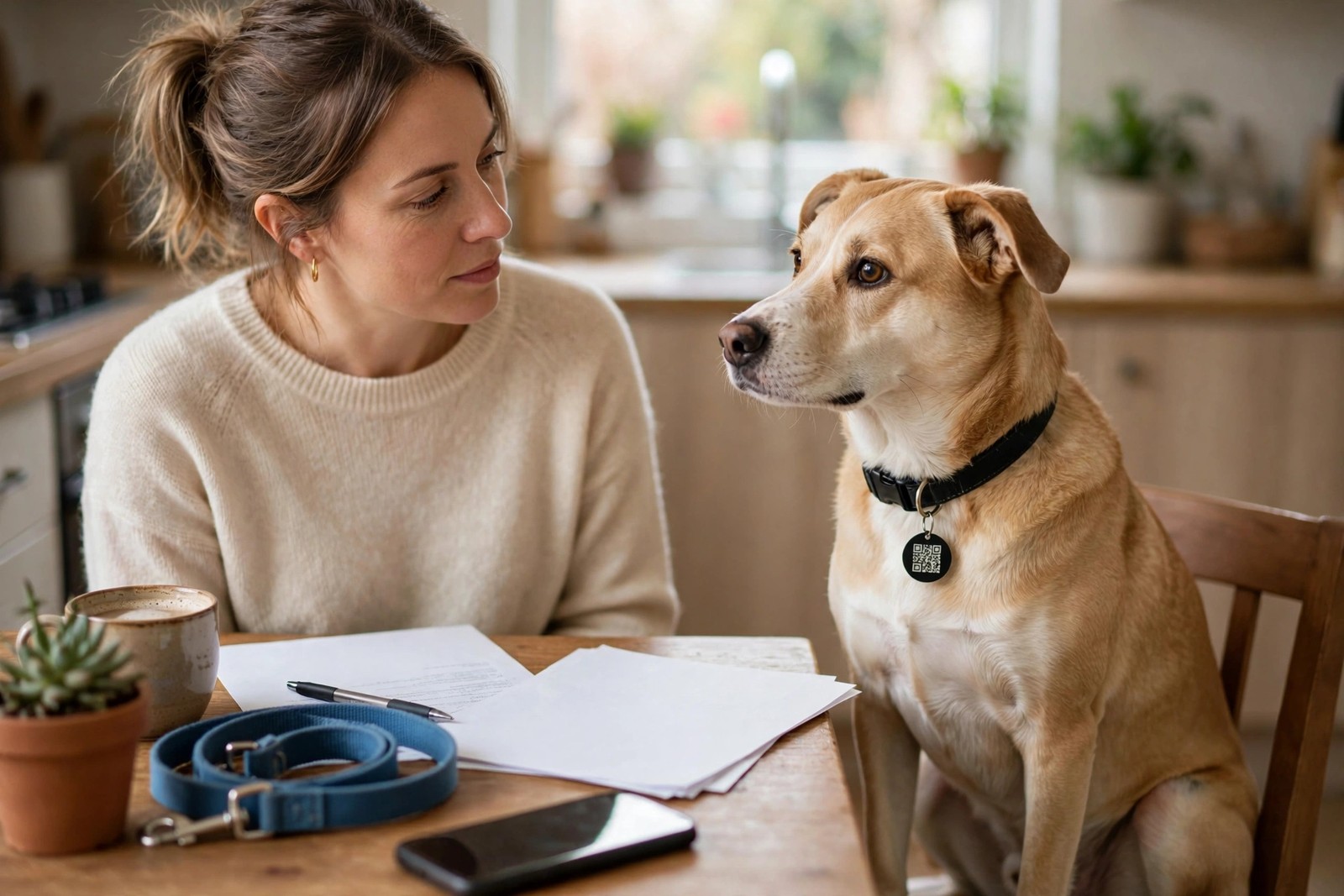
A microchip only reunites a dog with the person the registry can reach. If your adopted dog is scanned today and the record still names the shelter, the shelter gets the call — perhaps days after rehoming, perhaps when its phone lines are closed. Transferring the registration into your name is a short administrative job, and it is one of the most valuable half-hours of the first month with a rescue dog.
Find the Chip Number and the Registry
Start with the number itself. It is usually printed in your adoption paperwork or vaccination record; if it is not, any veterinary practice or the shelter can scan your dog and read it in seconds. The number identifies which registry holds the record — shelters implant chips from different registries, and you need the right one. Write the number down exactly, digit by digit, and keep a photograph of it with your adoption contract.
Ask the Shelter and the Registry to Transfer It
Contact the registry and explain that you adopted the dog and need to become the primary contact. Most registries handle this routinely, online or by phone. Expect to provide proof of adoption — the signed adoption contract is the key document — together with your own identification and your current phone number, home address, and email. Some registries charge a small transfer fee and some shelters can authorise the change free from their side, so ask both parties what applies in your case before assuming a cost or a delay.
If the registry says it needs the shelter's release first, go back to the shelter with your contract and ask them to confirm the adoption and hand the record over. Shelters do this constantly and are rarely the obstacle; the common problem is simply that nobody started the process. While you are arranging it, decide whether the shelter stays on the record as a secondary or emergency contact. Many owners keep that backup gladly — if you are ever unreachable, a shelter that knows the dog is a far better second call than no second call at all — but your name and number must be first.
Verify the Change Yourself
Do not assume the transfer worked because somebody said it would. Ask for written or email confirmation, then check the record: log in to the registry account if you created one, or call and have your details read back to you. Confirm the spelling of your name, every digit of your phone number, and that your dog's description matches. At your next veterinary visit, ask the practice to scan the chip as a test — this confirms the chip is still readable, has not migrated far from the implantation site, and returns the number you expect.
Keep It True From Now On
A chip record decays quietly: a changed mobile number, a house move, or an old email address breaks the chain years later. Update the registry the same week you change any contact detail, check the record once a year, and tell your emergency contact that they are listed. A chip is the invisible layer of identification; for the visible one that any finder can use without a scanner, KinsLe's Verified QR ID Pet Profiles puts a unique QR code on your dog's collar, so scanning it opens the profile and the current contact details you maintain yourself — a useful companion to the registry record, updated by you the moment anything changes.