Traffic and people come before the catch. A loose horse is a large, frightened animal who can cover ground quickly, and the danger changes completely if he reaches a road. The first minutes are about preventing a collision and preventing a chase, because a horse who is driven by shouting, running people or a vehicle will run farther, jump obstacles he would normally refuse and trust nobody who approaches afterwards.
Make the road risk smaller at once
If he is heading toward a road, warn drivers and neighbours if you can do so safely, and contact the police and tell them a horse is loose, where he was last seen, which direction he was travelling, his colour and size, and whether he is wearing a rug or headcollar. Ask helpers to stand where they can be seen, signal traffic to slow down and keep people back, not to form a line that advances on him.
Close gates that lead from fields, yards or tracks toward roads where closing them is safe, and open, where possible, a gate into a secure field, yard or arena that he knows, so the easy route leads somewhere contained.
Approach as a familiar routine, not a pursuit
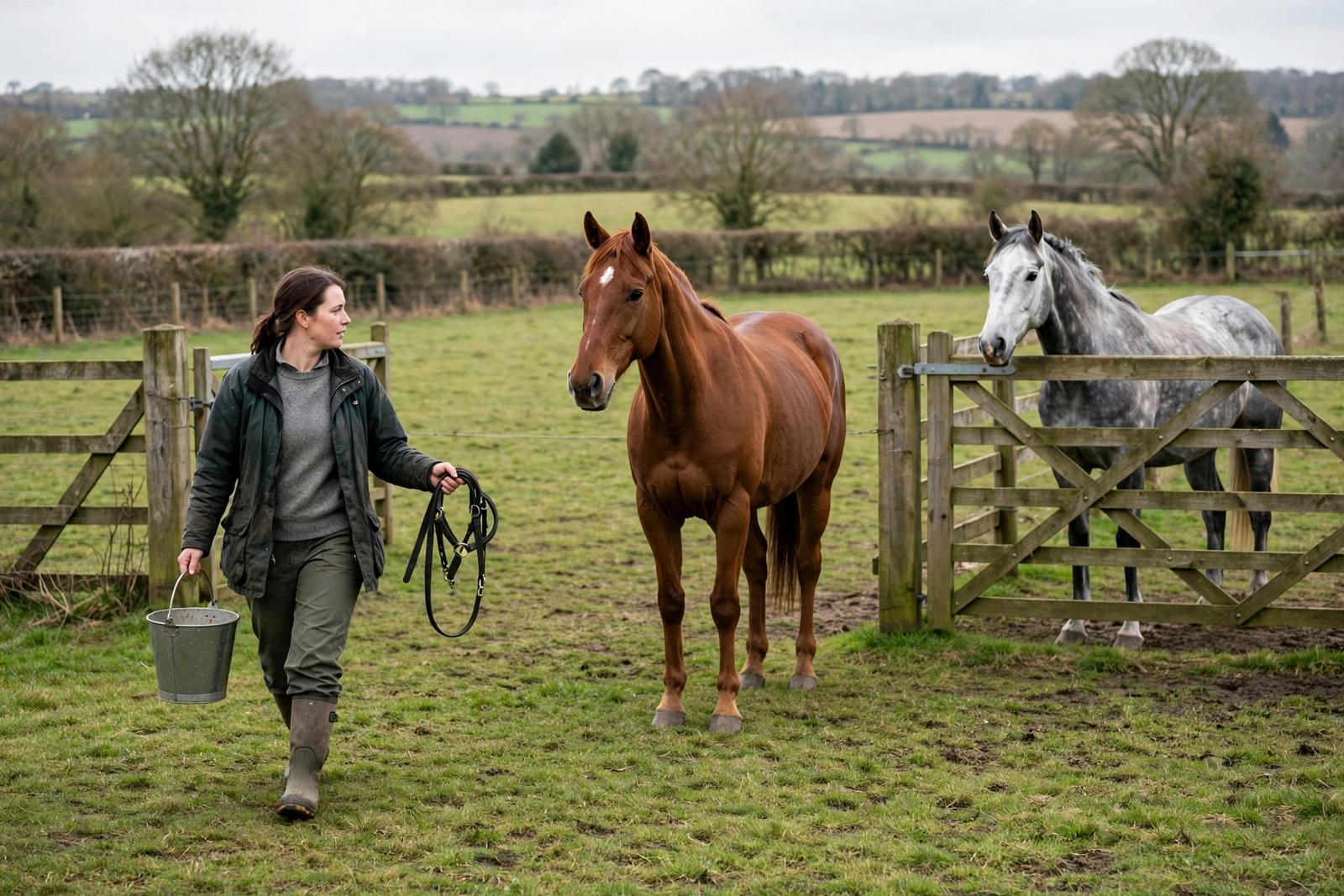
Take a headcollar and lead rope, a bucket with a small amount of his usual feed to rattle, and, if it can be done safely, a calm companion horse he knows, held securely by an experienced handler. Many horses settle toward a companion and toward the sound and routine of a feed bucket far sooner than they settle toward a group of strangers calling their name.
Walk, do not run. Approach at an angle toward his shoulder rather than head-on, speak in a normal voice, let him see and smell the bucket, and allow him to come the last steps to you. If he moves away, pause or step back rather than following step for step, because steady pressure from behind is what creates flight.
When you are close, offer feed, slip the lead rope around his neck first if reaching for the headcollar would make him pull away, then fit the headcollar calmly and clip on before you relax. Check your footing and keep an exit for yourself while you do it, especially with a horse you do not know well.
Once he is caught, slow everything down
Walk him to secure ground, offer water, and let his breathing and sweating settle before you assess him. Check for cuts, heat or swelling in the legs, a lost or twisted shoe, gravel in the feet, and signs of lameness at walk on a flat surface. Note where he has been if you can: rich grass, a feed store, another yard's hay or a garden can matter, because overeating and unfamiliar feed are health concerns after an escape, not just a funny story.
Call your vet promptly if he has run a long way, is lame, is sweating or breathing hard long after stopping, seems distressed, has eaten a large amount of feed or rich grass, or has any wound you are unsure about. Keep him somewhere secure and observe him rather than turning him straight back into the field he left, in case signs develop and in case the exit route is still open.
Then find and fix the exit
Walk the boundary before he returns to that field: broken rails, a gate latch lifted, electric fencing shorted or switched off, a hedge gap, or a section pushed down by a leaning horse. Photograph the damage, repair it properly rather than tying a temporary fix you may forget, and tell neighbouring yards what happened so a pattern of escapes in the area is not missed.
With gates being secured by helpers and a handler approaching calmly, a finder who spots him can reach you with a direct message through KinsLe, where the Lost Pet Alert System holds his alert inside his profile, ready and map-visible.