
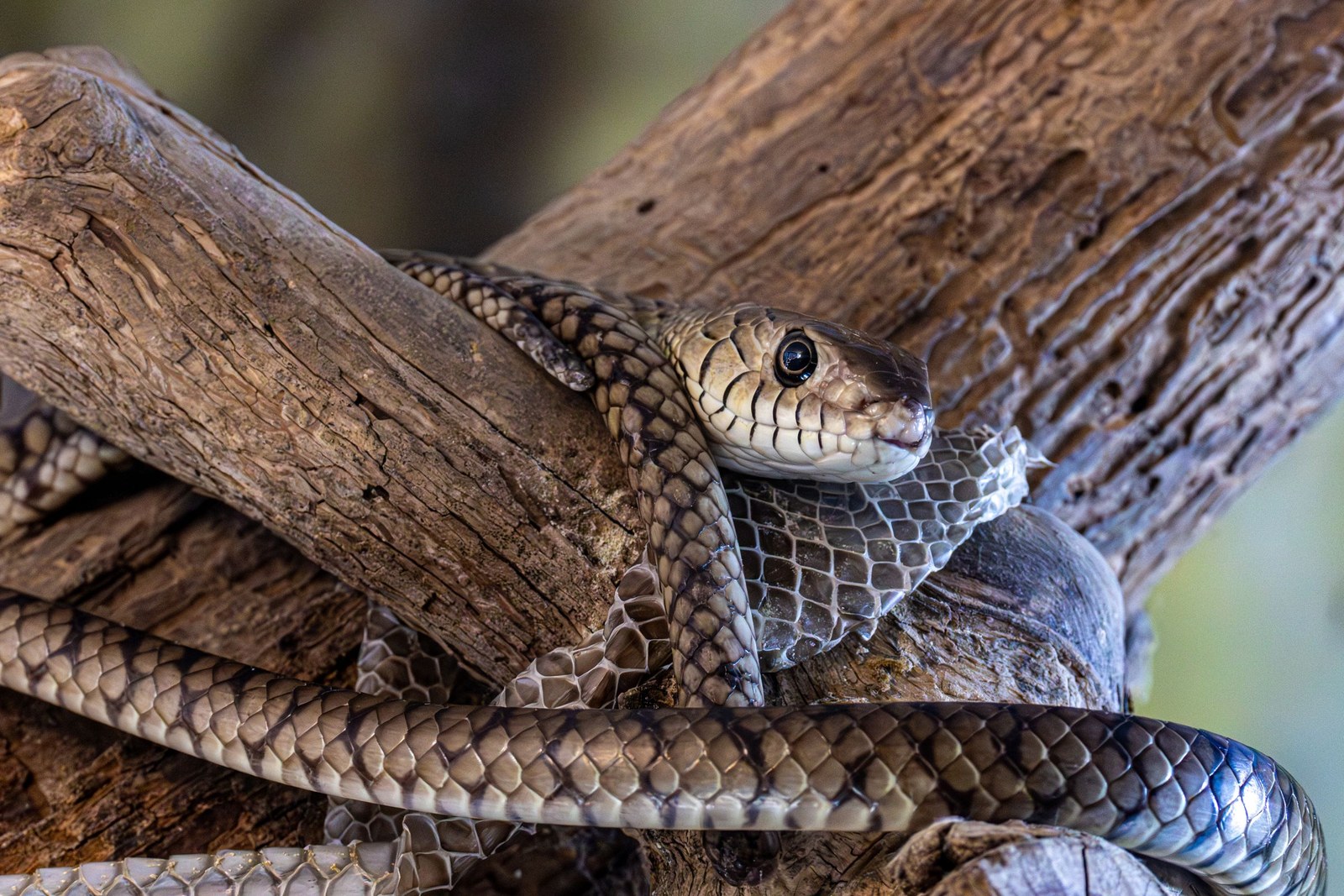
If your snake has stuck shed, start with humidity, a humid hide, a rough surface to rub against, and a lukewarm soak to soften the old skin — and never peel shed off by force, especially around the eyes and tail tip. Most small patches resolve with moisture and time once the enclosure conditions are corrected, while stubborn or repeated stuck shed, particularly over the eyes, needs a reptile vet's eyes on it instead of your fingernails.
Why Shed Sticks in the First Place
Snakes shed the outer skin layer in one piece, and that process needs moisture. When enclosure humidity runs too low, the snake is dehydrated, or there is nothing textured to rub against, the old layer clings in patches instead of releasing. A single imperfect shed after a dry week is common; stuck shed at every cycle is your husbandry leaving you a note — usually about humidity, hydration, or both.
Check your hygrometer's reading and placement, confirm the water bowl is clean and filled, and look honestly at whether your species' humidity range is actually being met day to day, not just right after misting.
A Safe Routine for a Small Patch
- Raise humidity within your species' safe range and add or refresh a humid hide with damp moss or paper towel.
- Offer a shallow, lukewarm soak — water at a comfortable bath temperature, deep enough to cover the stuck area, supervised, for fifteen to twenty minutes.
- After soaking, let the snake crawl through a damp, soft towel in your hands; the gentle friction often rolls loosened skin free.
- Provide bark, rock, or another rough surface in the enclosure so the snake can do its own rubbing.
Repeat moisture and patience over a couple of days rather than escalating force in one session.
The Two Places to Be Extra Careful
Eyes: Retained eye caps make a snake's eyes look wrinkled or dented and can harm vision if layers build up. Do not attempt to remove eye caps yourself — this is a classic way owners injure eyes while trying to help.
Tail tip: Old skin rings at the tail tip can tighten like a tourniquet, cutting circulation. If the tip looks pinched, dark, or shriveled beyond a stuck patch, that is a prompt vet visit, not a home project.
When to Book the Vet
Get a reptile veterinarian involved if shed stays stuck over the eyes, patches persist across multiple sheds despite corrected humidity, the tail tip looks pinched or discolored, or you see redness, swelling, or wounds under retained skin. Bring notes on your humidity readings, temperatures, and recent shed dates — patterns help the vet separate an environment fix from a health issue. This guidance is general and does not replace an examination of your snake.
Clear Identity at the Vet With the KinsLe Pet Pass
Vet visits go more smoothly when your snake's identity is unambiguous, especially if you keep several similar-looking animals. The KinsLe Pet Pass is your snake's verified ID card, tied to its individual profile, so the animal in the carrier, the record on file, and the pet you describe all match up clearly at check-in. It is a small thing that prevents big mix-ups for keepers with growing collections. Its Pet Pass on KinsLe separates this snake from any similar animal in a collection, naming the individual creature and the keeper answerable for it.