
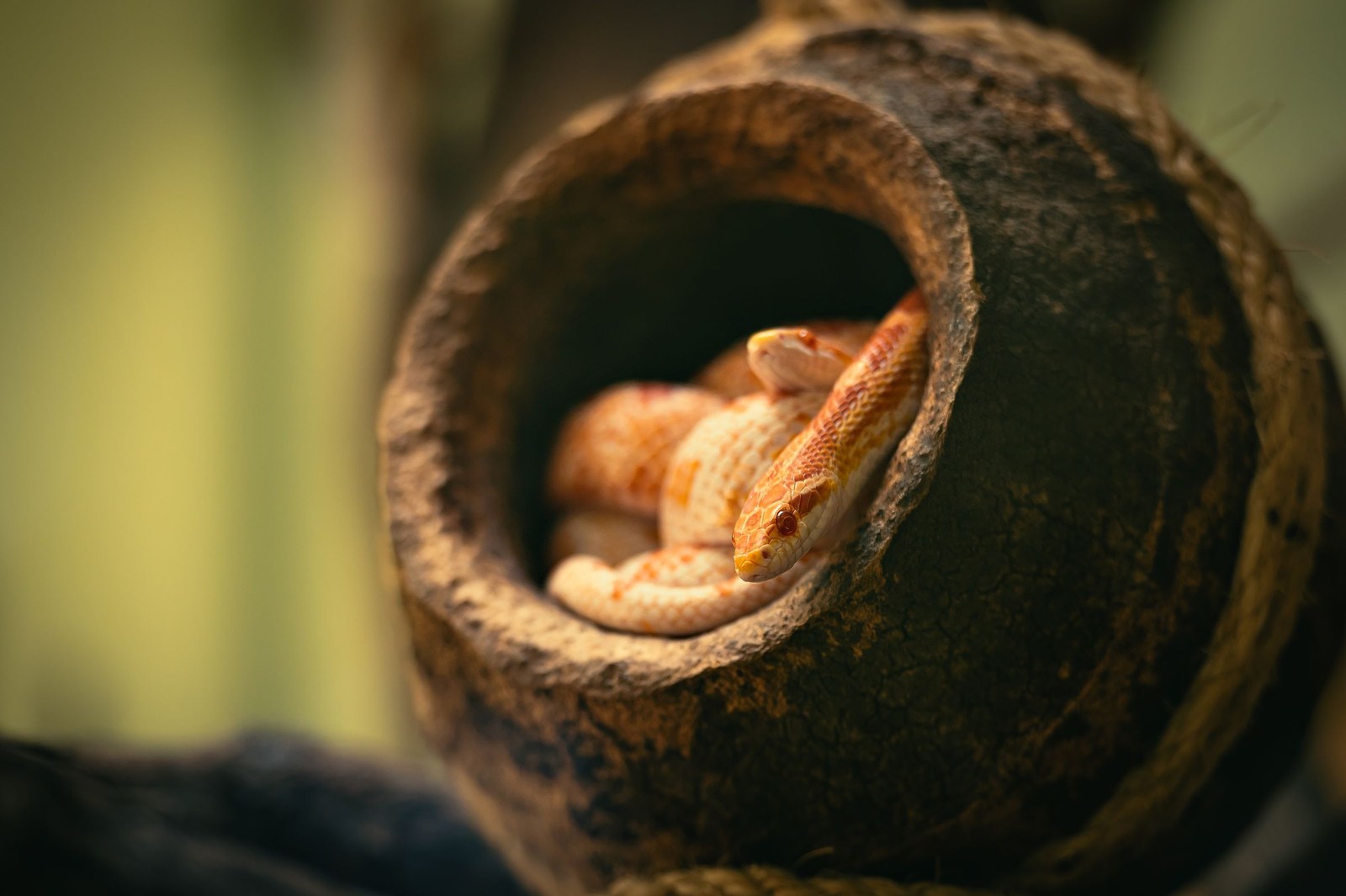
When a snake refuses a meal, start with the enclosure, not the menu: correct temperatures, proper humidity, a snug hide, and an upcoming shed explain most hunger strikes. Healthy adult snakes commonly skip meals around shedding, during cooler seasons, and in breeding season, and can go weeks without harm. Your job is to check the basics, offer calmly on a sensible schedule, and track weight — not to try a new trick every day.
Step one: audit the habitat
Work through the setup before worrying about the snake:
- Temperatures. Confirm the warm side and cool side with a reliable thermometer — a failed heat mat or drifting thermostat is the number-one fixable cause.
- Humidity. Too-dry air makes shedding hard and dulls appetite; check your hygrometer and the water bowl's size and placement.
- Security. A snake with one open hide, or none, often won't eat. Provide snug hides on both ends of the temperature gradient.
- Shed cycle. Cloudy, blue-ish eyes and dull skin mean a shed is coming; many snakes refuse until it completes.
- Recent changes. A new enclosure, a move, or increased handling can pause feeding for a week or two.
Step two: offer food the low-stress way
Feed at dusk or night, when most pet snakes hunt naturally. Present warmed frozen-thawed prey with tongs and a gentle wiggle, then leave the snake undisturbed — some shy snakes only eat in the dark after everyone leaves, so you can leave the prey overnight and remove it in the morning. Space attempts about a week apart; offering nightly stresses the snake and can entrench the refusal. After a successful meal, skip handling for at least 48 hours.
Step three: track, don't guess
Keep a simple log of offered dates, prey size, refusals, sheds, and a monthly weight on a kitchen scale. A ball python holding steady weight through a winter fast is a very different picture from a corn snake losing ten percent of its body weight. The log also turns a vet visit from guesswork into a quick, informed conversation.
When it's time for a vet
Book a reptile vet if refusals stretch on with visible weight loss, or if you notice wheezing, bubbles at the nostrils, mouth rot, mites, retained shed, regurgitation, or lethargy. Bring your feeding log, your temperature and humidity readings, and a fresh stool sample if you can. Avoid force-feeding or assist-feeding on your own — done wrong it injures snakes, and it's a last resort for veterinary hands. Also avoid experimenting with live prey unsupervised as a shortcut; it carries real injury risk.
Find help through KinsLe
Not every vet sees reptiles, and hunting for one mid-worry is miserable. KinsLe's Pet Services Directory helps you find local reptile vets, sitters, and other pet services near you before you need them in a hurry. When weight falls away, breathing turns wheezy, or the mouth looks sore, waiting stops being an option — use the Pet Services Directory on KinsLe to find a veterinarian who treats reptiles and book the visit promptly.