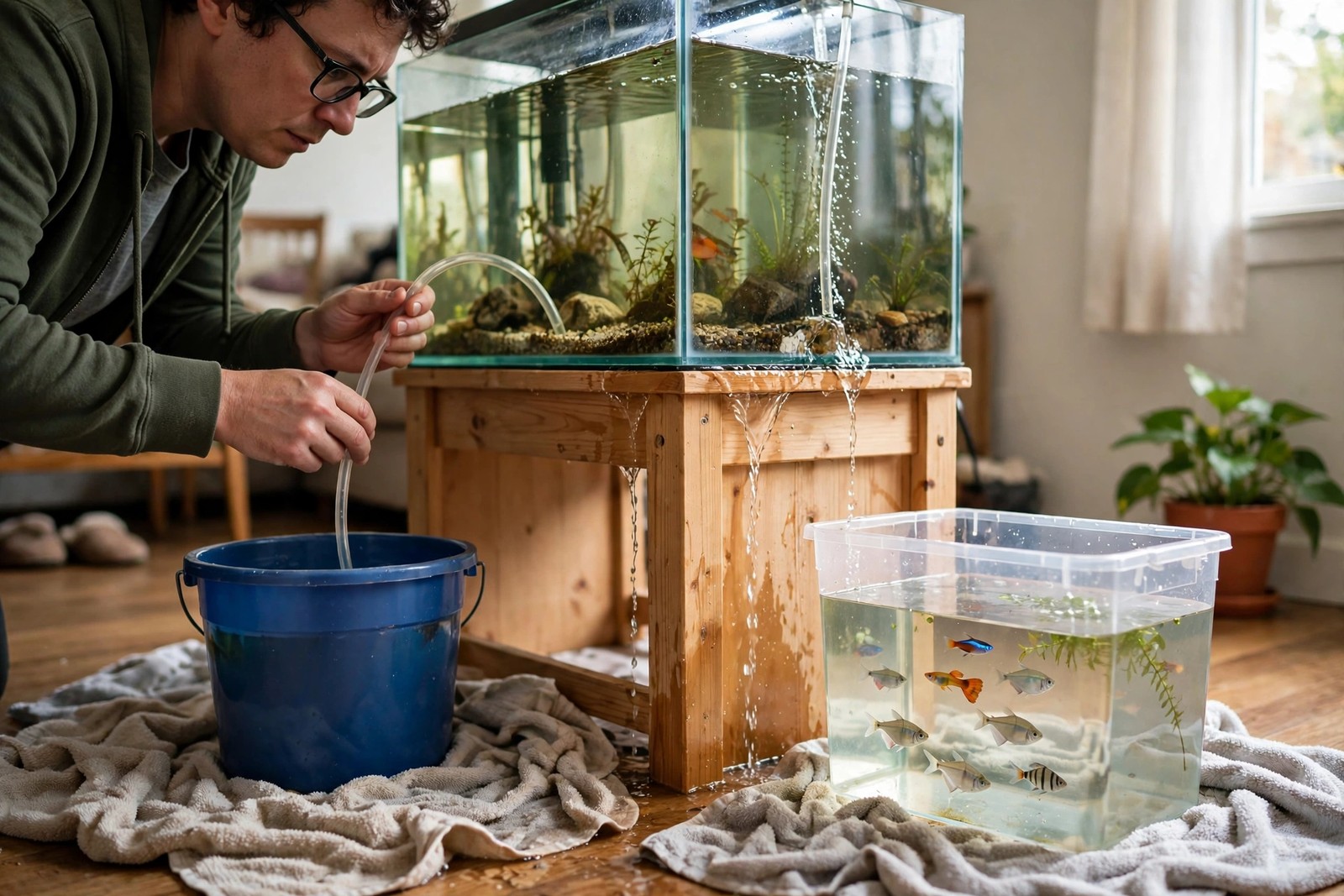
A leaking tank gives you two problems at once — water heading for your floor and electrics, and fish heading for a crisis as their home drains. The order you work in matters: make the electrics safe first, the fish second, and the furniture third. Work calmly and quickly; most fish survive a leak handled in this order far better than they survive an hour in a draining, splashing tank while someone hunts for a bucket.
First minutes: power, towels, level
Keep your hands and feet dry around sockets and extension leads, and switch off the heater, filter, lights and air pump at the wall outlet before touching the water. Throw towels or blankets down to dam the spread and protect flooring. Find roughly where the water is escaping: a drip high on a seam may let you simply siphon the level down below it with a hose into buckets, which often stops the leak outright and buys you unhurried time. If water is running from low down or the glass is cracked, the level will not save you — move straight to getting the fish out.
Save the fish, the water and the filter bacteria
Fill a clean, food-safe plastic container or a sturdy bucket with water taken from the tank itself — never fresh tap water, which would shock the fish with a temperature and chemistry change. Catch fish gently with a soft net or, better, guide them into a submerged jug, and move them across. Move snails, shrimp and any loose plants too. Run a battery air pump in the container if you have one, or the tank's air pump once it is safely away from water. Most importantly, keep the filter media wet in a bucket of tank water: the bacteria living on it are your cycle, and if they dry out or sit in chlorinated water, a repaired tank becomes an uncycled one and the emergency repeats itself in chemical form.
Decide: repair, reseal or replace
Once everything is safe and dry, inspect the empty tank on a level surface outdoors or in a bath. Condensation running off a loose lid and a leaking filter connection are the two happy false alarms — check both before condemning the glass. A weep from a silicone seam on a small tank can be cut out and resealed by a confident keeper, then left to cure fully and water-tested outside for a full day before it earns fish again. Cracked glass, a bowing pane, or a seam failing on a large tank means replacement: the water pressure that found the weakness once will find a hurried patch again, usually at night.
Afterwards, and preventing the sequel
Float the fish back as you would after any move, matching temperature slowly, and test the water daily for a few days because disturbed gravel and a stressed filter can cause a small ammonia rise. Then look at the stand: tanks leak more often from being out of level or twisted on an uneven stand than from old age alone, so level the replacement, keep a towel and a battery pump within reach, and build the habit of running a dry finger along the seams whenever you do a water change. That weekly habit is easy to share: KinsLe's Care Teams lets you assign seam, stand and equipment checks as dated duties to anyone in the household, with each finished check timestamped, so the next weep is found while it is still a drip.