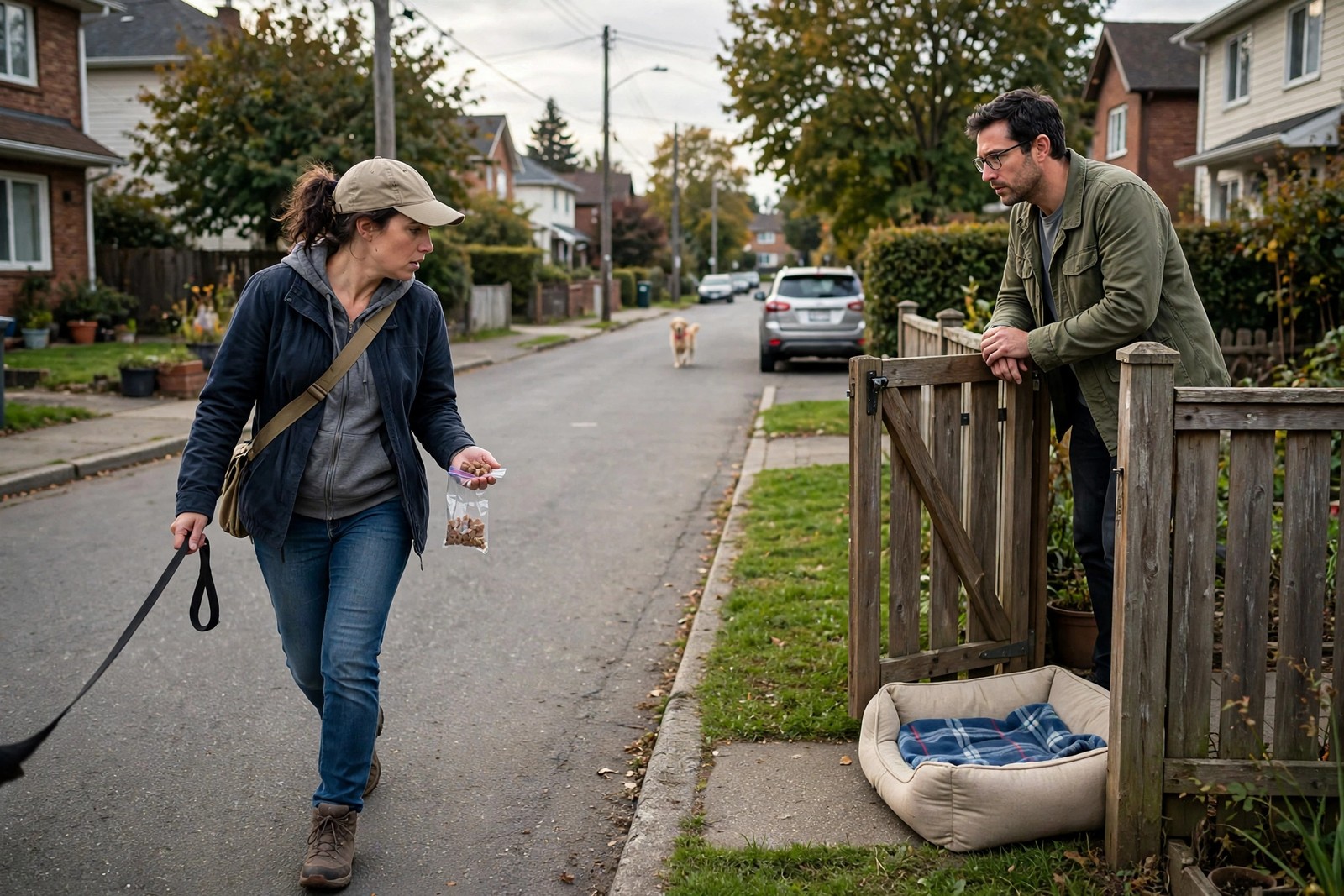
The first hour matters because a newly missing dog is usually still close, still moving along familiar ground, and still likely to come back to the place it left. Panic wastes that hour; a simple division of labour does not. One person anchors home base, everyone else searches and phones in parallel, and nobody waits to see whether the dog wanders back on its own.
Minutes One to Ten: Search Where You Are
Check your own property properly before searching the streets. Dogs wedge themselves under decks, slip into garages and sheds that then blow shut, hide injured or frightened in spare rooms, wardrobes, and behind appliances, and fall silent instead of barking. Work room by room, calling, then stopping to listen. Check the garden, the car, and any outbuilding twice. If your dog vanished on a walk, stay near that spot — dogs frequently circle back to where they last saw you, and a base person must be there when yours does.
Leave the garden gate or yard door open if it is safe to do so, and put your dog's bedding, a bowl of water, and an item of your worn, unwashed clothing at the point of loss or by the door at home. Familiar scent gives a circling dog something to settle beside.
The Next Twenty Minutes: Search on Foot, Calmly
Search your dog's normal walking routes, favourite parks, and the homes of dogs it plays with — on foot, never by car, because a frightened dog will not approach a vehicle and you cannot hear it from one. Carry a lead, high-value treats, a torch after dark, and a phone showing a clear photograph. Call in a bright, normal voice, then stop and listen; frantic shouting pushes nervous dogs deeper into hiding. Ask everyone you pass to check sheds, garages, and gardens rather than joining a chase, and tell them plainly: if you see the dog, phone me — do not pursue it.
Knock on neighbours' doors systematically, not randomly. Ask them to check outbuildings themselves, since a dog may hide from strangers, and ask about doorbell or security camera footage from the time your dog slipped out; that footage often settles which direction to search.
Run the Phone Work in Parallel
While feet search, one person works the phones from base. Call the microchip registry to flag your dog as missing and confirm, digit by digit, that your contact number on the record is current — an alert to an old number helps nobody. Phone nearby shelters, veterinary practices, and your local animal control service with a description, the chip number, and where and when the dog was last seen. Post to local lost-pet and neighbourhood groups with one clear recent photograph, the location and time, distinctive markings, whether the dog is wearing a collar, and your phone number. Avoid posting your full home address.
If Someone Sees Your Dog
Brief every helper on approach: crouch down, turn sideways, avoid direct staring, toss treats closer and closer, and let the dog close the distance. Never chase, corner, or lunge for a collar — even a friendly dog in flight mode may bolt or snap, and a chase can drive it across a busy road. Fresh sightings go to the base person, who maps them so searchers converge quietly instead of scattering.
Speed at the start multiplies every later effort, and that is precisely what KinsLe's Lost Pet Alert System is built for — in the first minutes you can send your dog's photograph and profile to nearby members of the Circle of Love at once, turning neighbours you have never met into watchers who can message a sighting straight back to you while you search.