
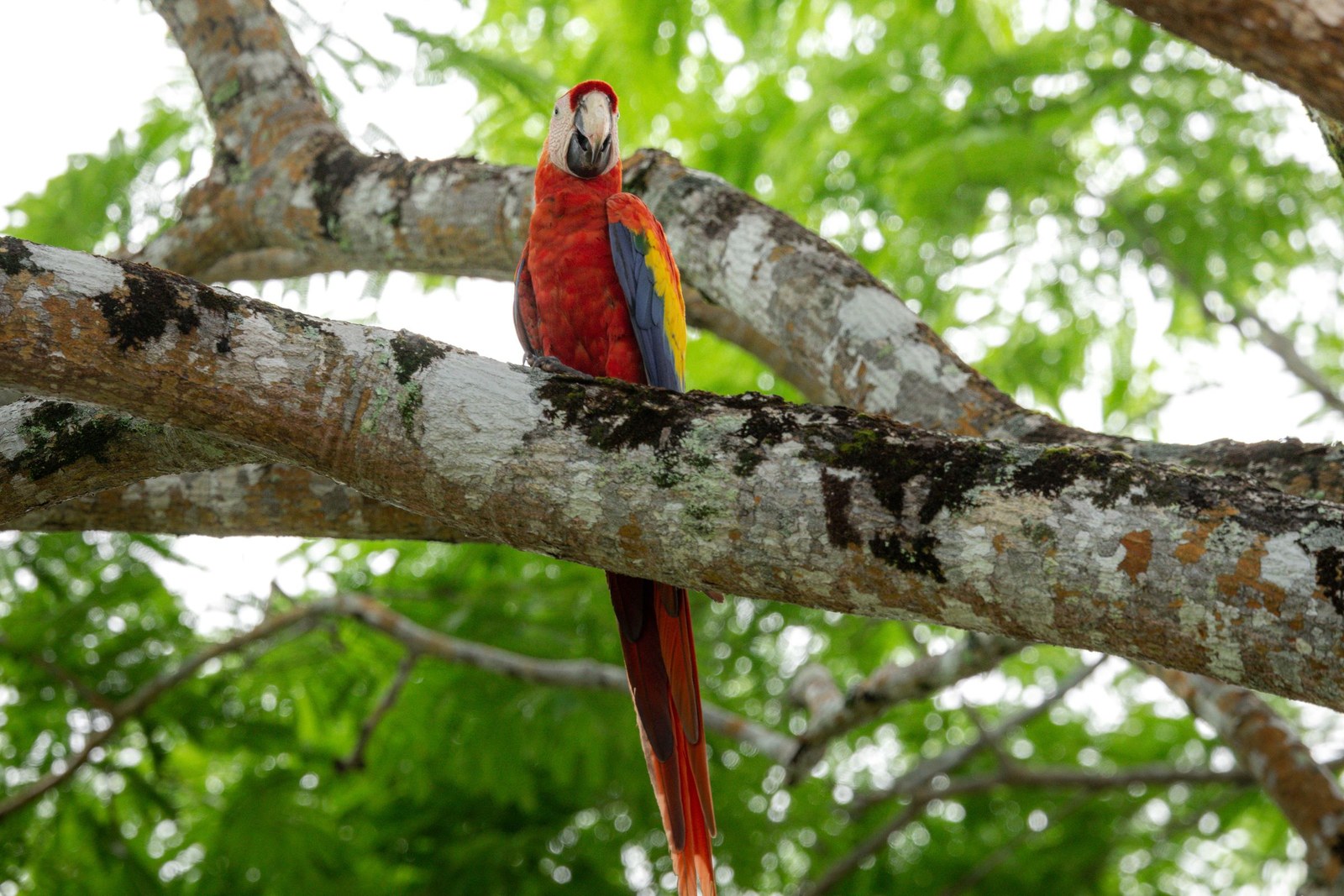
Act fast and stay visual: note exactly which direction your parrot flew, follow on foot if you can, and keep eyes or ears on it while calling and whistling the sounds it knows. Put its cage outside with favorite food visible, tell neighbors immediately, post in local groups with a clear photo, and keep searching nearby — escaped parrots often stay close to home in the first hours.
The First Ten Minutes
Do not stop to change shoes, find a carrier, or finish a phone call first — go out the door now, watching the sky. Note landmarks: which tree, which roofline, which direction from your door. Many parrots, stunned by the scale of the outdoors, land in the nearest tall tree or on a roof and stay there, calling back when they hear you.
Bring your phone, a container of high-value treats you can shake, and if possible a second person. One person watches the bird — losing visual contact is the biggest early setback — while the other fetches the cage, calls neighbors, and posts alerts. Keep calling with familiar whistles, phrases, and the silly sounds your parrot loves. Your voice is its strongest homing signal.
Avoid gathering a crowd under the tree, which can frighten the bird higher. Keep voices low, dogs away, and give it a clear, calm flight path down toward you.
Bringing a Parrot Down From a Tree
Parrots are often willing but unable: flying down at a steep angle is a skill indoor birds have rarely practiced, and a scared bird may circle or climb instead. Position the cage or a familiar play stand in a clear spot visible from the tree, with food on top. Stand back a little rather than directly underneath, angle your offered perch or arm so the descent looks manageable, and be patient — descents can take an hour of false starts.
Do not spray the bird with a hose or throw things to flush it down; a panicked flight can carry it far beyond your search area. If it flies again, watch the direction and follow. If darkness falls, note the roosting spot precisely — parrots usually stay put overnight, and dawn, when they call to the flock, is your best second chance.
Alert Everyone, Everywhere, Fast
While one search continues, spread the word in parallel:
- Tell neighbors face to face and ask them to check trees, roofs, and yards.
- Post in local lost-pet and neighborhood groups with a clear photo, species, colors, size, any leg band number, and sounds or phrases your parrot says.
- Contact local vets, shelters, rescues, and pet stores — finders often call them first.
- Put a sign with a photo near where the bird was last seen.
Update posts the moment anything changes, and never include details that would let a stranger falsely claim your bird — keep one identifying detail, a phrase it says or a marking, back as your verification question.
Safety Notes for Searchers
Do not climb trees or roofs after your parrot — a fall helps no one, and professionals such as tree services or animal control may assist in some areas. Beware of scams, too: genuine finders will describe or photograph the bird, and you should never pay a large "reward fee" in advance or share financial details with an unverified caller.
The Alert System Built for Exactly This
KinsLe's Lost Pet Alert System is free in every profile: when you report your parrot lost, the alert shows on the map, and a finder can message you directly — no hunting through comment threads while you are searching a tree line. Setting up your parrot's profile in advance, with clear photos and details, means that alert can go out in seconds on the worst day, not after an hour of form-filling.
On KinsLe, that map alert means anyone who spots your parrot can reach you with a direct message instead of a public post you might never see, through the Lost Pet Alert System.