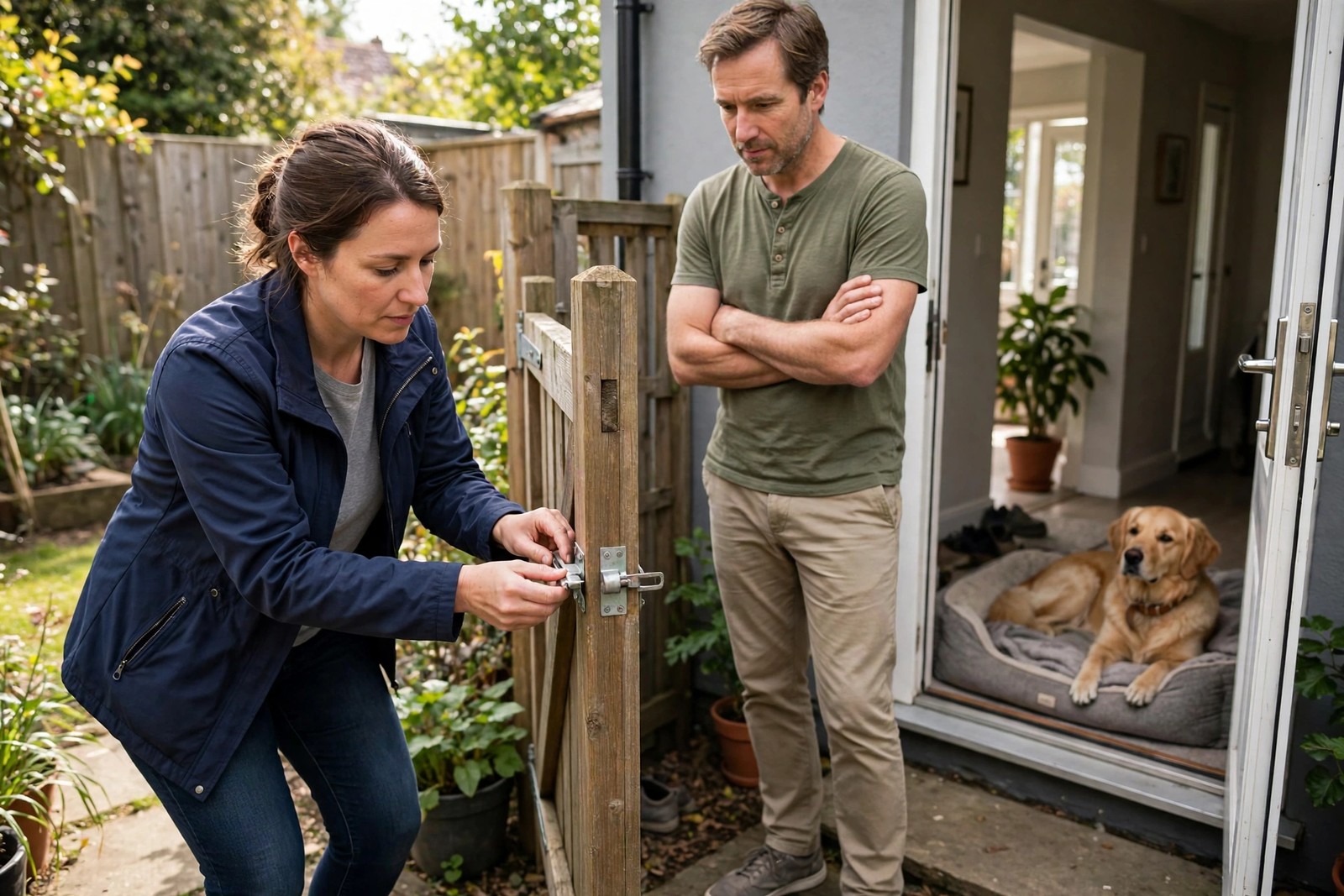
A home check is the stage of adoption where a rescue verifies, kindly and concretely, that the home described on your form is the home a dog will actually live in. It is rarely a test you pass or fail on tidiness. Checkers look for security, sensible sleeping arrangements, and owners who have thought about daily life with this particular dog, and they expect to find a few small fixable items in almost every property.
Who Comes and How the Visit Runs
Many rescues use trained volunteers for home checks, sometimes joined by a member of staff, and some organisations use a video walk-through for part of the process. A visit commonly lasts around half an hour to an hour. The checker will usually ask to see the rooms the dog can use, the garden or yard, and the places where the dog will sleep and be left alone. Having everyone who lives in the home present helps, because questions about routines land differently with each person, and resident dogs are often introduced or at least discussed in detail. Identification checks and a look at tenancy paperwork may form part of the visit if you rent, so keep landlord permission where you can reach it.
Fencing, Gates, and Escape Routes
Outdoor security gets close attention, because escape is a preventable cause of lost and injured rescue dogs. The checker will walk the boundary, push on fence panels, check for gaps at ground level and digging spots, and test that gates close fully and latch without being lifted. Height is judged against the dog you want: a fence that contains a placid older dog may not contain a young, athletic one. Front access matters as much as the back garden, so expect discussion of doors opening onto streets, shared hallways in flats, and how the dog will reach a car or a walk route safely. Balconies, low windows, and gaps in stair rails may all be noted for smaller or livelier dogs.
Hazards, Sleeping Space, and Alone Time
Indoors, the checker is picturing the dog's day. Where will the bed or crate sit, and is that spot warm, draught-free, and away from constant foot traffic? Where will the dog rest when the household is out, and is that area free of trailing cables, cleaning chemicals at floor level, small objects a dog could swallow, and unsecured bins? Unfenced ponds, steep open stairs, and fireplaces without guards are typical hazard points, and food storage matters too if a determined dog can reach a cupboard. Nobody expects a show home. A lived-in house with a defined dog area, a plan for visitors, and cleaning products stored up high reads as prepared, while a spotless house with no thought given to where the dog fits in raises more questions.
Conversation, Small Fixes, and the Outcome
Between rooms, the checker will talk through work hours, exercise plans, holiday cover, and what you would do if the dog proved noisier, stronger, or more anxious than expected. Honest answers help the match: saying a fence panel needs replacing before arrival is a positive, not a confession. Small agreed fixes are common, such as fitting a gate latch, moving a chemical cupboard, or adding a stair gate, often confirmed later with a photo rather than a second visit. The usual outcomes are approval, approval with named fixes, or a conversation about a different dog whose needs suit the property. Once approval lands, paperwork and the dog's own history follow, and KinsLe's Transferrable Profiles can carry vaccination notes, behaviour observations, and routines across to you intact.