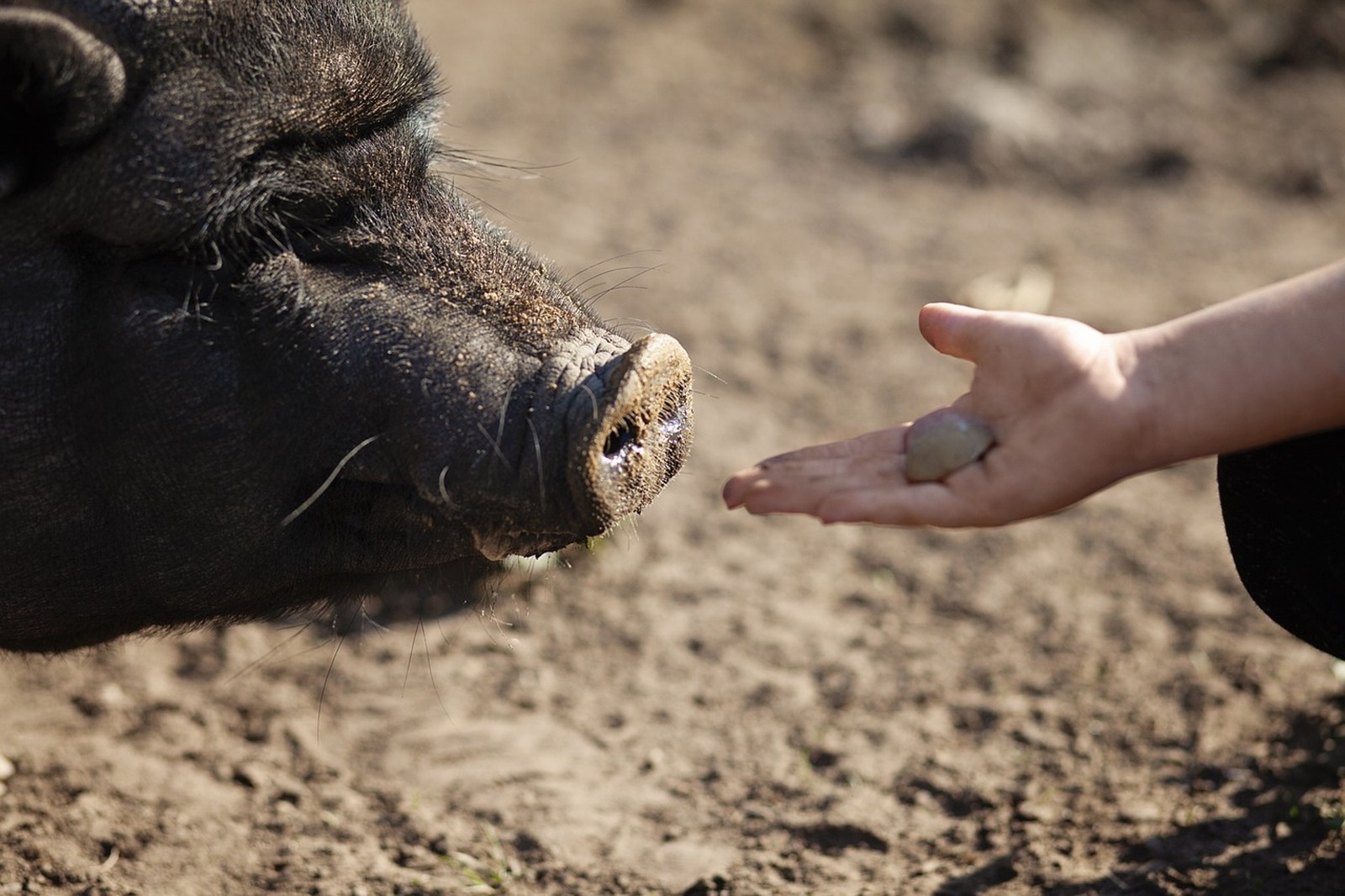
A pet pig's diet should be built on pellets formulated specifically for miniature pigs, fed in measured morning and evening meals, with vegetables and forage around that base. Pigs are enthusiastic, persuasive eaters, and appetite is a poor guide to need: a pig that has eaten a full ration will still root hopefully at an empty bowl. Feeding by measure, body condition and a written ration protects joints, hooves and breathing far better than feeding by how keen the pig looks at mealtimes.
Build the ration on mini-pig pellets
Pellets made for miniature pigs are balanced for a pet pig's protein, fibre, vitamin and mineral needs in a way that farm feeds, dog food and cat food are not. Dog and cat foods are too energy-dense and too high in protein and fat for a pig, and regular feeding on them pushes weight on quickly. Follow the feeding guide on the pellet packaging for your pig's weight as a starting point, then adjust in small steps according to body condition. Split the daily ration into two meals, morning and evening, rather than leaving pellets down all day. Scatter part of the ration in grass or a rooting area if you want the meal to last longer and satisfy the urge to forage.
Vegetables, forage and grazing
Vegetables are the main fresh component of the diet. Leafy greens, cucumber, courgette, celery, peppers and green beans suit pigs well and add bulk and chewing time without many calories. Root vegetables and squash are more starchy, so feed them in smaller amounts than greens. Fruit, including apple, pear and berries, is sugary for a pig and belongs in the treat category: a few small pieces for training or an occasional snack, not a bowlful alongside the pellets. Grazing and hay provide useful forage and occupation, and a pig with outdoor access will spend long, contented periods rooting and nibbling. Rich pasture is still food, though, so a pig that grazes for hours on lush grass may need the pellet ration trimmed, and a pig kept mainly on hard standing needs hay or other forage provided so that the gut and the day both stay busy.
Portion control and body condition
Check body condition by feel rather than by eye, because a rounded outline is normal for a pig and folds can hide a great deal. You should be able to feel the ribs and hip bones under a covering of fat when you press firmly, without them jutting sharply. A pig whose eyes are becoming buried in fat folds, whose belly swings low between the legs, or who is reluctant to walk to the far end of the pen is carrying too much. Young, growing pigs, pregnant or nursing sows and elderly pigs have different needs from a healthy adult, so ask your veterinarian to review the ration at routine visits and whenever weight moves in either direction despite a steady ration.
Foods and feeding habits to avoid
Keep salty snacks, sugary cereals, cake, biscuits and fatty kitchen scraps off the menu entirely; salt is a particular hazard when water intake is low, so constant access to clean water matters as much as the food itself. Never feed uncooked dried beans, green potatoes, potato or tomato leaves, or rhubarb leaves, and remove avocado stones and fruit pits, which are both a hazard and a choking risk. Meat scraps do not belong in a pet pig's bowl either, and in many places feeding meat-containing waste to pigs is restricted by law. Introduce any new vegetable in a small amount first and watch the droppings over the following day, because a sudden pile of rich food can loosen the gut of even a sturdy pig.
A pig fed by three people with three different ideas of a handful will quietly eat far more than any of them intended. KinsLe's Care Teams lets you record that ration as assigned morning and evening duties for each helper, with every completed feed timestamped, so the whole household feeds the same pig the same way.