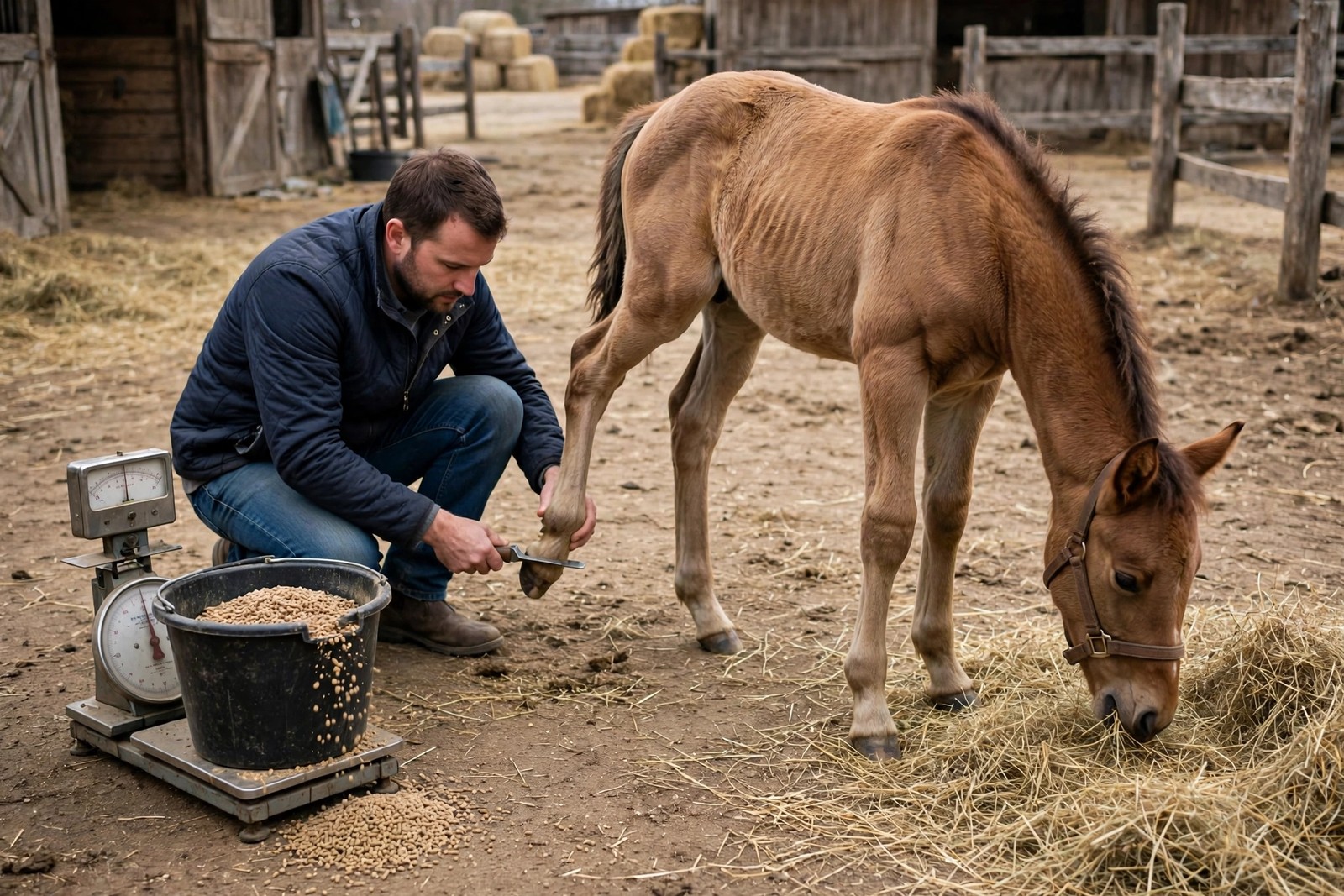
Hoof horn is built from the diet, but slowly and from the inside out. A young horse with soft, chipping feet usually needs its basic ration audited — forage quality, protein, and trace minerals — rather than a single magic supplement tipped on top of an unbalanced feed. Expect to judge results at the coronet band over months, because the wall that is chipping at the ground today grew long ago.
Start With the Forage Base
Good-quality hay or suitable pasture should make up the bulk of the ration, fed generously enough to support steady growth without piling on condition. Very rich, sugary grazing and large bucket feeds of sweet, starchy mix work against you twice: the calories push a youngster's weight up onto immature joints and soft feet, and a diet heavy in sugar and light in everything else still leaves the hoof-building nutrients short. If grazing is lush, manage access with strip grazing or a drier paddock and make hay the steady foundation instead.
Young horses need more protein, and better protein, than mature horses at rest, because they are building body as well as hoof. Lysine and methionine — amino acids the horse must get from feed — are part of the structure of strong horn, and a forage-only diet, or a token handful of mix, frequently falls short on both.
Fill the Mineral and Vitamin Gaps Properly
The practical answer for most youngsters is a ration balancer or a feed formulated for youngstock, fed at its full recommended amount for the horse's age and weight. That delivers concentrated protein and amino acids without the calories of a full bucket feed, together with the nutrients most often linked to poor horn: zinc and copper, which forage commonly supplies in low or poorly balanced amounts, and biotin, widely used to support horn quality. Calcium and phosphorus in the right balance matter too for a growing skeleton, and a youngstock product is formulated with that in mind.
Resist stacking several hoof supplements, balancers, and mixes together. Overlapping products can oversupply some minerals while the ones the hoof needs stay short, and no supplement corrects a ration that was never balanced as a whole. If you want certainty, a forage analysis and a conversation with an equine nutritionist or your veterinarian will tell you what your hay actually provides.
Feed Is Only Half the Picture
Check the non-feed causes with the same honesty. Constant wet, muddy turnout softens horn until it flakes and chips however good the diet is, so provide a dry standing area and pick feet out daily. Long intervals between trims let a young, fast-growing foot flare and crack under its own length; a regular farrier cycle keeps the wall supported while better horn grows down. Persistent chipping alongside lameness, a crumbly coronary band, or one foot far worse than the others deserves a veterinary look rather than another feed change, and your farrier's view of how the foot is growing is worth asking for at every visit.
Introduce any new balancer gradually over a week or more, weigh feed rather than guessing by the scoop, and photograph the feet monthly from the same angles so slow improvement is visible. Coordinating that routine across a yard is easier when it is written down: in KinsLe, Care Teams lets you set the balancer feed, daily hoof picking, and standing-dry checks as assigned duties for whoever is on the yard each day, with each completed task marked by time, so a growing horse's hoof plan does not slip when rotas change.