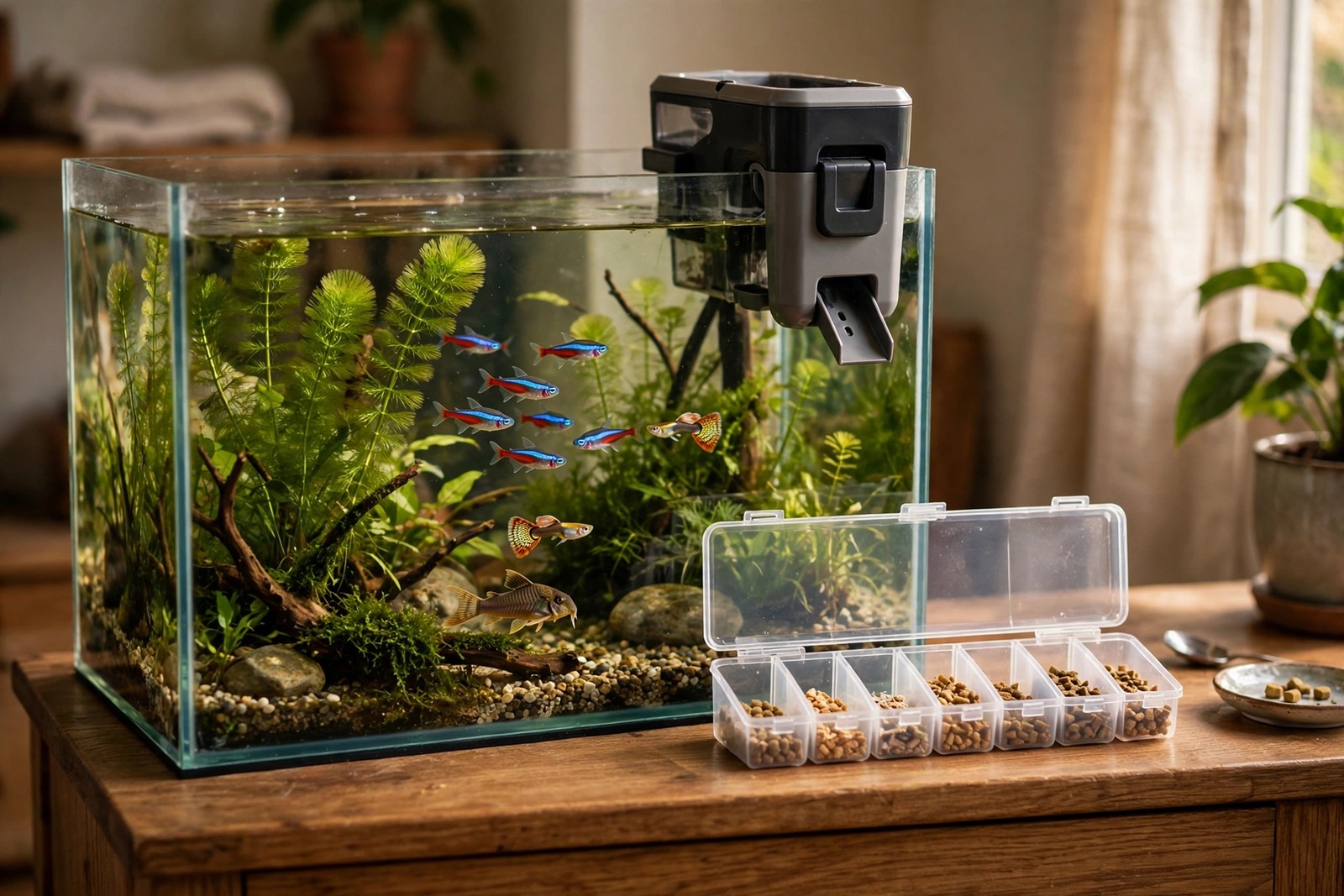
The biggest holiday risk to a healthy tank is not hunger — it is kindness. More fish are lost to a helpful neighbour tipping in generous handfuls, and the ammonia spike that follows in an unattended tank, than to a few missed meals. So the right holiday feeding plan is the one that controls the portion, not just the one that delivers food. Choose it by the length of your trip, and set it up days before you leave, never on departure morning.
Short trips: two to four days
For a long weekend, most healthy adult fish do best with nothing at all. Feed normally up to the day you leave — do not offer a double feast beforehand, which only fouls the water — and the fish will graze algae and microorganisms and come to no harm. This does not apply to fry, very young fish or species on medication, which need a proper plan at any trip length. Lights should go on a timer either way, set to your normal day length or a little shorter.
A week or more: feeder or sitter
An automatic feeder suits trips of a week or longer in a stable tank, but only a tested one. Fit it at least a week before you travel, load it with a dry food that flows evenly — crumbled flake or small pellets rather than a mix that clumps in humidity — set it to feed once a day at slightly less than your usual amount, and watch it perform for several days. A sitter suits tanks with mixed feeding needs, bottom feeders on their own schedule, or several tanks. The sitter-proof method is portioning: measure each day's food for each tank into a labelled pot or compartment in a weekly pill organiser, hide the main food tubs, and write one clear instruction — one pot per day, nothing extra, whatever the fish seem to say. A sitter with pots cannot overfeed; a sitter with a tub and good intentions often does.
What to avoid, and the pre-trip routine
Skip dissolving holiday blocks. They release food unevenly, soften into the water column and can push ammonia up precisely when nobody is home to test or change water, and many fish barely eat from them anyway. In the last two days before you leave, do a partial water change, rinse filter media in removed tank water, check the heater is holding temperature, confirm timers work, and leave the tank slightly underfed rather than full. Leave your sitter a short note covering the pots, the lights, what a problem looks like — cloudy water, fish gasping at the surface — and your phone number plus a local contact who can do a water change.
While you're away and when you return
Resist feeding from guilt the moment you walk back in. Test the water first, feed a small normal meal, and do a partial water change if readings or smell suggest the tank worked hard in your absence. Thank your sitter with specifics about what went well, so they will do it again. And make the whole arrangement repeatable rather than rebuilt each trip: KinsLe's Care Teams lets you assign the daily pot, the mid-trip water check and the lights check to your sitter as dated duties for each tank, with every completed task timestamped — so halfway through your holiday you can see the feeds happened, instead of hoping they did.