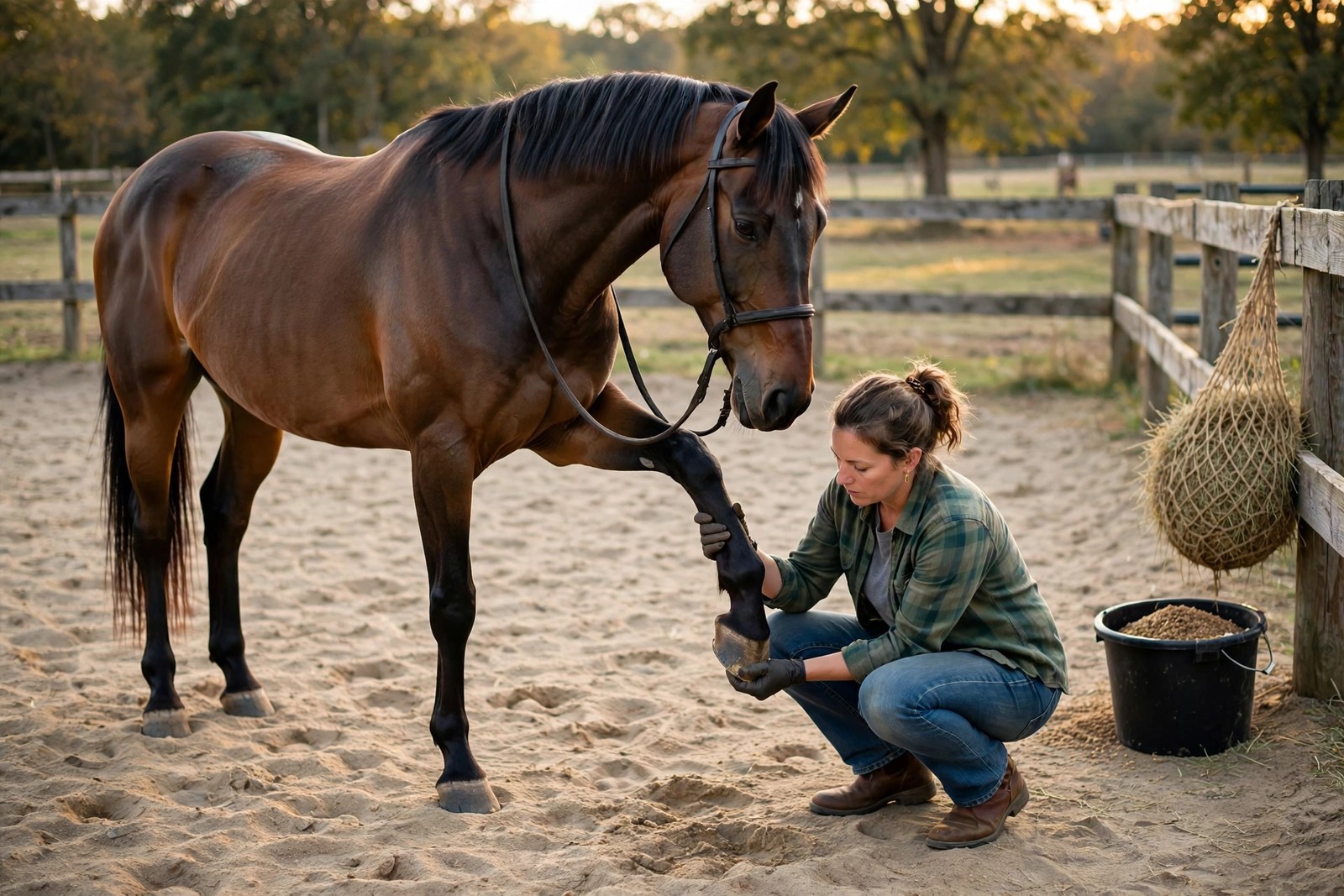
Removing shoes asks the hoof to do a job it previously outsourced to steel, and feed becomes part of the structure. The aim is not a special barefoot diet so much as the diet that grows dense, well-connected horn: forage at the centre, sugar and starch kept down, minerals balanced, and enough quality protein — while trimming and exercise surfaces do their share of the work alongside the feed bin.
Make Forage Low in Sugar and Starch
Hay or mature, not-too-rich grazing should carry the ration. Lush grass, particularly in its fast-growing flushes, and sweet, cereal-heavy mixes deliver sugar loads that many owners find show up quickly as footiness in a horse newly out of shoes, as well as adding weight his unshod feet must carry on every step. If your horse is a good doer, soaked hay can reduce its sugar content, and grazing may need restricting to part of the day or a drier paddock. Introduce every feed change gradually over at least a week or two — a barefoot transition is the wrong moment for an abrupt ration swap and an unsettled hindgut.
A forage analysis, where you can get one, turns guessing into planning: it tells you the sugar level you are managing and the minerals your hay is already short of, which is exactly the information a barefoot ration should be built on.
Balance Minerals and Protein, Not Just Calories
Most horses in light to moderate work do not need large bucket feeds during transition; they need a ration balancer fed at its recommended rate. That supplies concentrated protein and the amino acids horn is built from, including methionine, without piling on calories, and it corrects the trace-mineral pattern forage alone rarely gets right — in particular zinc and copper, for horn strength and quality, balanced against the iron that many forages supply in excess. Biotin is commonly included for horn support. Add plain salt daily and constant clean water; hydration and basic electrolytes are unglamorous, but a horse that drinks poorly eats poorly, and horn growth follows the ration he actually consumes.
Avoid the supplement shelf trap of layering a hoof product over a balancer over a mix. Pick one coherent base ration, feed it at the right rate for his weight and workload, and give it months — new wall grows down from the coronet slowly, and the foot he walks on next season is the honest verdict on this season's feeding.
Feed Cannot Do the Transition Alone
Say it plainly to yourself before the shoes come off: diet supports the transition, it does not perform it. A newly barefoot horse usually needs shorter intervals between trims so flares and long toes cannot lever the wall apart, regular movement to stimulate the foot, and common sense about surfaces — building up work on forgiving ground such as an arena or soft tracks before long rides over hard, stony going. Many owners use protective hoof boots for harder rides during the transition months while the sole thickens and the wall grows down; discuss fit and timing with your trimmer or farrier. Expect the process to take months rather than weeks, watch daily for increased sensitivity, chips, or thrush in a damper foot, pick feet out as part of every visit, and photograph progress from the side and front monthly.
If he becomes persistently lame rather than mildly tender in the first settling period, or heat and a strong pulse appear in a foot, stop and involve your veterinarian and farrier — that is beyond feeding adjustments. Keeping the whole transition — ration, trims, exercise surfaces, and daily foot checks — visible to everyone who handles him is the quiet benefit here: KinsLe's Care Teams lets those jobs be assigned and ticked off with a time stamp, so the balancer is actually fed, the trim is actually booked, and the plan survives a busy yard.