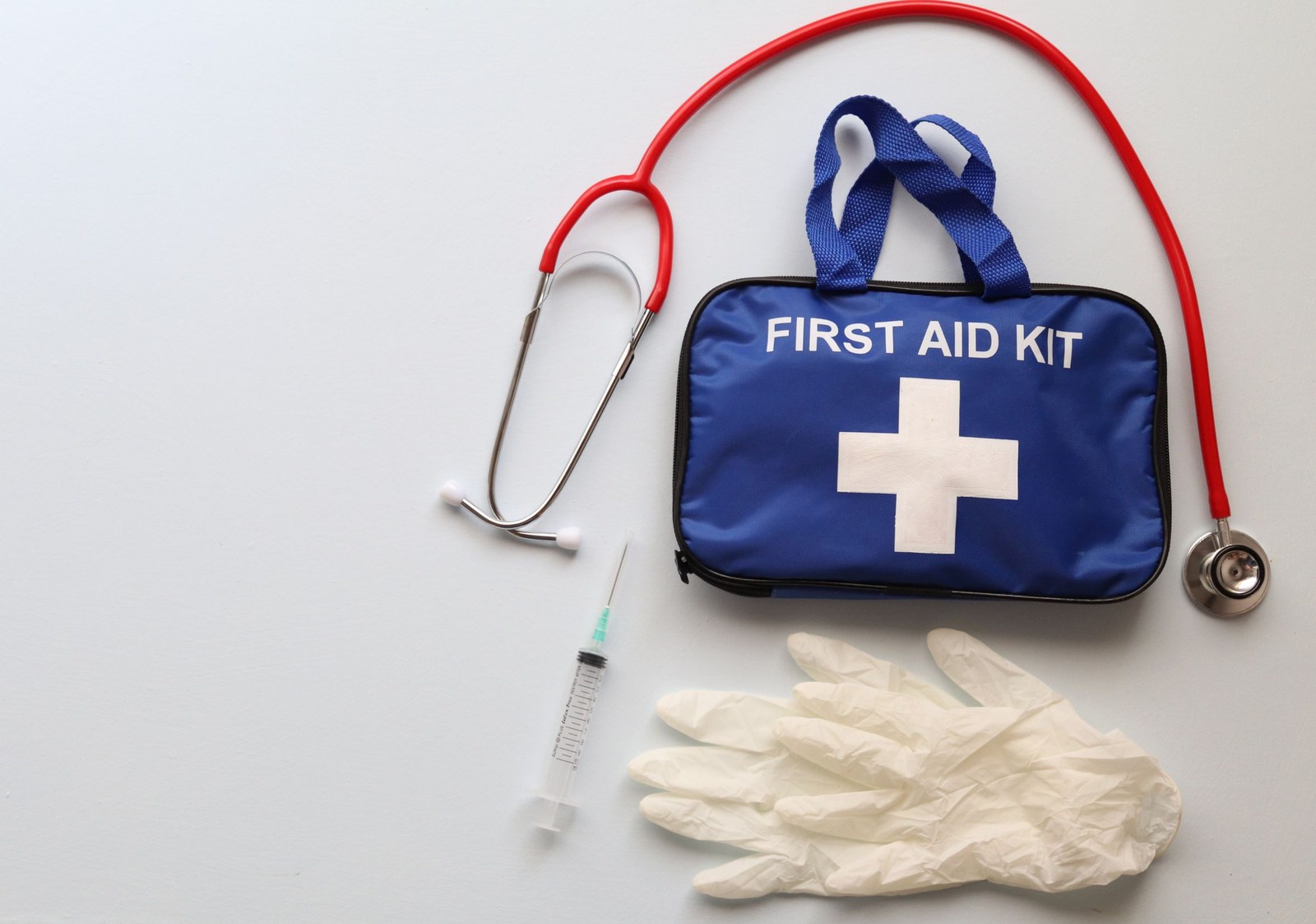
A basic first aid kit for your dog does not need to be elaborate — gauze, non-stick pads, self-adhesive bandage wrap, saline for rinsing, blunt-ended scissors, tweezers, a digital thermometer, and your veterinarian's and emergency clinic's numbers cover the most common scrapes, cuts, and scares. The kit only helps if it is complete, in date, and findable in the dark at 2 a.m., so where you keep it matters as much as what is in it.
Building the kit, item by item
Start with wound care basics: sterile gauze pads and roll gauze for pressure and padding, non-stick pads so dressings do not tear new skin, and self-adhesive wrap that sticks to itself, not fur. Add medical tape, cotton balls, and a clean towel dedicated to the kit.
For cleaning and checking, pack saline solution for rinsing wounds and eyes, blunt-ended scissors for cutting wrap and matted fur safely, tweezers or forceps for splinters and ticks, and a digital thermometer with a cover — normal temperature questions come up in almost every emergency call, and your veterinarian will ask. Include disposable gloves, a small flashlight, an instant cold pack, a spare leash and collar, and a lightweight muzzle or strip of cloth: even gentle dogs in pain can snap, and that is not a character flaw.
Keep printed cards with your veterinarian, the nearest emergency clinic, and your dog's weight, medications, and allergies. Phones die; paper does not.
What to leave out or handle with care
Do not stock the kit with human painkillers or leftover prescription medication to give on your own judgment — many human medicines are dangerous for dogs, and dosing is a veterinarian decision in the moment. Hydrogen peroxide, alcohol, and folk remedies cause more harm than help in most home situations. If your veterinarian has given you specific emergency instructions for your dog's condition, write them down, date them, and keep that sheet on top — that is different from improvising.
Check expiry dates on saline and wipes, replace anything used straight after an incident, and audit the whole kit every few months, ideally when you change smoke alarm batteries.
Where the kit lives — and the second kit
Keep the main kit in one obvious, dry place everyone in the house can name, not split across bathroom drawers. Add a mini version for the car and hiking pack: gauze, wrap, saline, tweezers, spare leash, and the emergency numbers. Dogs cut paws on trails, tear nails jumping into cars, and meet bees at picnics — trouble does not schedule itself at home.
Tell sitters and family where both kits are. A kit a sitter cannot find is decoration.
Using the kit calmly in a real moment
When something happens, breathe first. Restrain gently, muzzle if needed and if breathing allows, apply pressure to bleeding, rinse debris from wounds with saline, and call your veterinarian or emergency clinic early — while you are helping, not after you have run out of ideas. Note the time, what happened, and what you did; that short record helps the clinician enormously.
First aid is a bridge to proper care, not a replacement for it. Deep wounds, eye injuries, suspected poisoning, difficulty breathing, collapse, or bleeding that will not slow always mean go now, kit in hand.
Identification beside the kit with KinsLe's Pet Pass
In an emergency, the other thing you reach for is identification. KinsLe's Pet Pass is your dog's verified ID card, designed to sit alongside that kit as the quick, linked record of who your dog is when minutes matter and papers are scattered. Keeping the Pass details current — as you keep the kit stocked — means a finder, sitter, or clinic can identify your dog fast. Kept beside that kit, the Pet Pass credential on KinsLe identifies your dog at a glance and names you as the keeper a clinic should call when papers are scattered and minutes matter.