
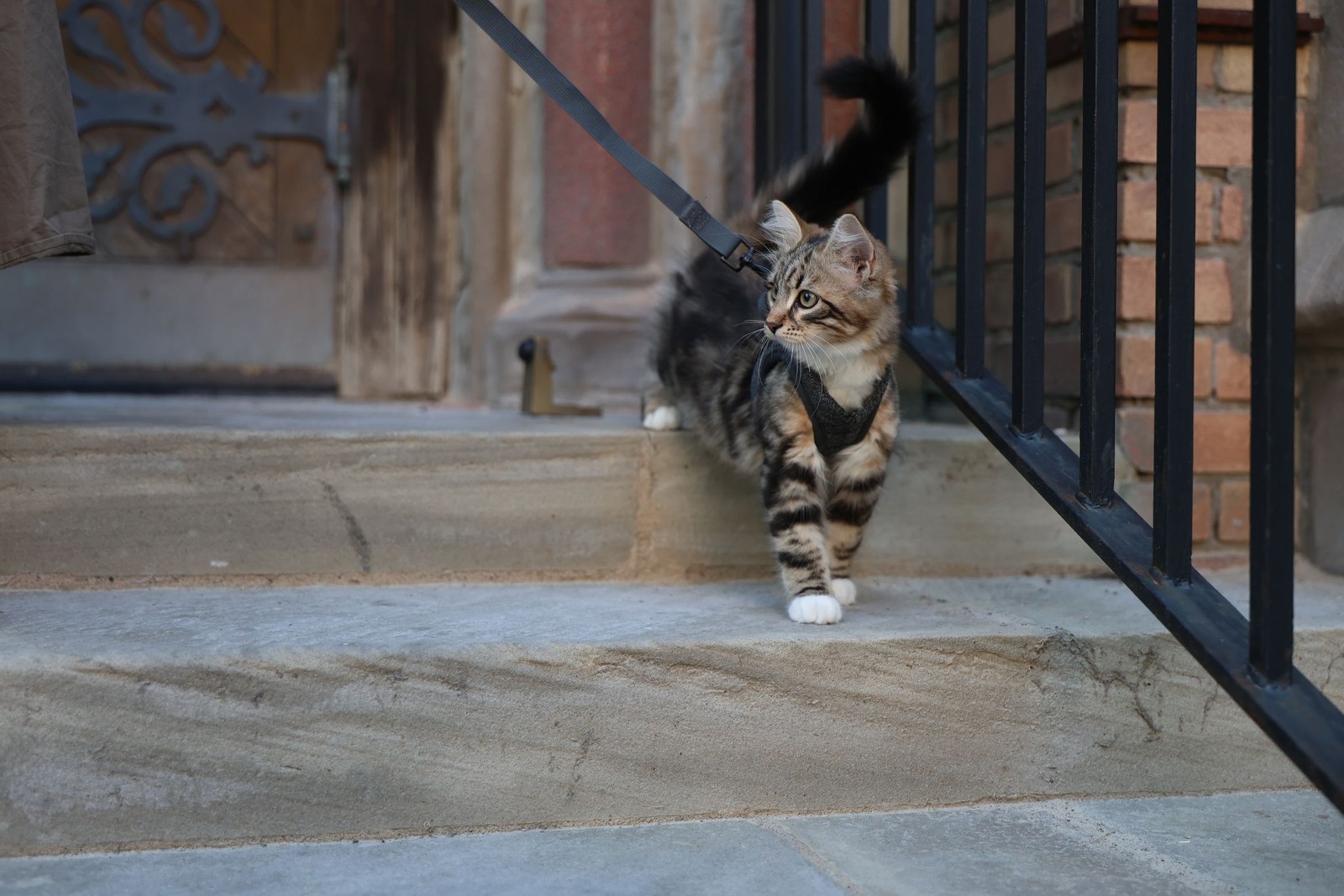
Before your cat's first real walk outside, know this: the outing succeeds or fails on preparation, not bravery. Start in a quiet yard or low-traffic spot, keep the session short, confirm the harness is truly escape-proof, watch her body language like a subtitles track, and head home on a good note rather than pushing for distance. A first walk measured in calm minutes — even five — builds a cat who asks for the harness; a first walk measured in blocks builds one who hides from it.
The pre-walk checklist
Do the boring work at home, where mistakes are cheap. The harness should be snug enough that she cannot back out of it — cats reverse out of loose gear with shocking ease — with one or two fingers fitting under the straps, and she should already have several relaxed indoor sessions wearing it with the leash attached. Clip ID to the harness or her collar even for a ten-minute outing, check that her microchip registration has your current phone number, and time the walk for her naturally active, confident part of the day rather than when she usually naps. A pre-walk play session indoors takes the frantic edge off without tiring her out.
Choosing the first route
Your first route is a place, not a distance. A private garden, a quiet courtyard, or the calmest corner of a small park beats a sidewalk, however short. Scout it at the same time of day without her first if you can: note off-leash dogs, construction noise, busy crossings, and hiding spots she might dive into, because a cat who bolts under a shed mid-walk is a long afternoon. Early mornings are reliably the quietest hours in most neighborhoods. Set her carrier down and open it at the start if she is carrier-comfortable — having a familiar retreat right there lowers the stakes of everything new.
Reading her once you are out there
Expect the first minutes to look like nothing: she may sit, crouch, or pressed-belly survey the world from one spot. That is processing, not failure. Good signs are slow blinks, ears rotating to sounds, sniffing the air, and eventually choosing a direction and walking with her tail mid-height. Let her pick every turn; your job is a loose leash and quiet commentary. Warning signs — flattened ears, tail tucked hard, low slithering, panting, or frantic pulling toward cover — mean the session is over. Pick her up calmly, or let her retreat into the carrier, and go home without treating it as a defeat. Carry her past anything overwhelming, like a barking dog behind a fence, rather than letting her conclude walks include ambushes.
Safety habits for every walk after the first
Re-check harness fit each time, since fur and weight shift. Keep her out of treated lawns until you know the local spraying habits, discourage hunting and eating unknown plants or prey, and wipe paws after walks on salted or chemically treated surfaces. If she will ever walk near traffic, build a startle plan: a secure grip on the leash wrap, never tied to your belt, and a carrier or your arms as the emergency exit.
Identification is the quiet backbone of all of it. Her KinsLe Pet Pass works as her verified ID card, and her profile carries a unique QR ID, so anyone who finds her can connect straight back to you through it. Her Pet Pass on KinsLe does its quiet work on that first outing: the credential identifies her as your cat and lists you as the person to contact before anything has gone wrong.